
Menopause brings significant hormonal shifts that make weight gain nearly inevitable for many women. Estrogen and progesterone decline, slowing metabolism and shifting where your body stores fat.
At NuMed DPC, we see patients navigate this challenge every day, and the good news is that how to manage menopause weight gain is entirely within your control. The right nutrition, exercise, and lifestyle adjustments can help you maintain a healthy weight through this transition.
Why Your Body Stores Fat Differently After Menopause
Estrogen’s Role in Fat Distribution
The shift toward belly fat storage during menopause isn’t random. When estrogen levels drop, your body fundamentally changes how and where it accumulates fat. Estrogen helps regulate fat deposition, and without adequate levels, your body preferentially stores fat in the abdominal area rather than the hips and thighs. This visceral fat sits around your liver, intestines, and other internal organs, making it metabolically active and dangerous.
The Scale of the Problem
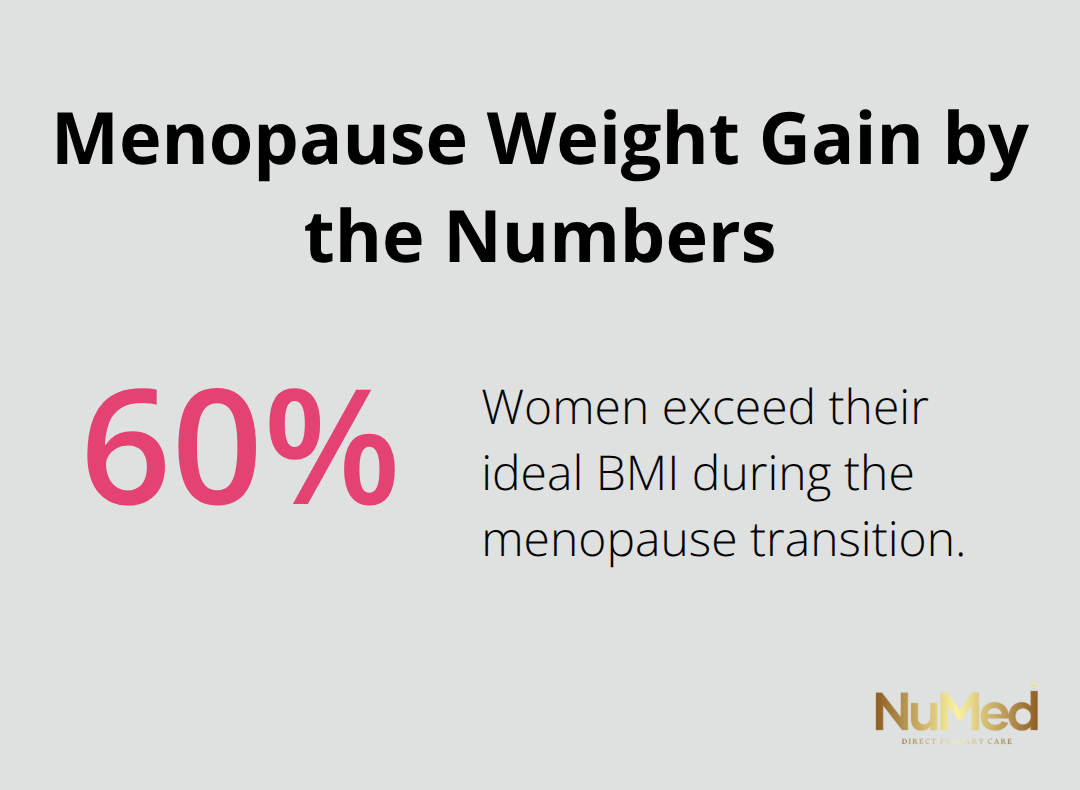
Research shows that about 60% of women exceed their ideal BMI during the menopause transition, and roughly two out of ten women gain at least 10 pounds during this period, often with unhealthy belly fat accumulation. Women often gain 1 to 2 pounds per month during perimenopause, and without intervention, these gains compound over the years. The CDC reports that one in four adults over 50 is inactive, which accelerates metabolic decline.
How Hormones Affect Hunger and Metabolism
Falling estrogen reduces leptin production, the hormone that signals fullness to your brain. Lower leptin means increased hunger, even when you consume enough calories. Your metabolism simultaneously slows with age due to muscle loss and reduced protein production, lowering your resting calorie burn. These changes happen whether or not you change your eating or activity habits, which explains why many women gain weight during menopause despite maintaining the same lifestyle they had before.
Health Risks Beyond the Scale
Visceral fat significantly increases your risk for high blood pressure, high cholesterol, heart disease, type 2 diabetes, and certain cancers, including breast and endometrial cancer. This isn’t about vanity or fitting into old clothes-it’s about preventing serious disease. Understanding these specific mechanisms gives you actionable targets: you need to address muscle preservation through strength training, stabilize hunger hormones through proper nutrition timing, and create the right calorie deficit without drastic restriction.
Sustainable Weight Loss Works Better
Most sustainable weight loss occurs gradually at about 1 pound per week, which means 4 pounds monthly. This slower pace actually works better than aggressive dieting because it helps preserve muscle mass while fat decreases. Your body works against you during menopause, but that doesn’t mean you lack control. The right nutrition strategy can stabilize your hunger signals and support your metabolic needs, which is exactly where we turn next.
What You Should Actually Eat to Stop Menopause Weight Gain
Protein: Your Metabolic Foundation
Protein becomes your most important macronutrient during menopause, and this isn’t negotiable if you want to preserve muscle mass while losing fat. Aging causes muscle loss due to hormonal changes and reduced protein production, which directly lowers your resting calorie burn. Women need protein during menopause for muscle preservation of 1.0 to 1.2 grams of protein per kilogram of body weight daily to maintain muscle during weight loss. Distributing protein evenly across meals rather than loading it into dinner works better, since your body absorbs and utilizes protein more effectively when you consume 25 to 40 gram portions at each meal. Practical sources include Greek yogurt with 15 to 20 grams per serving, eggs with 6 to 8 grams each, salmon with 25 grams per 3.5-ounce portion, and legumes like lentils with 9 grams per cooked cup.
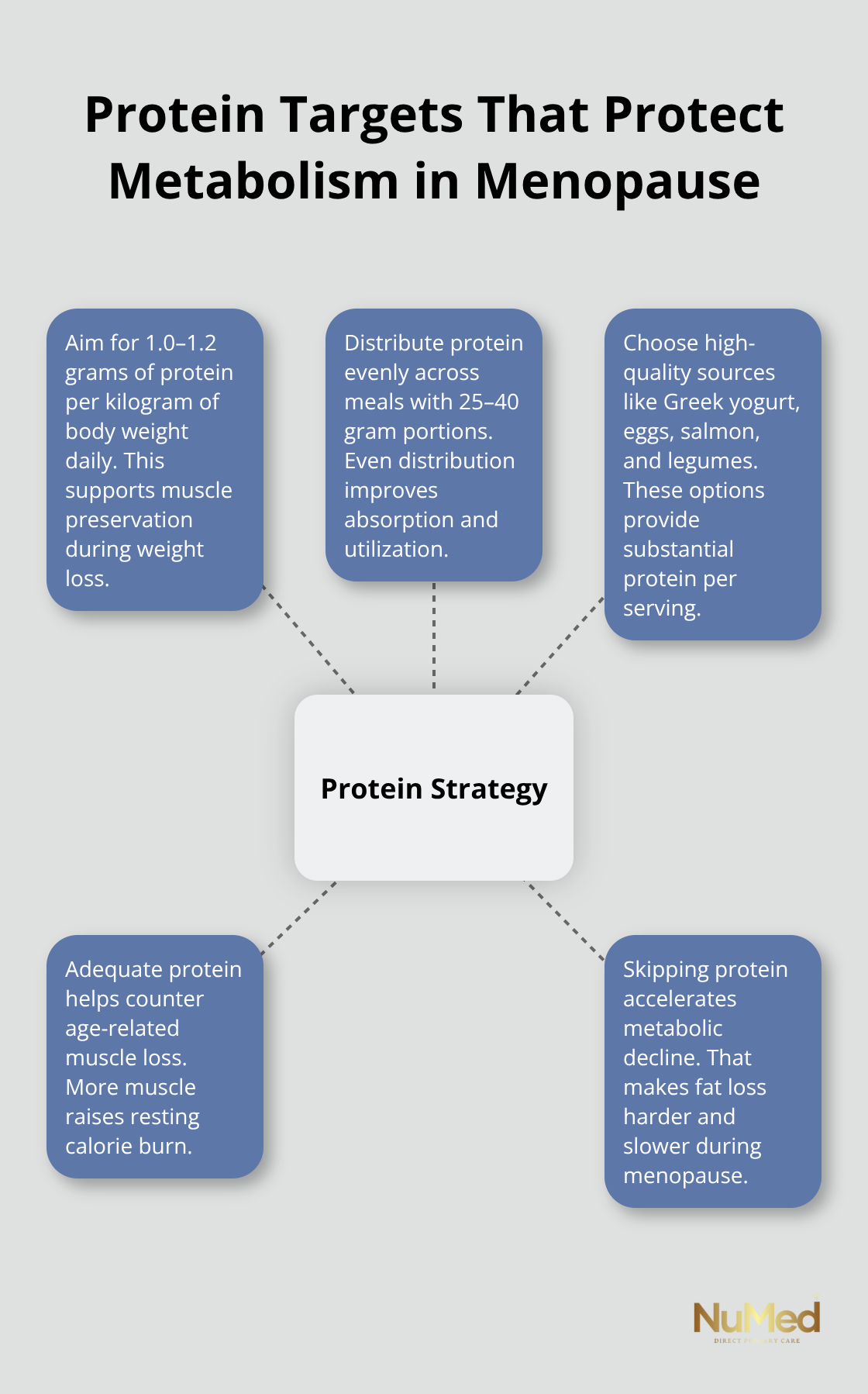
Skipping adequate protein during menopause accelerates the metabolic decline you’re already fighting, making fat loss exponentially harder and slower.
Building Your Calorie Deficit the Right Way
Your approach to overall nutrition should prioritize whole foods while eliminating the calorie-dense items that sabotage progress. Create a calorie deficit of roughly 500 to 750 calories daily through a combination of reduced intake and increased activity, which produces sustainable 1-pound weekly losses without muscle wasting. Focus on vegetables, whole grains, beans, nuts, fish, and low-fat dairy while reducing or eliminating sweets, alcohol, and high-fat foods. Mediterranean and DASH diet patterns are strongly supported by research for cardiometabolic health in menopausal populations. Smaller, more frequent meals help stabilize metabolism and prevent the hunger spikes caused by falling leptin levels.
Sleep and Appetite Regulation
Try for 7 to 9 hours of sleep nightly, since sleep disturbances from hot flashes and night sweats directly impair your body’s ability to regulate appetite and weight. Women who sleep poorly show higher cortisol levels and increased hunger hormones, making dietary adherence significantly harder. Limiting or eliminating sugary sodas, high-sugar drinks, and processed foods cuts daily calories substantially while improving blood sugar stability and reducing insulin resistance that menopause accelerates. These dietary changes work together with sleep quality to address the physiological drivers of weight gain rather than relying on willpower alone.
The nutrition foundation you establish now sets the stage for the exercise strategies that amplify these results-and that’s where movement becomes your most powerful tool for preserving muscle and accelerating fat loss.
Movement and Recovery Transform Menopause Weight Loss
Strength Training Preserves Your Metabolism
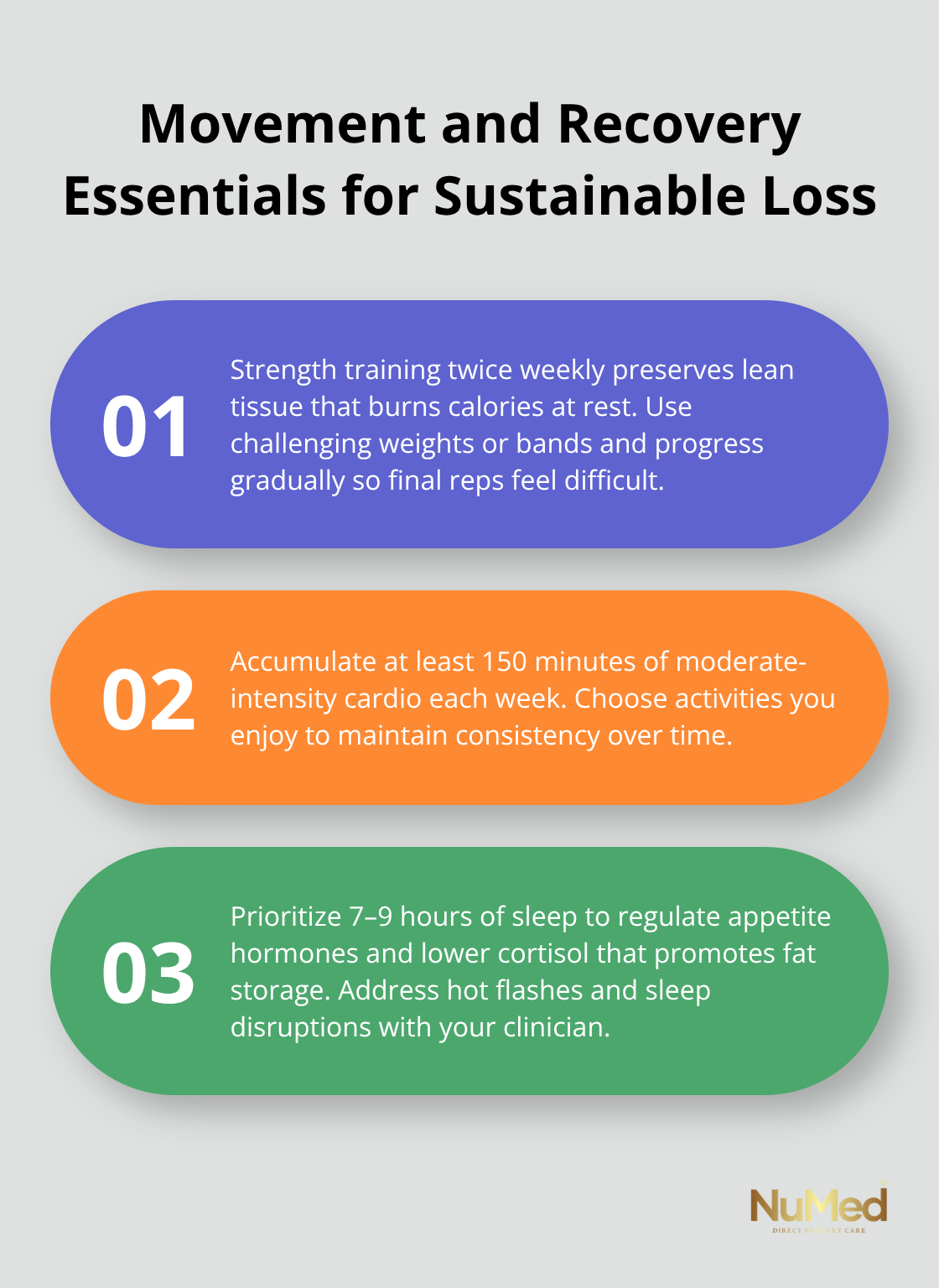
Strength training is non-negotiable during menopause because it directly counteracts the muscle loss that decimates your metabolism. The CDC reports that one in four adults over 50 is inactive, and this inactivity accelerates the metabolic decline you’re already fighting hormonally. You need resistance work at least twice weekly, targeting major muscle groups, using weights or resistance bands that challenge you enough that the final repetitions feel difficult. This isn’t about building bulk; it’s about preserving lean tissue that burns calories at rest. Research shows that women who combine strength training with a calorie deficit preserve significantly more muscle mass compared to those who diet alone, which means your weight loss comes from fat rather than muscle.
Start with compound movements like squats, chest presses, and rows that engage multiple muscle groups simultaneously, then add isolation exercises for specific areas. Progressive overload matters more than intensity; gradually increase weight or repetitions week to week rather than jumping into heavy loads that risk injury.
Cardiovascular Activity Builds Consistency
Cardiovascular activity should reach at least 150 minutes weekly at moderate intensity, spread across the week rather than crammed into single sessions. Walking, dancing, jogging, stairs, jumping rope, and sports like pickleball all count if they elevate your heart rate substantially. The consistency matters far more than the specific activity, so choose something you’ll actually do rather than the theoretically optimal exercise you’ll abandon after two weeks.
Sleep Quality Determines Your Success
Sleep quality directly determines whether your weight loss efforts succeed or fail, making this your most underestimated lever for change. Sleep disturbances from hot flashes and night sweats reduce sleep duration and quality, which impairs your body’s ability to regulate appetite hormones and increases cortisol levels that promote fat storage. Try for 7 to 9 hours nightly, and if menopause symptoms disrupt your sleep, address those directly with your healthcare provider rather than accepting poor sleep as inevitable.
Stress Management Protects Your Progress
Stress management works alongside sleep because elevated cortisol from chronic stress increases hunger, promotes visceral fat accumulation, and sabotages the calorie deficit you’ve worked to create through nutrition and exercise. Practical stress reduction includes consistent sleep schedules, limiting caffeine after 2 PM, creating a cool, dark bedroom, and addressing hot flashes medically if they’re preventing adequate rest. These physiological factors work together-movement and recovery preserve muscle, stabilize hormones, and create the metabolic environment where sustainable fat loss actually occurs.
Final Thoughts
Menopause weight management requires you to address the physiological changes happening in your body rather than relying on willpower alone. The combination of protein-rich nutrition, consistent strength training, adequate sleep, and stress management creates the metabolic environment where sustainable fat loss actually occurs. You now understand why your body stores fat differently, how to eat in ways that preserve muscle while creating a calorie deficit, and why movement and recovery matter equally to your nutrition strategy.
The reality is that managing menopause weight gain becomes an ongoing process, and relapse to weight gain is common but entirely manageable with the right support. Many women find that making one small change at a time works better than overhauling every habit simultaneously. Start with sleep if hot flashes disrupt your rest, add protein to stabilize hunger if you eat inconsistently, or begin strength training if you’ve been sedentary. Small changes compound into significant results over months.
When lifestyle changes alone don’t produce the weight loss you’re targeting, professional support becomes valuable. Your healthcare provider can identify metabolic drivers like thyroid dysfunction or insulin resistance through comprehensive lab work, then guide you toward interventions that address your specific situation. NuMed DPC takes a root-cause approach to menopause weight management by addressing nutrition, sleep, stress, gut health, and hormonal balance together, offering extended visits and transparent pricing so you receive the personalized attention your menopause transition deserves.