Your skin’s appearance isn’t just about creams and treatments. The hormones flowing through your body control collagen production, elasticity, and how your skin renews itself at the cellular level.
As we age, natural anti-aging hormones decline, and that’s when fine lines, sagging, and dryness become harder to fight. At NuMed DPC, we focus on addressing the root causes of aging rather than just treating the surface.
How Your Hormones Control Skin Aging
Estrogen, progesterone, testosterone, and human growth hormone regulate far more than metabolism and mood; they directly control whether your skin looks firm or slack, hydrated or desiccated. Estrogen stimulates collagen production, increases skin thickness, and boosts hydration by promoting hyaluronic acid synthesis in the dermis. When estrogen declines during perimenopause and menopause, collagen production slows dramatically. Women lose up to 30% of skin collagen in the first five years after menopause, which explains why wrinkles and dryness accelerate so rapidly during this window. Progesterone supports skin elasticity and circulation; when levels drop, skin appears dull and loses that radiant quality. Testosterone regulates sebum production and skin regeneration. Excess testosterone can trigger acne, while declining levels reduce skin firmness and repair capacity.
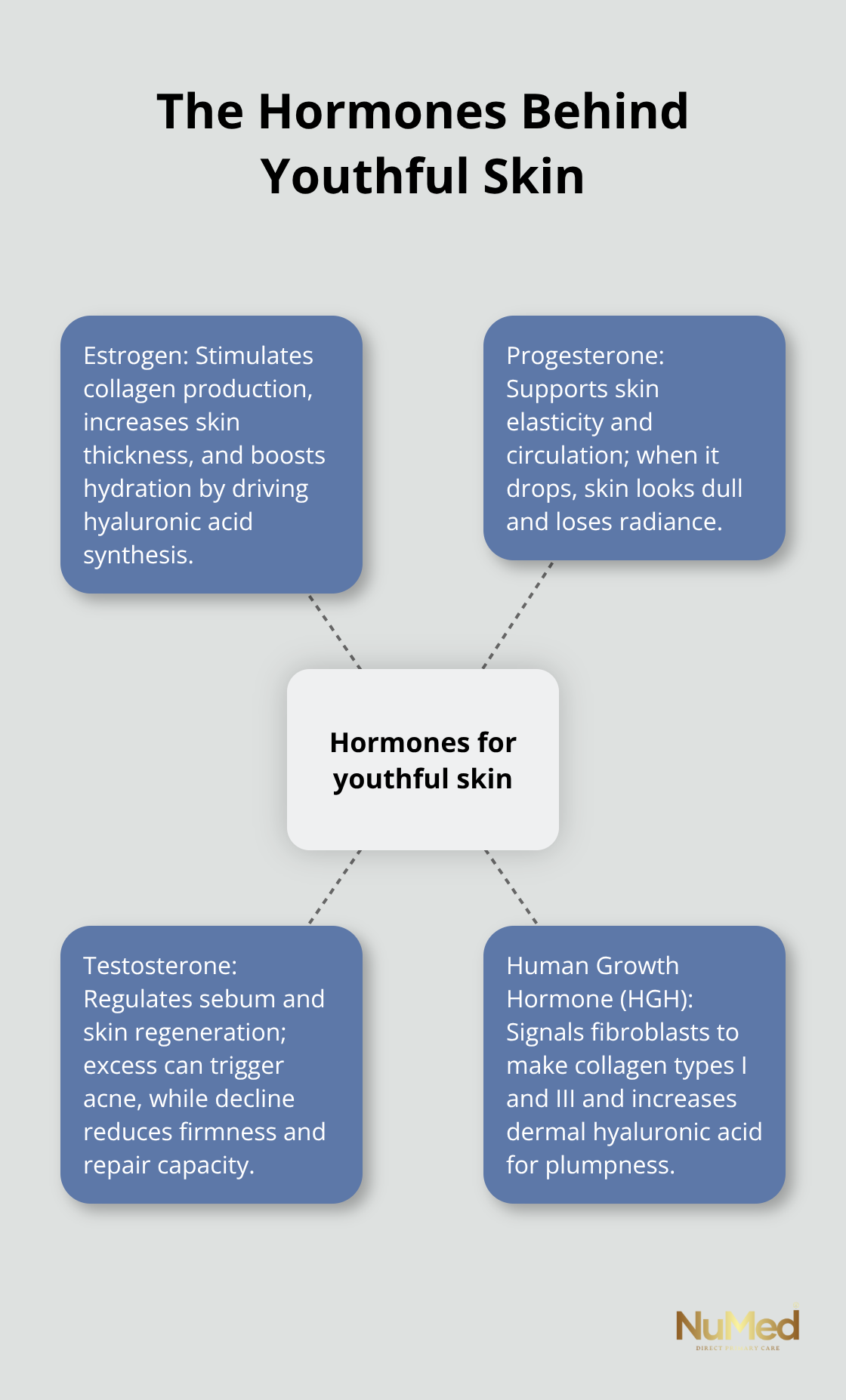
Human growth hormone stimulates collagen types I and III through IGF-1 signaling and increases hyaluronic acid production in the dermis, directly improving dermal thickness and plumpness. These hormones work synergistically, and when even one declines significantly, visible aging accelerates.
The Timeline of Hormonal Decline and Skin Changes
Hormone levels decline gradually, starting in your 30s, but skin changes typically become visible only when the decline reaches critical thresholds. For women, perimenopause (typically starting in the mid-40s) marks the point where estrogen and progesterone fluctuate wildly, causing unpredictable skin texture shifts, increased sensitivity, and accelerated collagen loss. Men experience testosterone decline at roughly 1% per year after age 30, leading to slower skin regeneration and reduced firmness, though the changes are less dramatic than in women. HGH decline begins in your 20s, dropping approximately 14% per decade after age 30, which means dermal thickness and wound healing capacity diminish steadily over time. Waiting until skin visibly sags or wrinkles deeply means waiting until hormonal deficits are severe. Addressing hormonal balance before dramatic skin changes occur prevents the accelerated aging cascade rather than trying to reverse it afterward.
Why Hormone Optimization Addresses Root Causes
Most skincare products target surface symptoms-wrinkles, dryness, texture-without addressing why those symptoms developed. Topical retinoids, peptides, and hyaluronic acid help, but they cannot restore the dermal substrate if the hormones that build that substrate have declined significantly. Hormone optimization restores the biological foundation that allows skin to repair itself, produce collagen, and maintain hydration. When you support hormone levels through medical evaluation, bioidentical hormone replacement when appropriate, and lifestyle strategies, your skin responds not just cosmetically but at the cellular level. A personalized approach begins with comprehensive hormone testing to establish your baseline, then combines targeted nutrition, exercise, sleep optimization, and stress management to support natural hormone production. This root-cause strategy prevents the need for increasingly aggressive cosmetic interventions down the road.
What Happens When You Address Hormonal Imbalances Early
Identifying hormonal imbalances before they cause visible skin damage shifts your entire aging trajectory. Early intervention means your skin maintains its collagen-producing capacity, stays hydrated, and repairs itself efficiently. The hormonal foundation remains strong enough that topical treatments and lifestyle modifications work more effectively. Waiting until wrinkles deepen or skin texture deteriorates significantly means fighting against a compromised dermal substrate-a much harder battle. Testing your hormone levels now provides a baseline that guides whether you need lifestyle adjustments alone or whether medical support makes sense for your situation. This proactive approach prevents the cascade of skin changes that typically accelerates once hormonal decline crosses certain thresholds.
The Four Hormones That Determine Skin Quality
Estrogen: The Foundation of Skin Thickness and Hydration
Estrogen stands as the most visibly impactful hormone for skin aging because its decline triggers a cascade of cellular changes that no topical product can fully reverse. When estrogen levels drop, fibroblasts in your dermis produce less collagen, and simultaneously, the skin’s ability to hold water diminishes because estrogen drives hyaluronic acid synthesis. A study found that women lose approximately 30% of collagen in the first five years after menopause, which translates to visible sagging, deeper wrinkles, and persistent dryness that worsens month after month. Topical hyaluronic acid and retinoids help temporarily, but they cannot restore the dermal thickness that estrogen normally maintains.
Progesterone and Testosterone: Supporting Elasticity and Renewal
Progesterone works alongside estrogen to support skin elasticity and blood flow to the skin’s surface, which is why women often notice their complexion looks dull and gray during the luteal phase when progesterone drops. Testosterone in women regulates sebum production and skin cell turnover, so when testosterone declines with age, skin cell renewal slows and the skin loses firmness. If you experience accelerated skin aging, sagging, or persistent dryness after age 40, estrogen and progesterone levels are almost certainly part of the problem, and topical treatments alone will produce disappointing results.
Human Growth Hormone: Collagen Synthesis and Dermal Thickness
Human growth hormone operates through a different mechanism but produces equally dramatic skin benefits when restored to physiologic levels. HGH stimulates collagen synthesis through IGF-1 signaling, meaning it directly tells your fibroblasts to manufacture collagen types I and III, which are the structural proteins that keep skin firm and resilient. HGH also increases hyaluronic acid production in the dermis, improving both hydration and skin plumpness.
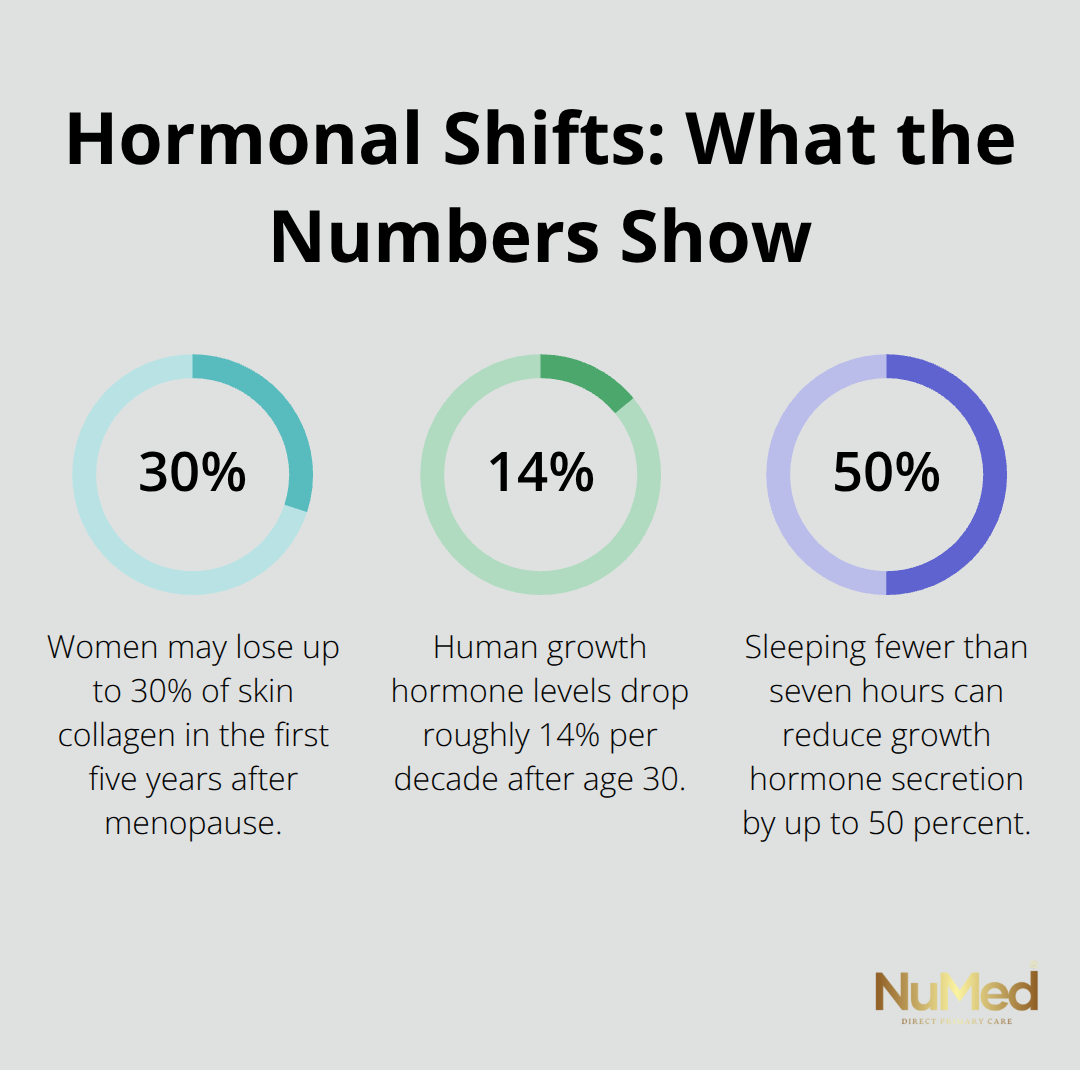
Age-related HGH decline begins in your 20s and accelerates after 30, dropping roughly 14% per decade, so by age 50, your dermal thickness and collagen-production capacity have declined significantly.
Clinical data show that physiologic HGH restoration increases dermal thickness and tensile strength, with subjective improvements in skin hydration appearing within 4 to 8 weeks and measurable changes in wrinkle depth emerging within 3 to 6 months. Bioidentical HGH pellet therapy provides steady hormone release over 3 to 6 months via subcutaneous implantation, avoiding the daily injections that make compliance difficult.
DHEA and Testosterone: Maintaining Skin Firmness and Repair
DHEA and testosterone work synergistically to maintain skin thickness and regeneration capacity, with testosterone specifically supporting skin firmness and the speed at which damaged skin repairs itself. Declining testosterone in both men and women reduces skin elasticity and moisture retention, though men typically experience less dramatic visible changes than women do during menopause. Comprehensive hormone testing establishes your baseline levels and reveals which hormones have declined enough to affect your skin’s appearance and function. This data-driven approach allows you to tailor support through bioidentical hormone restoration when appropriate, combined with nutrition and lifestyle strategies that naturally optimize hormone production. Understanding your individual hormone profile transforms how you approach skin aging-rather than applying generic treatments, you address the specific hormonal deficits driving your skin’s decline.
How to Support Your Hormones Through Food, Movement, and Sleep
Hormonal balance cannot be forced through willpower alone-it requires consistent actions that signal to your body that hormone production matters. The foods you eat directly influence whether your body manufactures sufficient estrogen, progesterone, testosterone, and growth hormone, which is why generic diet advice fails for hormone optimization.
Nutrition That Drives Hormone Production
Phytoestrogen-rich foods like flaxseed, soy, and legumes provide plant compounds that mimic estrogen’s effects on skin, helping counteract the collagen loss that accelerates after menopause. A 2019 study in Nutrients found that women consuming flaxseed daily showed measurable improvements in skin hydration within 12 weeks. Cruciferous vegetables, including broccoli, Brussels sprouts, and cabbage, support estrogen metabolism by enhancing liver detoxification, preventing excess estrogen from being reabsorbed into circulation.
Zinc-rich foods like oysters, beef, and pumpkin seeds directly support testosterone production and skin cell turnover. Deficiency in zinc accelerates skin aging and impairs wound healing. Vitamin C from citrus, berries, and peppers is non-negotiable because it drives collagen synthesis at the fibroblast level; older adults commonly have suboptimal vitamin C levels, and research shows higher plasma vitamin C correlates with better cognitive performance and stronger skin resilience.
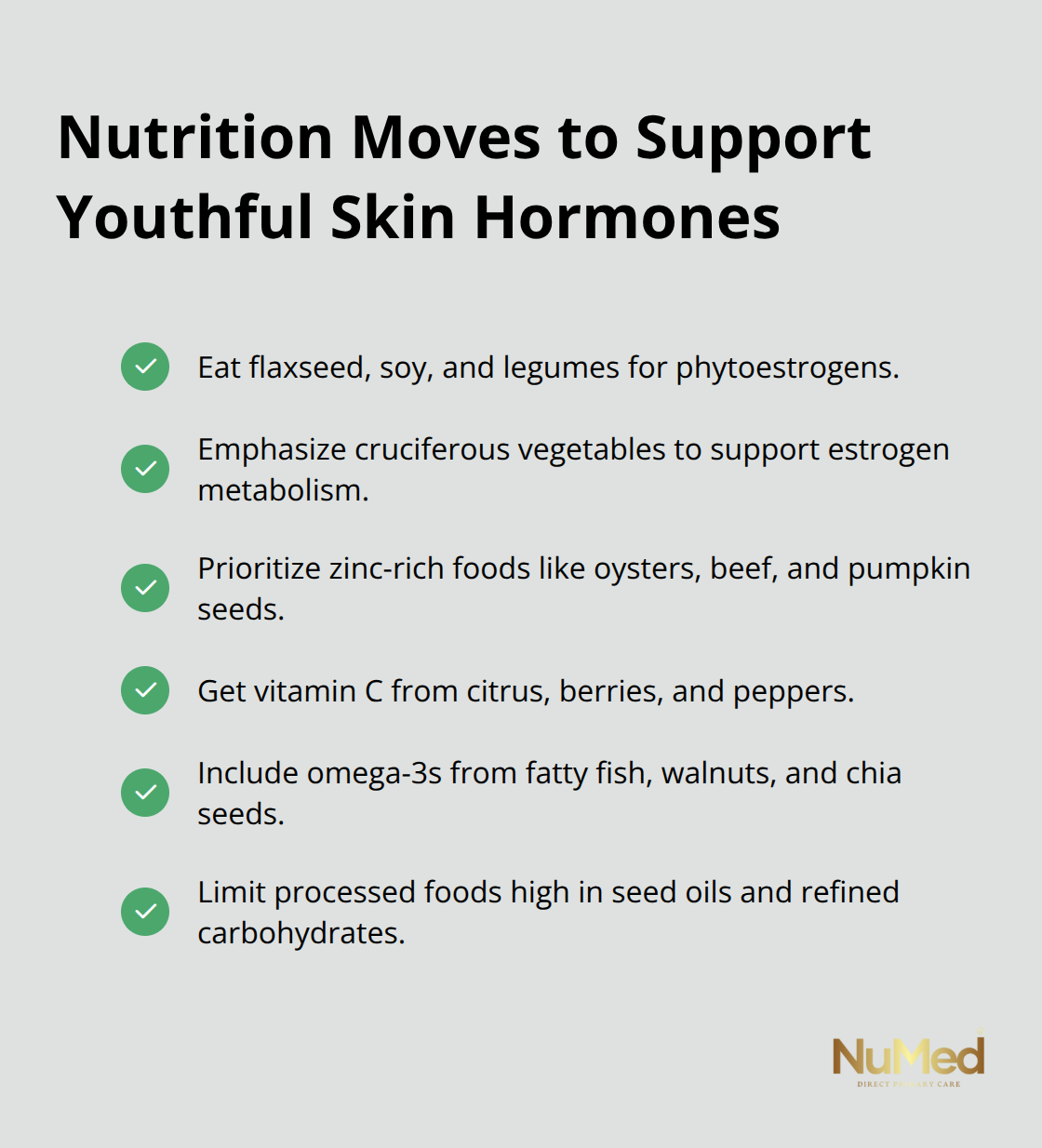
Omega-3 fatty acids from fatty fish, walnuts, and chia seeds reduce systemic inflammation that damages collagen and elastin, with consistent intake showing measurable improvements in skin barrier function within 8 to 12 weeks. Processed foods high in seed oils and refined carbohydrates elevate insulin and cortisol, which directly suppress growth hormone and accelerate collagen breakdown. Elevated cortisol from poor diet and stress measurably damages skin barrier integrity and accelerates wrinkle formation.
Exercise Patterns That Optimize Hormones
Strength training two to three times weekly stimulates testosterone production and growth hormone release through muscle fiber disruption and recovery. Research shows that resistance exercise increases IGF-1 levels within weeks, directly improving skin thickness and hydration. Moderate aerobic activity like brisk walking or cycling for 150 minutes weekly improves circulation to the skin and reduces cortisol without triggering the excessive stress response that high-intensity exercise can cause in already-stressed individuals.
Sleep Quality and Hormonal Recovery
Sleep quality determines whether your body produces adequate growth hormone. Most HGH release occurs during deep sleep stages, and insufficient sleep (fewer than seven hours nightly) reduces growth hormone secretion by up to 50 percent, which translates to slower collagen production and impaired skin repair. Consistent sleep timing matters as much as duration; sleeping and waking at the same time daily stabilizes cortisol rhythm, which prevents the hormonal dysregulation that accelerates skin aging.
Stress Management and Cortisol Control
Stress management through meditation, time in nature, or consistent breathing practices directly lowers cortisol. Elevated cortisol stands as one of the most underestimated drivers of premature skin aging. Chronic high cortisol breaks down collagen and elastin while simultaneously impairing skin barrier function. These foundational strategies work synergistically to optimize your hormonal environment without requiring pharmaceutical intervention in many cases, though comprehensive hormone testing reveals whether your specific situation benefits from additional medical support.
Final Thoughts
Your skin’s youthful appearance depends on natural anti-aging hormones, not on expensive creams or invasive procedures. Estrogen, progesterone, testosterone, and human growth hormone work at the cellular level to maintain collagen production, hydration, and elasticity. When these hormones decline with age, your skin loses its ability to repair itself efficiently, and surface treatments become increasingly ineffective against deepening wrinkles and sagging. Lifestyle strategies like eating phytoestrogen-rich foods, performing strength training two to three times weekly, and prioritizing seven to nine hours of consistent sleep nightly produce measurable improvements in skin thickness and hydration within weeks to months.
However, lifestyle alone may not be sufficient if your hormone levels have declined significantly. Comprehensive hormone testing establishes your baseline and reveals whether your specific situation benefits from bioidentical hormone restoration, preventing the guesswork that leads most people to waste money on ineffective treatments while their hormonal deficits worsen silently. Addressing the root causes of skin aging rather than treating surface symptoms shifts your entire aging trajectory and preserves your skin’s collagen-producing capacity before accelerated decline becomes exponentially harder to reverse.
We at NuMed DPC focus on preventing illness through personalized hormone evaluation and optimization tailored to your unique needs. A consultation reveals whether your skin aging stems from hormonal decline and what combination of lifestyle adjustments and medical support makes sense for your situation.