

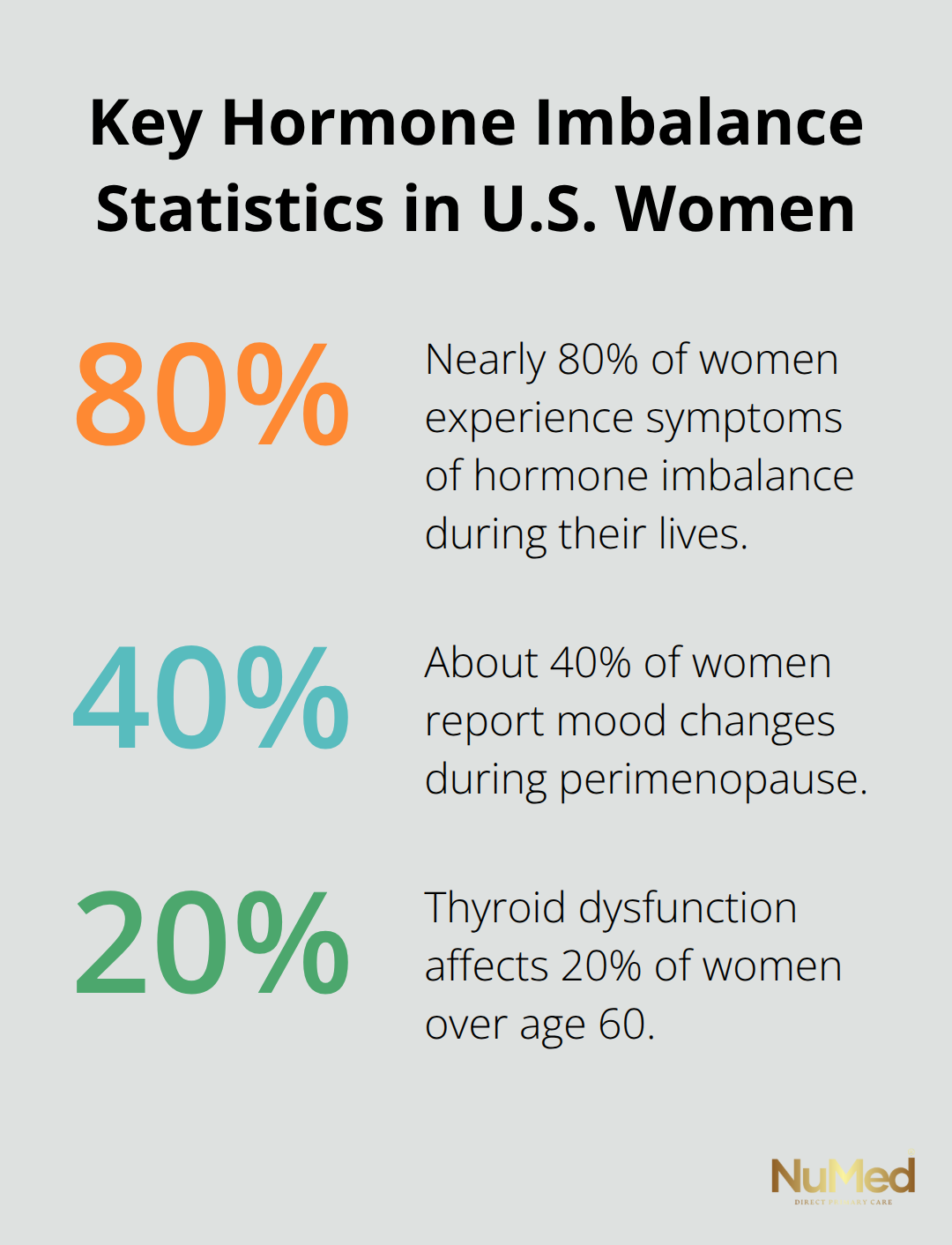
Nearly 80% of women experience symptoms of hormone imbalance in women at some point in their lives, yet many dismiss these signs as normal aging or stress.
Weight gain, fatigue, mood swings, and irregular periods aren’t just inconveniences-they’re your body’s way of signaling deeper hormonal disruptions. We at NuMed DPC see these patterns daily in our practice.
The good news? Most hormone imbalances are treatable once properly identified and addressed through comprehensive testing and personalized care.
Common Physical Symptoms of Hormone Imbalance
Irregular Menstrual Cycles Reveal Hormonal Disruption
Your menstrual cycle offers the clearest window into your hormonal health. Cycles shorter than 21 days or longer than 35 days reveal estrogen and progesterone imbalances that need attention. Heavy bleeding that lasts more than seven days or requires pad changes every hour often stems from thyroid dysfunction or insulin resistance.
Women who experience flooding, clots larger than a quarter, or bleeding between periods should track these patterns immediately. These symptoms point to specific hormonal disruptions that respond well to targeted treatment when properly identified.
Unexplained Weight Gain Resists Traditional Methods
Sudden weight gain of 10 pounds or more within six months, especially around the midsection, indicates cortisol elevation from chronic stress or insulin resistance. Women with hypothyroidism often experience weight gain before diagnosis, while those with insulin resistance struggle to lose weight despite caloric restriction.
Sugar and carbohydrate cravings between 2-4 PM signal cortisol crashes that create energy dips. Women who exercise regularly but still gain weight around their waist should request comprehensive hormone panels (including fasting insulin, cortisol, and complete thyroid function tests).
Chronic Fatigue Persists Despite Adequate Rest
You wake up tired after eight hours of sleep when disrupted cortisol rhythms or low thyroid function affect your body. Many women with hormone imbalances experience afternoon energy crashes between 1-3 PM, regardless of caffeine intake.
True hormonal fatigue differs from normal tiredness because rest doesn’t restore energy levels. Women who need multiple cups of coffee to function or feel exhausted after minimal physical activity often have thyroid hormone levels in the low-normal range that still cause symptoms.
These physical symptoms often coincide with emotional and mental changes that many women don’t recognize as hormone-related.
How Do Hormone Imbalances Affect Your Mental Health
Mood Swings Signal Estrogen and Progesterone Fluctuations
Women with hormone imbalances experience dramatic mood shifts that feel unpredictable and overwhelming. Estrogen fluctuations reduce serotonin production, which leads to sudden irritability followed by periods of sadness within the same day. The American College of Obstetricians and Gynecologists reports that about 40 percent of women experience mood changes during perimenopause when estrogen levels become erratic.
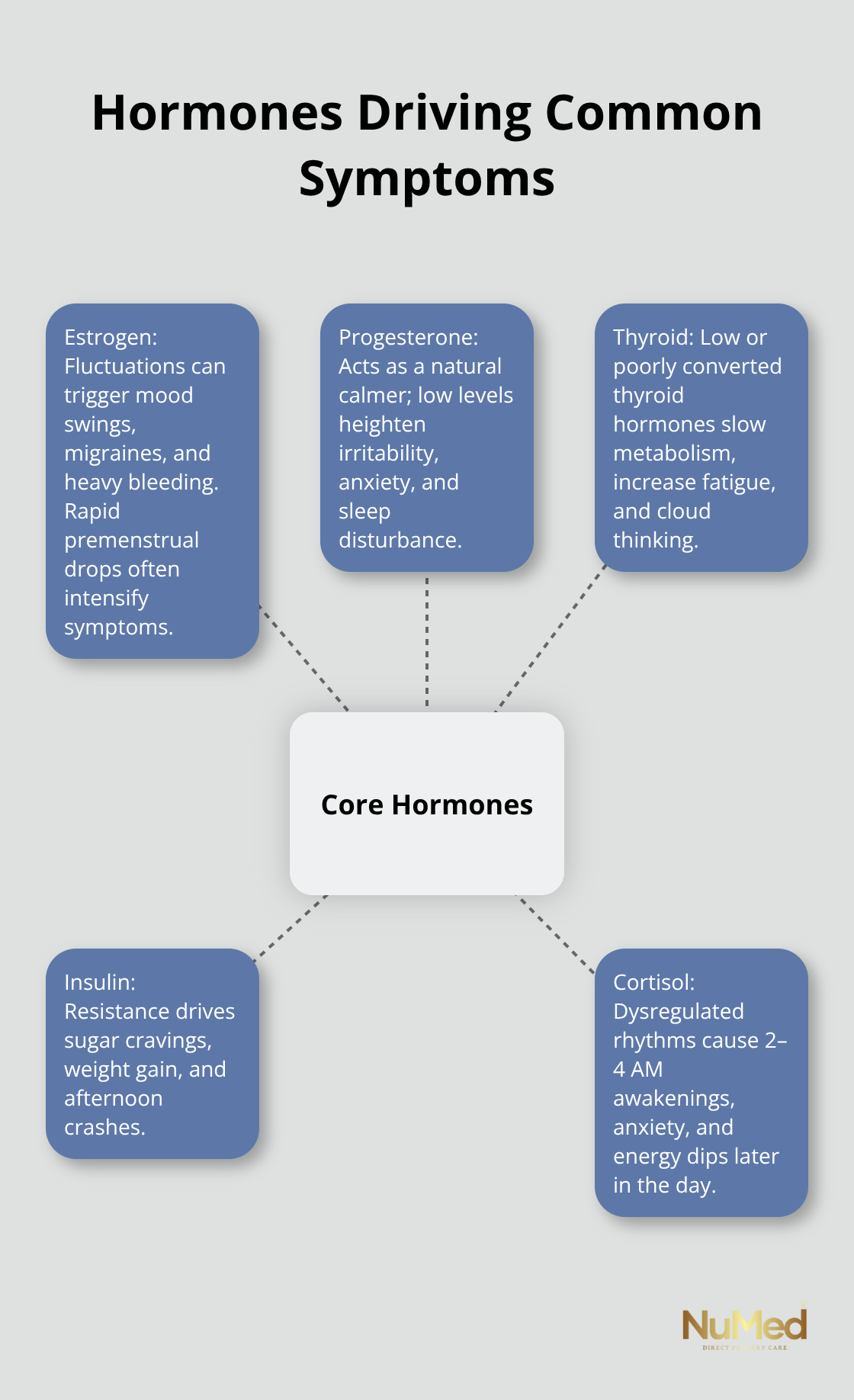
Progesterone acts as a natural calming agent, and when levels drop, women become easily agitated by situations that previously didn’t bother them. You might snap at family members, feel overwhelmed by minor stressors, or cry without apparent reason. These aren’t character flaws but biochemical responses to hormonal shifts that require medical attention rather than willpower.
Anxiety and Depression Stem from Hormonal Disruption
Thyroid dysfunction creates anxiety symptoms that mimic panic disorders (including racing heart, sweating, and constant worry). Women with hyperthyroidism experience anxiety attacks that feel identical to psychological panic disorders, while those with hypothyroidism develop depression that doesn’t respond to traditional antidepressants. The American Thyroid Association notes that women are five to eight times more likely than men to develop thyroid disorders.
Cortisol imbalances from chronic stress create persistent anxiety that worsens in the evening when cortisol should naturally decline. Women who wake up between 2-4 AM with racing thoughts often have elevated nighttime cortisol that disrupts sleep cycles and increases anxiety the following day.
Brain Fog Indicates Multiple Hormone Deficiencies
You forget common words mid-sentence, lose your train of thought during conversations, or walk into rooms without remembering why when estrogen levels fluctuate. Low thyroid function slows cognitive processing and makes simple tasks feel mentally exhausting. Women describe feeling like they think through molasses or operate at half their normal mental capacity.
Memory problems worsen during the luteal phase of menstrual cycles when progesterone peaks, then crashes before menstruation. Blood sugar instability from insulin resistance creates afternoon brain fog that makes concentration nearly impossible between 2-4 PM (particularly when combined with cortisol crashes).
These mental and emotional symptoms often point to specific hormonal disruptions that affect different systems throughout your body.
Which Hormones Drive Your Symptoms
Estrogen Dominance Creates Multiple System Disruptions
Estrogen deficiency during perimenopause occurs when estrogen levels decline relative to progesterone. Women with this imbalance experience breast tenderness that worsens before periods, bloating that makes clothes feel tight, and heavy menstrual bleeding that soaks through super tampons within two hours. The condition also triggers migraine headaches during the week before menstruation when estrogen levels crash rapidly.
Environmental toxins from plastics, pesticides, and synthetic fragrances contribute to hormonal imbalances by mimicking natural estrogen in your body. Women who work in nail salons, hair salons, or cleaning industries face higher exposure risks. Request estradiol, estrone, and progesterone testing during days 19-21 of your cycle for accurate assessment. Progesterone levels below 10 ng/mL during this luteal phase indicate insufficient production to balance estrogen.
Thyroid Dysfunction Affects 20% of Women Over 60
Hypothyroidism develops gradually and often goes undiagnosed because standard TSH testing misses subclinical cases. Women with TSH levels between 2.5-4.0 mIU/L frequently experience symptoms despite normal lab ranges. The most telling signs include morning body temperatures below 97.8°F, hair loss from the outer third of eyebrows, and constipation that doesn’t respond to fiber or water intake.
Free T3 levels below 3.0 pg/mL cause brain fog and afternoon fatigue that coffee cannot fix. Reverse T3 elevation above 15 ng/dL blocks active thyroid hormone from entering cells (creating symptoms despite normal TSH levels). Women need comprehensive thyroid panels including TSH, free T4, free T3, reverse T3, and thyroid antibodies for proper diagnosis.
Insulin Resistance and Cortisol Create Metabolic Chaos
Insulin resistance is a highly prevalent condition in the adult population, yet most women remain undiagnosed until diabetes develops. Fasting insulin levels above 5 mIU/L indicate early insulin resistance, while glucose levels above 90 mg/dL suggest metabolic dysfunction. Women notice intense sugar cravings between 3-4 PM, energy crashes after meals that contain carbohydrates, and difficulty losing weight despite caloric restriction.
Cortisol dysregulation from chronic stress creates a cascade of hormonal disruptions throughout your body. Normal cortisol should peak between 6-8 AM at 15-25 mcg/dL, then decline steadily throughout the day. Women with elevated nighttime cortisol above 5 mcg/dL experience insomnia (while those with low morning cortisol below 10 mcg/dL struggle to wake up despite adequate sleep).
Taking Action on Your Hormonal Health
Women who experience three or more symptoms of hormone imbalance should seek comprehensive hormone testing within 30 days. Standard lab panels often miss subclinical imbalances that still cause debilitating symptoms. Accurate diagnosis requires thorough evaluation that goes beyond basic screening tests.
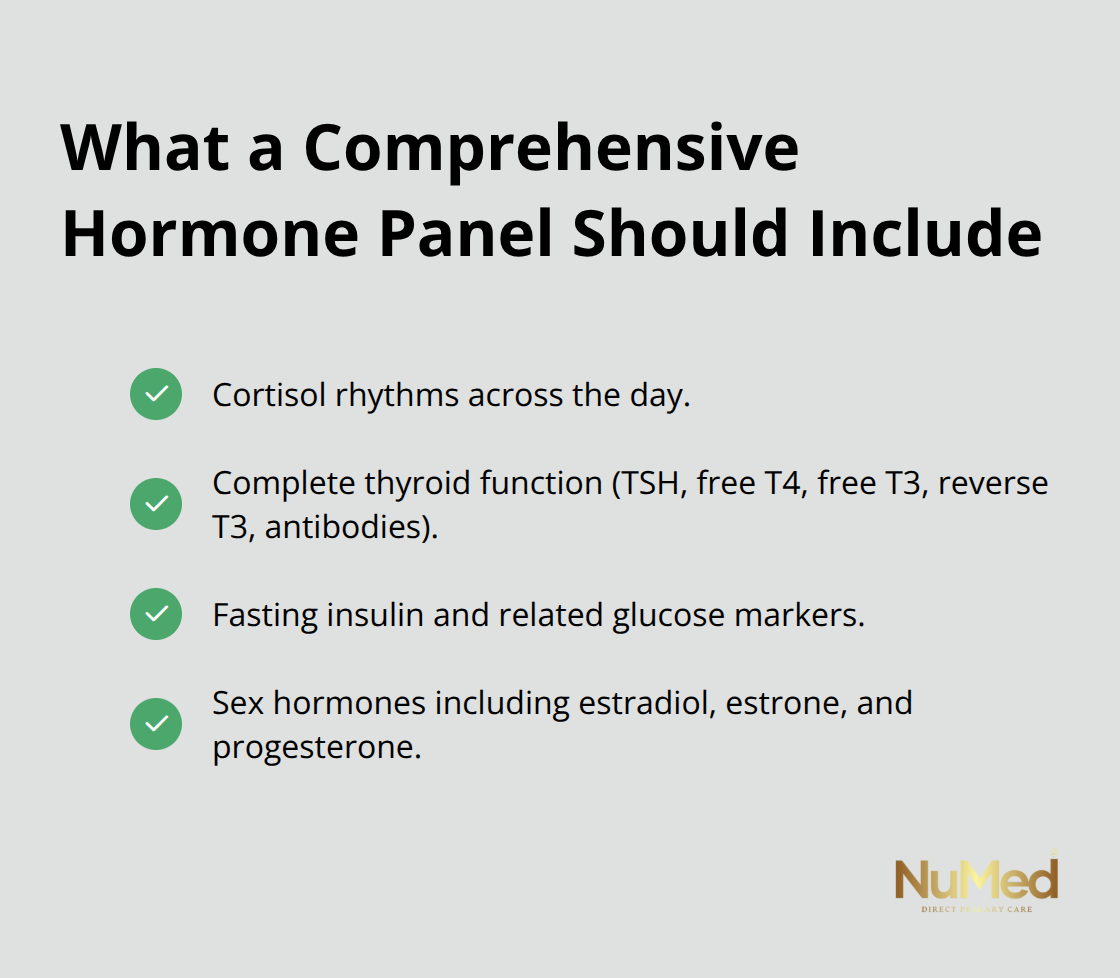
We at NuMed DPC spend adequate time with each patient to conduct complete evaluations and order comprehensive hormone panels that include cortisol rhythms, complete thyroid function, insulin levels, and sex hormones. Our direct primary care model allows us to create individualized treatment plans that combine targeted supplementation, lifestyle modifications, and ongoing monitoring to restore optimal hormone balance. Through functional medicine approaches, we address root causes rather than mask symptoms.
The path to hormonal wellness begins with accurate testing and continues with consistent support from healthcare providers who understand the complexity of women’s hormonal health. Schedule comprehensive hormone testing today to identify the specific imbalances that drive your symptoms. Develop a treatment plan that addresses your unique needs and restores your vitality.