Hair loss affects millions of people, and many turn to expensive treatments without addressing the root causes. Natural therapy for hair growth works by targeting what your body actually needs: proper nutrition, stress management, and scalp health.
At NuMed DPC, we focus on evidence-based approaches that combine lifestyle changes with proven natural ingredients. This guide walks you through the science behind hair growth and practical steps you can start today.
What Nutrients Actually Matter for Hair Growth
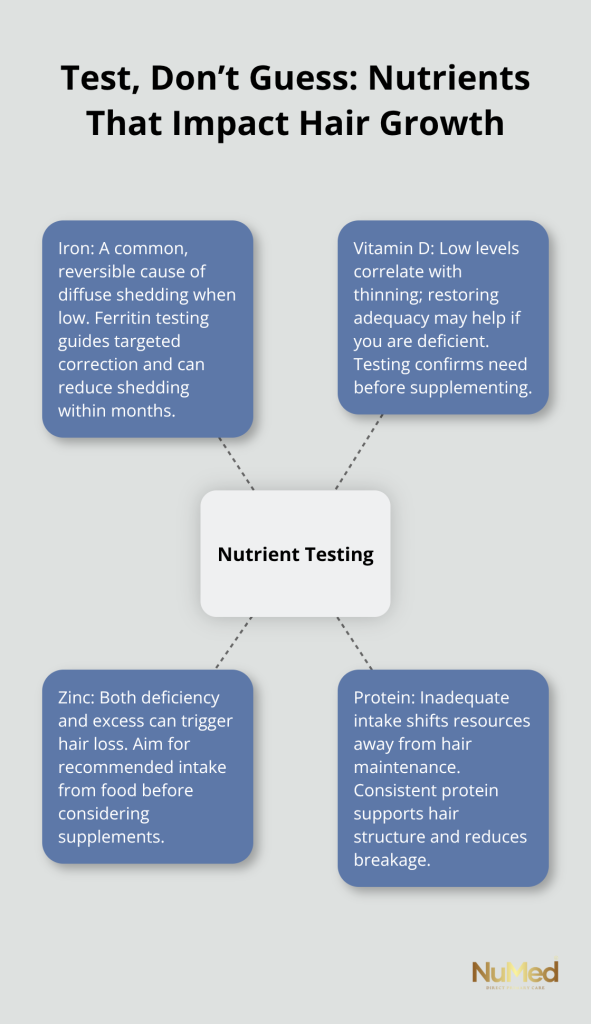
Biotin gets all the attention, but the truth is less exciting: it only helps if you’re deficient. According to the NIH Office of Dietary Supplements, biotin supplementation shows real benefits mainly in people with existing biotin deficiency, which is rare in developed countries. If you eat a normal diet with eggs, almonds, or sweet potatoes, you likely have enough. The same applies to B-vitamins like B12 and folate-they support hair follicle function, but only when levels are low.
Iron deficiency as a common reversible cause of diffuse hair shedding, especially in premenopausal women. If you lose more than 100 hairs daily and feel fatigued, get your iron levels tested. Correcting iron status can meaningfully reduce shedding within a few months.
Zinc, Vitamin D, and Targeted Testing
Zinc matters, but the margin is narrow. Too little zinc contributes to hair loss, but excessive supplementation causes the same problem. Try the recommended daily amount through food sources like oysters, beef, and pumpkin seeds rather than high-dose supplements. Vitamin D deficiency correlates with hair thinning, and the NIH notes that restoring adequate levels may help in deficient individuals-another reason to test rather than guess.
Oils and Extracts That Deliver Results
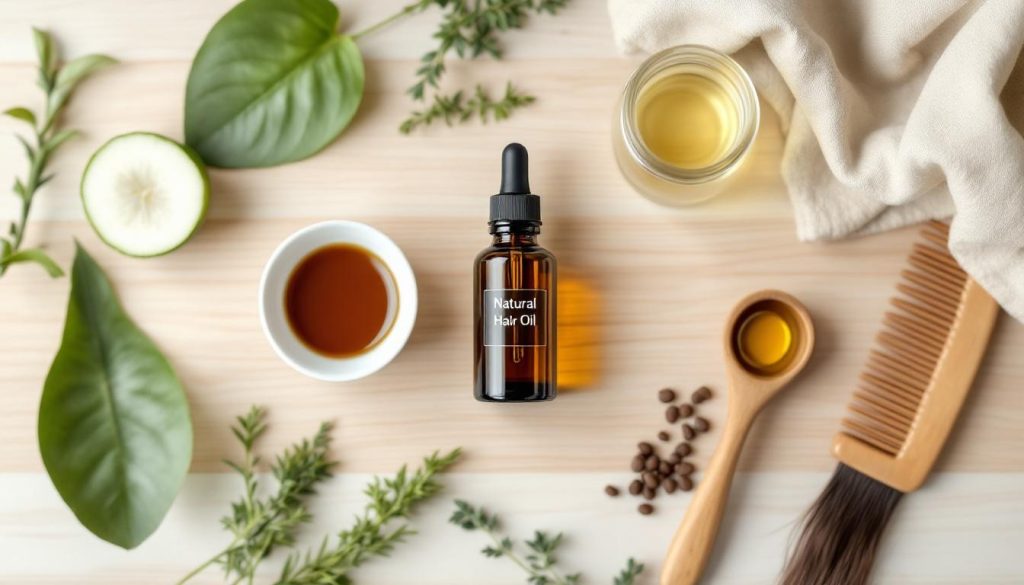
Coconut oil reduces protein loss in the hair shaft according to research in the International Journal of Trichology, making it genuinely useful for strengthening existing hair, though it won’t trigger new growth. Pumpkin seed oil is different. A 2014 study in Evidence-Based Complementary and Alternative Medicine found that men with androgenetic alopecia who used pumpkin seed oil showed improvement, likely because it may inhibit 5-alpha reductase. Apply it directly to your scalp 3-4 times weekly for 4-6 months before expecting results.
Rosemary essential oil produced outcomes comparable to minoxidil in a 2015 trial published in SKINmed after approximately 6 months of use. Always dilute it in a carrier oil-never apply essential oils undiluted to your scalp. Green tea with EGCG protects follicles from DHT-induced damage; drinking 1-2 cups daily or using it as a cool scalp rinse supports long-term scalp health. Jojoba oil reduces scalp inflammation and improves the skin barrier, potentially enhancing absorption of other active ingredients, though it doesn’t independently stimulate growth.
Protein and Amino Acids Build Hair Structure
Your hair is made primarily of keratin, a protein, which means adequate protein intake directly supports hair structure and prevents breakage. The NIH Office of Dietary Supplements emphasizes that insufficient protein intake can trigger shedding because your body prioritizes other functions over hair maintenance. Try 1.2-1.6 grams per kilogram of body weight daily. If you weigh 70 kilograms, that’s roughly 84-112 grams of protein.
Specific amino acids matter: lysine, arginine, and methionine have roles in hair formation and collagen synthesis. You don’t need special amino acid supplements-adequate protein from whole foods covers these needs. Fish, chicken, legumes, and dairy provide complete amino acid profiles. Collagen peptides are marketed for hair, skin, and joints, but evidence for direct hair growth is limited.
Protein deficiency creates visible thinning and breakage within weeks, so prioritize adequate intake before spending money on specialized supplements. If you restrict calories or follow a very low-protein diet, that works against your hair health. Consistent protein intake, combined with the nutrients mentioned above, creates the metabolic foundation that natural therapies actually need to work. These nutritional foundations matter far more than expensive supplements, but they only work when you address the lifestyle factors that either support or sabotage your hair growth cycle.
How Lifestyle Changes Drive Hair Growth
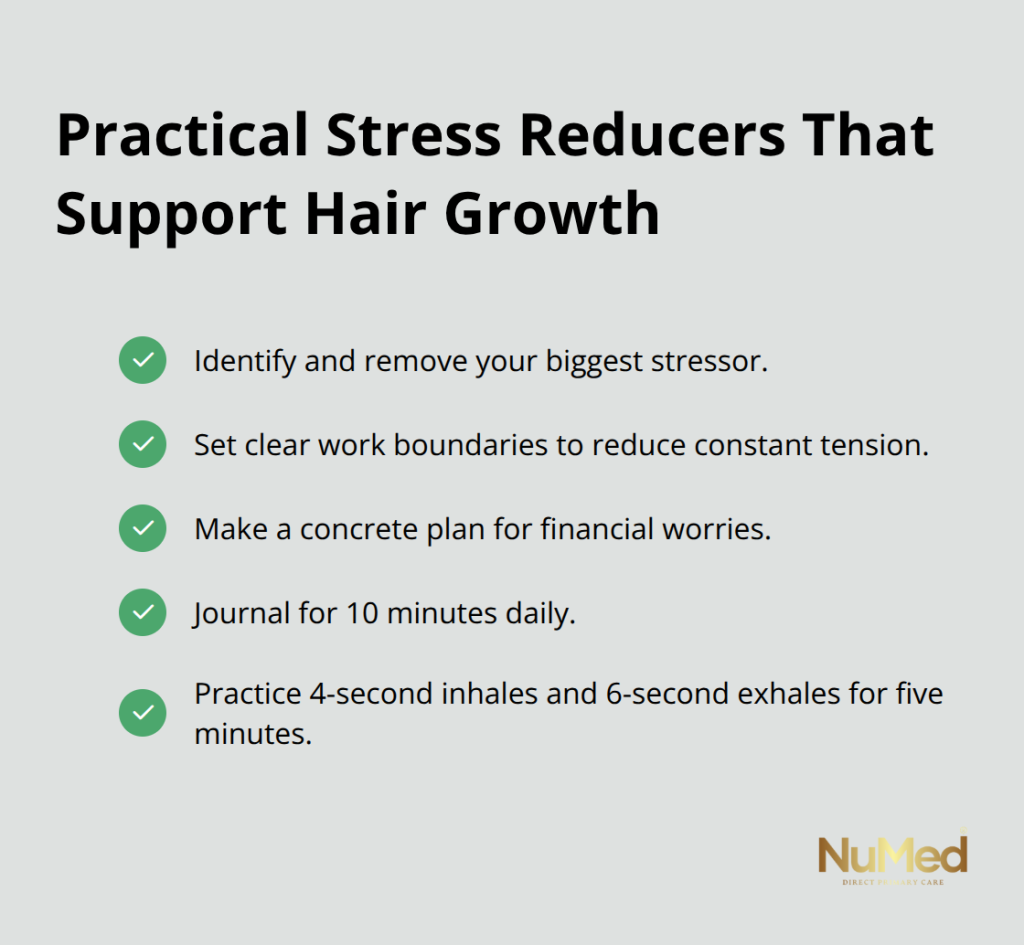
Stress directly disrupts your hair growth cycle through cortisol elevation. When cortisol rises, it shifts hair follicles from the growth phase into the resting phase, triggering telogen effluvium-a reversible shedding pattern where you lose 100–150 hairs daily instead of the normal 50–100. The American Academy of Dermatology confirms that chronic stress accelerates this process. The practical fix isn’t meditation alone; it’s identifying what actually causes your stress and removing it. If work creates constant tension, set boundaries. If financial worry keeps you awake, create a specific plan to address it. Journaling for 10 minutes daily reduces cortisol measurably, and breathwork, specifically 4-second inhales and 6-second exhales for five minutes, lowers cortisol within days.
Sleep Quality Restores Growth Hormone Production
During deep sleep, your body produces growth hormone, which supports hair follicle activity. Sleep deprivation leads to increased cortisol levels, which may initiate or worsen hair loss by inhibiting hair follicle stem cell function. Track your sleep for one week; if you’re averaging under seven hours or waking multiple times nightly, that’s your priority. Most people see reduced shedding within four weeks of improving sleep to seven to nine hours consistently.
Hydration Delivers Nutrients to Your Scalp
Dehydration reduces blood flow to your scalp, which means the nutrients you consume never reach your hair follicles effectively. Drink half your body weight in ounces daily-if you weigh 160 pounds, that’s 80 ounces. You’ll notice your skin improves first, but scalp hydration follows within two weeks.
Calorie Intake and Meal Composition Support Hair Maintenance
Extreme calorie restriction or crash dieting triggers hair loss within six to eight weeks because your body shuts down nonessential functions, including hair growth. If you eat 1,200 calories daily, your hair suffers regardless of nutrient quality. Eat to maintenance level or slightly above, not below. Pair protein with healthy fats and complex carbohydrates at each meal to stabilize blood sugar, which keeps cortisol low and supports steady nutrient absorption. A meal of chicken, sweet potato, and olive oil at lunch works better than a protein shake alone because the combination slows digestion and maintains stable insulin levels.
Moderate Exercise Increases Scalp Circulation
Exercise improves hair health primarily through circulation, not intensity. Thirty minutes of steady-state activity-walking, cycling, or swimming-at a pace where you can talk but not sing increases blood flow to your scalp consistently. High-intensity interval training raises cortisol acutely, which works against hair health if done daily. Three sessions of moderate exercise weekly, plus daily movement like walking, outperform five intense workouts that leave you exhausted and stressed. The Mayo Clinic notes that regular exercise also improves sleep quality and reduces anxiety, creating a multiplier effect on hair health. Start with daily 15-minute walks; this single change improves circulation, reduces stress, and supports sleep without creating additional cortisol burden. Most people notice reduced shedding within six to eight weeks of consistent moderate exercise combined with the nutritional foundations from the previous chapter.
These lifestyle shifts create the metabolic environment where your body can actually use the nutrients and natural ingredients you’re providing. The next chapter addresses specific hair loss causes and how targeted natural remedies address each one.
Common Hair Loss Causes and Natural Remedies
Androgenetic alopecia drives most hair loss cases, affecting roughly half the population over time, according to the American Academy of Dermatology, and it stems from genetics plus DHT sensitivity in your hair follicles. If your parents or grandparents experienced hair loss, your follicles likely carry the same genetic blueprint that makes them vulnerable to DHT shrinkage. This matters because it shapes your treatment strategy. Natural remedies alone cannot override genetics, but they can slow progression meaningfully when you target the actual mechanisms at work. DHT disrupts the communication between your dermal papilla cells and hair matrix cells, essentially starving follicles of growth signals.
Targeting DHT Sensitivity With Natural Approaches
Pumpkin seed oil works partly because it may inhibit 5-alpha reductase, the enzyme that converts testosterone into DHT. Apply it directly to your scalp three to four times weekly for at least four to six months because the hair growth cycle moves slowly. Red light therapy at wavelengths between 630 and 800 nanometers offers another mechanism-it boosts mitochondrial function in your dermal papilla cells, counteracting the oxidative stress that DHT creates. FDA-cleared at-home devices used for ten to twenty-five minutes, two to three times weekly, show documented benefits in androgenetic alopecia according to research in the Journal of the American Academy of Dermatology.
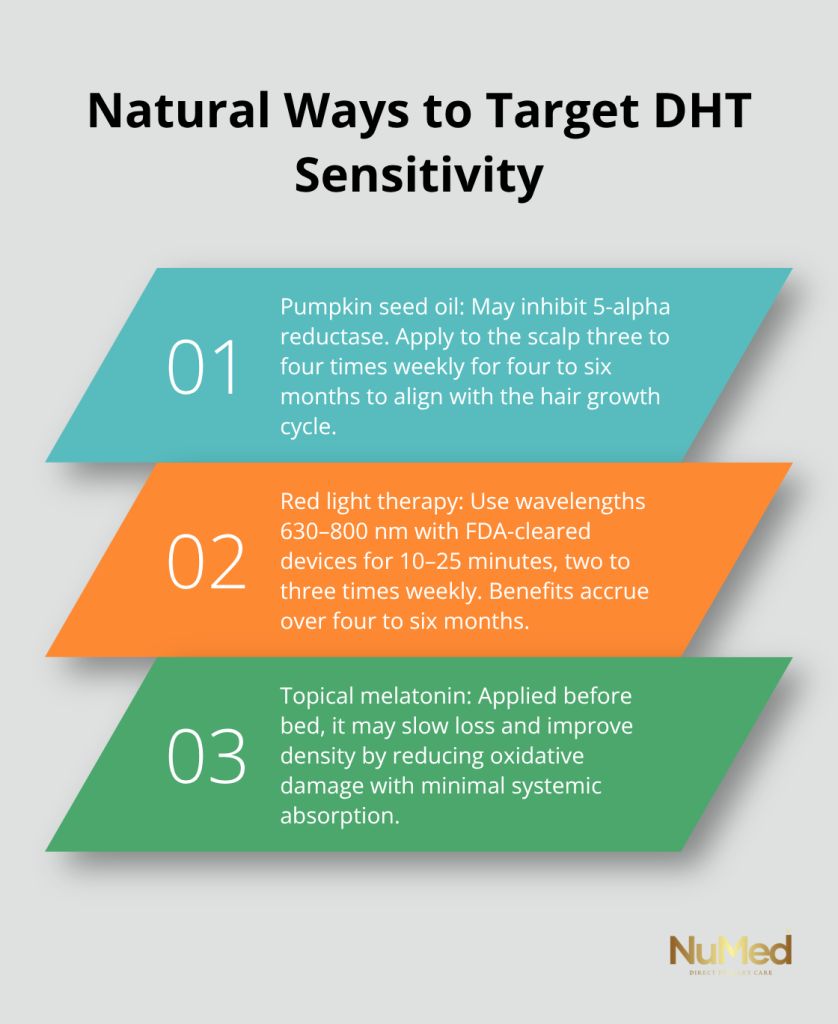
Results appear after four to six months, so patience matters.
Topical melatonin applied directly to your scalp before bed has shown potential to slow hair loss and increase density in small studies because it reduces oxidative damage and supports follicle health. The absorption into your bloodstream remains minimal at topical concentrations, making this safer than oral melatonin for sleep concerns. Combine these approaches-pumpkin seed oil, red light therapy, and melatonin-because they address DHT sensitivity through different pathways rather than relying on a single mechanism.
Iron and Thyroid Status Change Everything
Iron deficiency causes diffuse shedding, particularly in premenopausal women, and it’s reversible. If you lose more than one hundred hairs daily, feel persistently fatigued, or notice pale skin, request a ferritin test, not just a basic hemoglobin check. Ferritin measures your iron stores and predicts hair loss risk more accurately. The NIH Office of Dietary Supplements notes that correcting iron deficiency restores normal shedding within two to three months. Eat iron-rich foods like beef, spinach, and lentils with vitamin C sources like citrus or bell peppers to maximize absorption.
Thyroid dysfunction also masquerades as permanent hair loss when it’s actually reversible. Hypothyroidism slows your entire metabolic rate, including hair growth, while hyperthyroidism triggers telogen effluvium. Get your TSH, free T3, and free T4 tested if shedding worsens suddenly or if you experience weight changes, temperature sensitivity, or fatigue alongside hair loss. These conditions require medical management, not natural remedies alone. Once your thyroid function normalizes through appropriate treatment, hair regrowth typically follows within three to four months. Nutritional deficiencies compound thyroid problems because your thyroid requires selenium, iodine, and zinc to function properly. A single blood test revealing low ferritin or abnormal thyroid markers changes your entire approach from general supplementation to targeted correction.
Scalp Inflammation Demands Specific Treatment
Scalp conditions like seborrheic dermatitis, psoriasis, or folliculitis create inflammation that actively damages hair follicles. Visible flaking, redness, or persistent itching means you need dermatological evaluation, not just natural oils. Ketoconazole shampoo, used twice weekly, can reduce inflammation in seborrheic dermatitis when combined with scalp care, though it requires dermatologist guidance. Jojoba oil reduces scalp inflammation and improves your skin barrier, supporting better absorption of other treatments, but it works best as part of a comprehensive plan rather than alone.
Rosemary and peppermint essential oils, diluted in jojoba oil and applied three times weekly, have anti-inflammatory and antimicrobial properties that support scalp health. Always patch test behind your ear first because essential oils irritate sensitive skin. If you notice round patches of baldness, severe itching, or scalp redness that spreads, stop home treatments immediately and see a dermatologist. Alopecia areata and lichen planus are autoimmune conditions that require professional diagnosis and treatment because natural remedies cannot suppress the immune attack on your follicles. The American Academy of Dermatology emphasizes that postponing professional evaluation for patchy hair loss worsens outcomes. Scalp health determines whether your follicles can actually respond to the nutritional support and lifestyle changes you’ve implemented in previous chapters. Inflammation silences growth signals regardless of how much biotin or protein you consume.
Final Thoughts on Natural Therapy for Hair Growth
Natural therapy for hair growth works when you address the actual mechanisms driving your hair loss rather than chasing expensive supplements. Correcting nutritional deficiencies like iron or vitamin D, managing stress through practical strategies, and improving sleep quality produce measurable results within four to eight weeks. Pumpkin seed oil, red light therapy, and topical melatonin target DHT sensitivity through different pathways, while rosemary oil and scalp care address inflammation. Each intervention requires four to six months of consistent use before results become obvious because your hair growth cycle operates on that timeline.
Start by identifying your specific hair loss cause through testing rather than guessing. Get your iron, vitamin D, and thyroid levels checked, assess your stress level and sleep quality honestly, then layer your approach by fixing the nutritional deficiency, implementing the lifestyle change, and adding the targeted natural remedy that addresses your particular mechanism. Skip the expensive supplements that don’t match your actual needs.
We at NuMed DPC help you identify root causes through comprehensive lab work and personalized health coaching rather than recommending generic protocols. Our functional medicine approach combines evidence-based natural therapies with lifestyle strategies tailored to your situation, and we’re ready to discuss your specific case with a practitioner who understands how nutrition, stress, and natural ingredients work together to restore hair health.