

Chronic disease rates continue climbing, with conditions like type 2 diabetes and heart disease affecting millions. Many patients find themselves caught between two compelling approaches: lifestyle medicine versus functional medicine, each offering distinct pathways to better health.
At NuMed DPC, we recognize that understanding these differences matters. This guide breaks down how each approach works and which might align with your health goals.
What Lifestyle Medicine Actually Does
Lifestyle medicine is a medical specialty that treats chronic diseases by changing how people live, not by adding more medications. The American College of Lifestyle Medicine defines it as an evidence-based approach that applies therapeutic lifestyle interventions to treat, reverse, and prevent chronic conditions like cardiovascular disease, type 2 diabetes, and obesity. About 60 percent of Americans have at least one chronic disease, contributing to nearly 4.5 trillion dollars in annual healthcare costs, according to ACLM data. Lifestyle medicine directly addresses this crisis by targeting the root causes of these conditions rather than managing symptoms alone. The specialty rests on six pillars: optimal nutrition, physical activity, restorative sleep, stress management, connectedness, and avoiding risky substances like tobacco and excessive alcohol. Research from ACLM suggests lifestyle medicine can impact up to 80 percent of chronic diseases, making it far more powerful than most people realize.
The Six Pillars in Real Numbers
The evidence for each pillar is concrete. Adults should try at least 150 minutes of moderate aerobic activity per week, plus muscle-strengthening activities, according to standard ACLM guidelines. Sleep matters enormously; seven to nine hours nightly supports healing and reduces your risk of cardiovascular disease and dementia. Nutrition focuses on minimally processed vegetables, fruits, whole grains, legumes, nuts, and seeds rather than restrictive dieting. Stress reduction and improved connectedness lower mortality risk significantly. Clinician burnout sits at 62 percent according to physician surveys, which lifestyle medicine addresses through more sustainable care models that remove the pressure on doctors to see dozens of patients daily and instead build time for meaningful conversations about how patients actually live.
Why Prevention Beats Treatment Every Time
Lifestyle medicine practitioners spend time understanding your health story, identifying patterns, and teaching you to make changes that stick. A 2019 study in JAMA Network Open involving more than 7,000 people found that those receiving functional medicine care, which shares lifestyle medicine’s root-cause philosophy, reported significantly better improvements in physical health and quality of life at six months compared to traditional family medicine. The difference matters because treating the disease after it develops costs far more than preventing it. Insurance coverage for lifestyle interventions is improving, though some services may still require out-of-pocket payment. The approach demands active participation from patients, which means it works best for people ready to change their daily habits rather than those seeking quick pharmaceutical fixes.
How Lifestyle Medicine Differs from Symptom Management
Lifestyle medicine practitioners take a fundamentally different approach than conventional medicine. They view chronic disease not as an isolated problem requiring a specific drug, but as a signal that daily habits need to shift. This perspective changes everything about how treatment unfolds. Rather than prescribing a medication and scheduling a follow-up in three months, lifestyle medicine clinicians work with you to understand what drives your condition and what changes will actually stick. The model requires patience and commitment from both patient and provider, but the payoff extends far beyond symptom relief-it addresses the actual mechanisms that created the disease in the first place. Understanding this distinction helps explain why functional medicine, our next topic, takes a similarly detailed approach to uncovering what drives your health problems.
How Functional Medicine Views Your Body Differently
Functional medicine starts with a premise that lifestyle medicine shares but takes further: your body operates as an interconnected system, not a collection of isolated problems. Rather than asking what drug treats your symptom, functional medicine practitioners ask why your body developed that symptom in the first place.
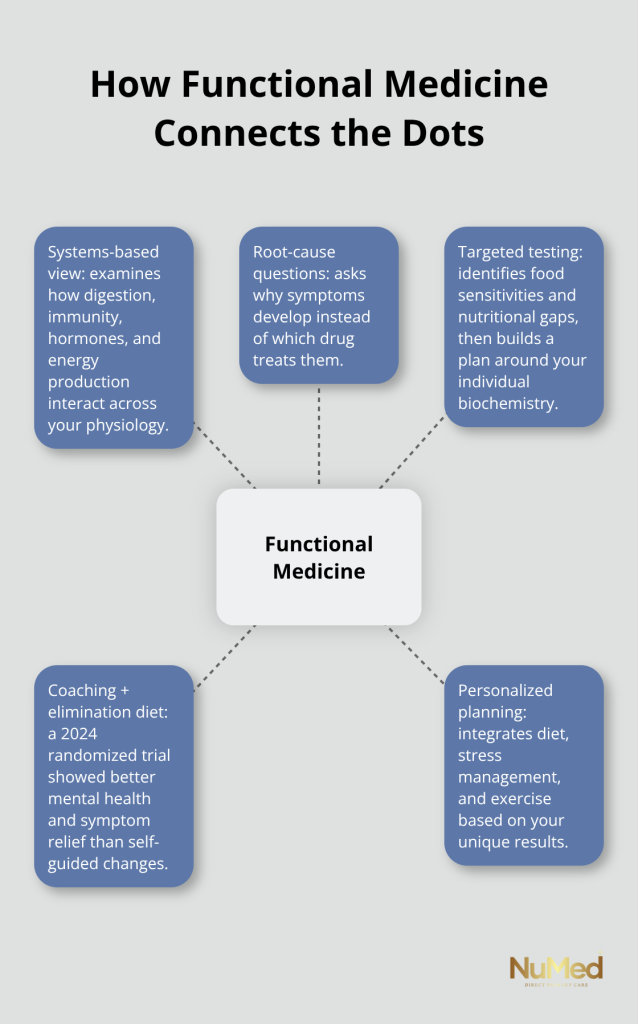
The Institute for Functional Medicine describes this as a systems-based approach that examines how digestion, immunity, hormones, and energy production interact across your entire physiology. A 2024 randomized trial published by D’Adamo and colleagues showed that functional medicine health coaching combined with an elimination diet produced better mental health and symptom relief than self-guided dietary changes alone. This matters because functional medicine doesn’t simply tell you to eat better-it identifies your specific food sensitivities and nutritional gaps through targeted testing and then builds a plan around your individual biochemistry.
The Comprehensive Initial Assessment
The initial consultation typically runs 90 minutes to two hours, far longer than a standard office visit. Practitioners map your complete health timeline, trace when symptoms began, and connect seemingly unrelated issues to common underlying drivers like chronic inflammation, hormonal imbalances, or gut dysfunction. This depth of assessment distinguishes functional medicine from conventional approaches that focus on isolated complaints. Your practitioner then creates a treatment strategy tailored entirely to your results and your life, blending targeted supplementation, specific dietary changes, stress management protocols, and customized exercise recommendations.
Why Testing Reveals What Standard Labs Miss
Functional medicine relies on specialized diagnostic tools that conventional medicine rarely orders. While a standard physical might include a basic metabolic panel and thyroid test, functional practitioners often use gut microbiome analysis, food sensitivity panels, advanced hormone testing, and inflammatory markers to identify imbalances that routine labs overlook. A single functional medicine consultation costs between $465 and $620 according to real-world clinic pricing, and many practitioners offer monthly membership plans to spread costs. This investment reflects the depth of assessment and personalized treatment planning that follows. Unlike conventional medicine’s one-size-fits-all approach, functional medicine acknowledges that your unique genetics, environment, and lifestyle created your health problems, so your solution must be equally unique.
Understanding Your Costs and Coverage
Insurance coverage varies significantly-some practitioners operate hybrid models where certain services are covered while others require out-of-pocket payment, so clarifying costs upfront prevents surprises. HSAs and FSAs can help offset expenses for eligible services. The personalized nature of functional medicine means treatment plans differ dramatically from patient to patient, which also affects total costs. Some practitioners include follow-up visits and progress tracking in their initial fee, while others charge separately for ongoing care adjustments. Understanding these financial details helps you make informed decisions about whether functional medicine fits your budget and health priorities.
This comprehensive, individualized approach to diagnosis and treatment sets functional medicine apart from lifestyle medicine’s broader focus on the six pillars. The next section examines how these two philosophies actually compare when you’re deciding which path makes sense for your specific health situation.
How These Two Approaches Actually Differ in Practice
Lifestyle medicine and functional medicine share a commitment to root-cause thinking, but they diverge significantly in execution and emphasis. Lifestyle medicine positions the six pillars-nutrition, exercise, sleep, stress management, connectedness, and substance avoidance-as the primary intervention for chronic disease. A practitioner using this model spends time teaching you how to implement these changes and tracks your progress through standard clinical markers like blood pressure, cholesterol, and blood sugar. Functional medicine, by contrast, treats lifestyle changes as one component within a much broader diagnostic framework.
Where the Treatment Philosophy Splits
A lifestyle medicine clinician might recommend 150 minutes of weekly aerobic activity and a plant-forward diet for your type 2 diabetes. A functional medicine practitioner orders advanced testing to identify whether your condition stems from insulin resistance, chronic inflammation, dysbiosis, or hormonal imbalance-then tailors your nutrition and exercise plan to address that specific driver. The financial reality reflects this difference: lifestyle medicine visits through standard primary care often cost less because they rely on conventional assessments, whereas functional medicine’s specialized testing and longer initial consultations typically range from $465 to $620 for a 90-minute to two-hour session. This matters when deciding where to invest your healthcare dollars.
How Testing Strategies Separate These Approaches
Functional medicine practitioners often order advanced microbiome testing, comprehensive stool analysis, food sensitivity panels, and specialized hormone assessments that standard insurance rarely covers, meaning you typically pay out-of-pocket or through HSA/FSA accounts. Lifestyle medicine relies on basic labs like CBC, metabolic panel, and lipid panels that most insurance covers because they’re diagnostic tools for established conditions. A clinical trial showed that functional medicine health coaching plus an elimination diet outperformed self-guided dietary change for symptom relief. That trial illustrates functional medicine’s strength: identifying your specific food sensitivities rather than recommending a generic elimination diet. Lifestyle medicine wouldn’t typically order food sensitivity testing; instead, practitioners guide you through general dietary principles and monitor how you respond.
The Supplement Question
Functional practitioners frequently recommend targeted formulations, specific probiotic strains matched to your microbiome results, or nutrient-dense supplements addressing identified deficiencies. Lifestyle medicine practitioners generally recommend whole-food sources first and reserve supplements for clear deficiencies. Both approaches integrate nutrition and exercise, but functional medicine personalizes these based on your individual biochemistry, while lifestyle medicine applies evidence-based standards at the population level.
Choosing Based on Your Preferences and Needs
If you want concrete data showing exactly what’s wrong before committing to change, functional medicine’s testing-first model appeals. If you prefer straightforward behavioral guidance without extensive lab work, lifestyle medicine’s focus on the six pillars moves faster and costs less upfront. Neither approach is wrong; lifestyle medicine excels for patients ready to commit to behavioral change without extensive testing, while functional medicine suits those with complex, interconnected symptoms or those who want laboratory confirmation of what drives their health problems before investing time and money in treatment modifications.
Final Thoughts
Both lifestyle medicine and functional medicine reject the conventional model of treating symptoms in isolation. They share a commitment to understanding what drives your health problems rather than simply masking them with medications. The real difference lies in how deeply each approach investigates your individual biology before recommending changes-lifestyle medicine vs functional medicine ultimately comes down to matching your preferences and health situation to the right diagnostic depth and cost structure.
Lifestyle medicine works exceptionally well for patients ready to commit to behavioral change without extensive testing, while functional medicine serves those with complex, interconnected symptoms or those who want laboratory confirmation of underlying imbalances before investing time in treatment modifications. Many patients benefit from elements of both approaches: the behavioral foundation of lifestyle medicine combined with functional medicine’s personalized diagnostic insights. Modern healthcare increasingly recognizes that prevention and root-cause thinking deliver better outcomes than reactive disease management.
Direct primary care models amplify this shift by removing insurance barriers and creating space for longer, more meaningful conversations about how you actually live. At NuMed DPC, we integrate functional medicine, health coaching, and extensive lab services within a direct primary care framework designed specifically to address root causes and prevent illness before it develops. Your choice between these approaches depends on your readiness for change, your budget, and whether you want detailed laboratory data before committing to a treatment plan.