

Functional medicine has gained popularity over the past decade, but a critical question remains: Is functional medicine evidence-based?
At NuMed DPC, we believe the answer isn’t simple. The reality sits somewhere between the rigorous clinical trials that conventional medicine demands and the real-world results that patients experience every day.
What Functional Medicine Actually Is
Functional medicine operates on a fundamental premise that conventional medicine often misses: the human body functions as an integrated system where dysfunction in one area cascades through others. A patient arrives complaining of fatigue, but the root issue sits in their gut microbiome, their sleep patterns, or their inflammatory load from dietary choices. Conventional medicine typically runs standard blood work, finds nothing alarming, and sends the patient home.
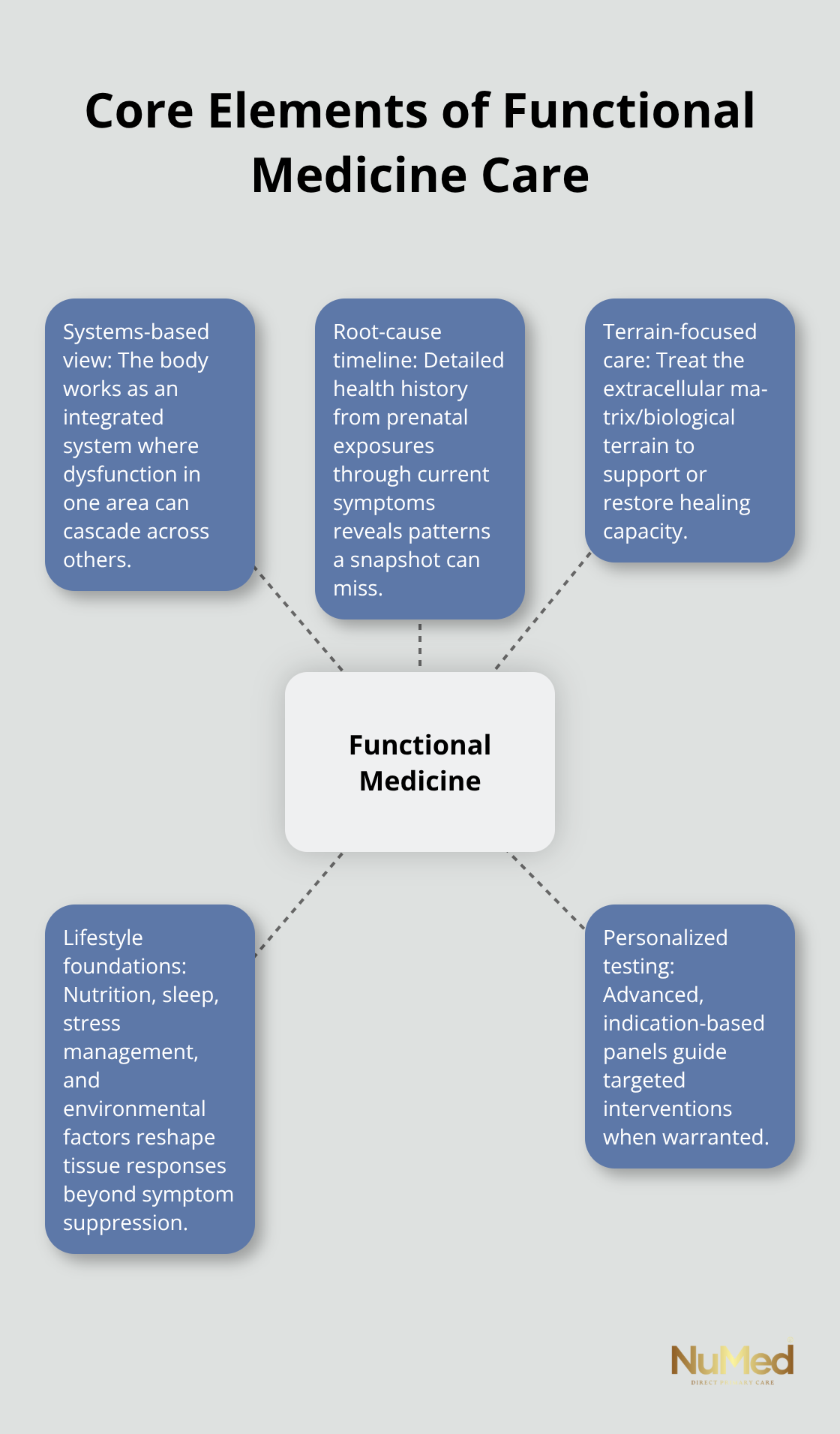
Functional medicine takes a different path entirely. It demands a thorough timeline of the patient’s health history, from prenatal exposures through current symptoms, to reveal patterns invisible in a single snapshot. The approach treats the extracellular matrix, or biological terrain, as a dynamic environment that either supports or sabotages healing. When you address the terrain itself through nutrition, sleep, stress management, and environmental factors, tissues respond differently than they do to symptom suppression alone.
How Functional Medicine Identifies Root Causes
The functional medicine framework relies on three core diagnostic tools that shift how practitioners think about illness. The ATM model maps Antecedents, Triggers, and Mediators to pinpoint what actually drives dysfunction rather than just naming the disease. The functional medicine matrix organizes clinical data into seven systemic domains: digestion, immune and inflammation status, energy metabolism, detoxification capacity, circulation, communication between body systems, and structural integrity. This isn’t theoretical categorization-it guides which interventions matter most for each patient. A practitioner using this matrix recognizes that a patient’s migraine headaches might stem from dysbiosis and inflammatory signaling through the gut-brain axis, not merely from vascular dysfunction. Research suggests dysbiosis correlates directly with pain intensity across fibromyalgia and irritable bowel syndrome, making microbiome restoration a legitimate intervention rather than a supplement afterthought.
Where Functional and Conventional Medicine Diverge
The split between these approaches reveals itself most clearly in appointment structure and testing philosophy. Conventional medicine excels at acute emergencies and infectious diseases through standardized protocols and rapid diagnosis. Functional medicine typically involves longer initial consultations-often 60 to 90 minutes-where practitioners explore lifestyle, diet, sleep, stress, environmental exposures, and personal health goals in depth. Conventional practitioners order standard panels; functional medicine clinicians select advanced testing based on clinical indications, including hormone panels and gut microbiome analyses when warranted.
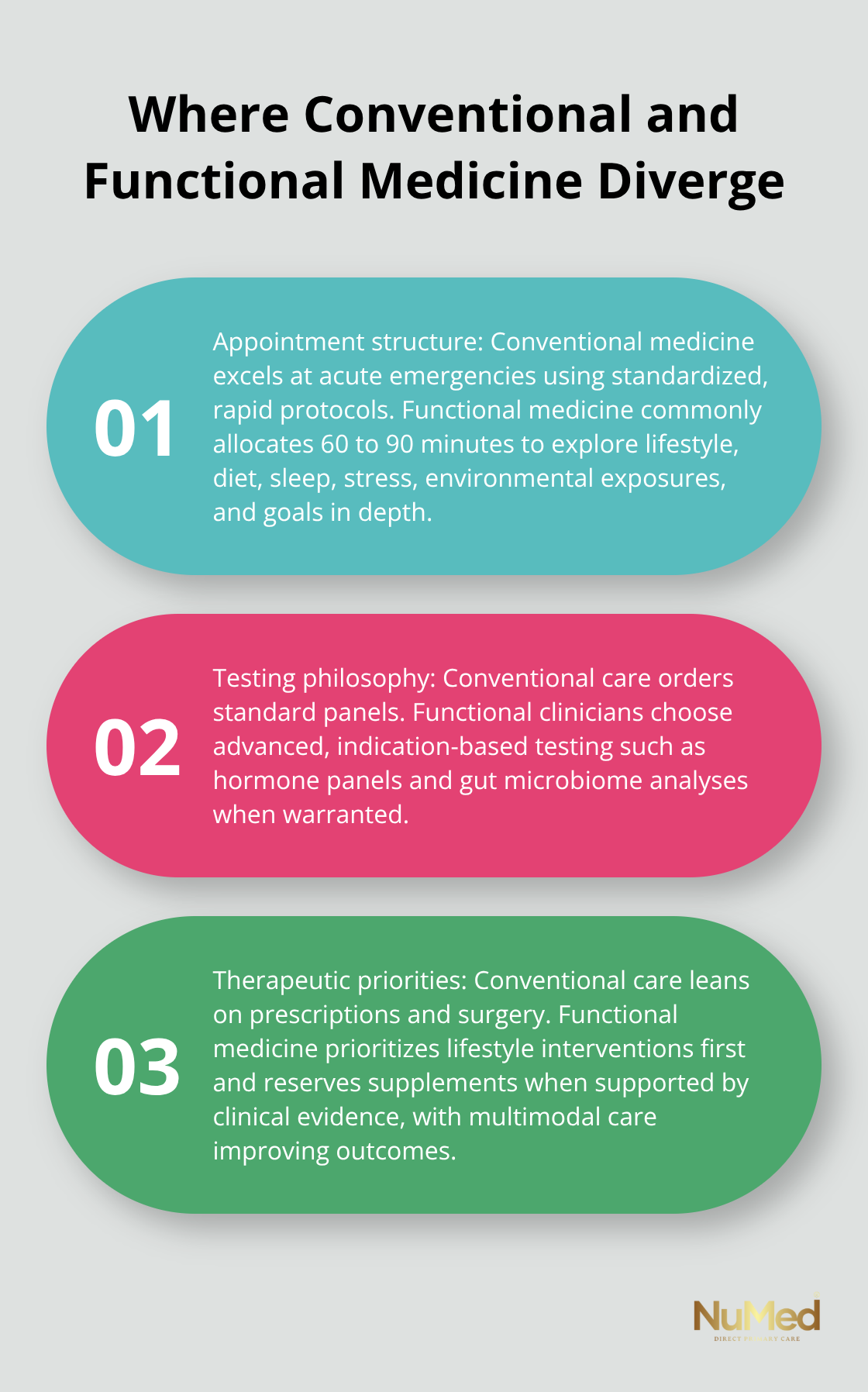
Conventional care leans heavily on prescription medications and surgery as primary tools. Functional medicine prioritizes lifestyle interventions first-nutrition, movement, sleep optimization, stress reduction, and social connection-reserving supplements only when clinical evidence supports them. Evidence indicates that multimodal trials consistently show greater pain relief and better functional outcomes when patients address nutrition, sleep, and stress alongside other interventions compared to standard single-modality care.
The Evidence Question That Matters Most
These differences raise an important question about evidence itself. What counts as proof? Conventional medicine demands large-scale randomized controlled trials with standardized protocols applied to thousands of patients. Functional medicine operates within a different framework-one that emphasizes personalized treatment plans tailored to individual biology, genetics, and life circumstances. This personalization makes traditional trial design difficult (if not impossible) because no two patients receive identical interventions. Yet real-world outcomes tell a compelling story. Patients with chronic conditions-fibromyalgia, autoimmune disorders, metabolic dysfunction-report significant improvements when practitioners address root causes rather than suppress symptoms. The question shifts from “Does functional medicine work?” to “Does functional medicine work for this patient, in this context, with these specific root causes?” That distinction matters enormously when evaluating whether functional medicine qualifies as evidence-based healthcare.
What the Research Actually Shows
Multimodal Evidence Supports Functional Outcomes
The evidence supporting functional medicine exists, but it looks different from what conventional medicine produces. Multimodal studies consistently demonstrate superior outcomes when patients address nutrition, sleep, stress, and inflammation alongside other interventions. Research published in the American Psychologist found that integrated treatment approaches yielded greater pain relief and better functional recovery than single-modality care across chronic pain populations. In fibromyalgia specifically, protocols combining anti-inflammatory nutrition, targeted supplementation, sleep optimization, and stress reduction produced large average reductions in pain compared to standard pharmaceutical management alone.
The Gut-Brain Connection Proves Measurable
The gut-brain axis research proves this connection isn’t theoretical; dysbiosis correlates directly with pain intensity in fibromyalgia and irritable bowel syndrome, according to Pain journal research, making microbiome restoration a measurable intervention. Diet-inflammation interactions matter too. Studies show that reducing pro-inflammatory dietary fats while increasing omega-3 intake reduces migraine frequency and intensity. When practitioners address the extracellular matrix through proper hydration, targeted nutrients, and reduced inflammatory load, tissue function improves measurably.
Why Traditional Trials Miss Functional Medicine’s Impact
The limitation sits in trial design, not in effectiveness. Functional medicine’s personalized approach makes traditional randomized controlled trials nearly impossible-no two patients receive identical interventions because treatment targets each person’s specific root causes. Conventional research demands standardization; functional medicine demands individualization. This doesn’t disqualify functional medicine from being evidence-based; it simply means the evidence accumulates through observational studies, clinical outcomes tracking, and patient-reported measures rather than large-scale trials with identical protocols.
Patient-Reported Outcomes Tell the Real Story
The NIH developed PROMIS patient-reported outcome measures precisely because real-world health improvements don’t always fit conventional metrics. When a patient’s fatigue resolves through addressing sleep architecture and circadian rhythm dysfunction, that outcome matters clinically even if it appeared in no randomized trial. These measures capture what standardized blood work cannot-the functional improvements that patients experience and that drive their health decisions.
Where Functional Medicine Delivers Results
Functional medicine works best for chronic conditions where conventional approaches have stalled-autoimmune disorders, metabolic dysfunction, fibromyalgia, and treatment-resistant conditions, where root cause identification produces measurable shifts in symptoms and function. This distinction between conditions that respond to symptom suppression and those that require root cause investigation shapes where functional medicine practitioners focus their efforts and where patients should expect the strongest outcomes.
Where Functional Medicine Falls Short
The Research Gap That Matters
Functional medicine faces legitimate obstacles that practitioners and patients cannot ignore. The research supporting functional medicine exists, but it operates within constraints that conventional medicine simply does not face. Large-scale randomized controlled trials remain sparse because personalized treatment protocols resist standardization. When a patient’s intervention involves specific dietary changes, targeted supplementation based on their microbiome analysis, sleep architecture correction, and stress management tailored to their life circumstances, replicating that exact protocol across thousands of patients becomes impractical. This gap matters. Insurance companies demand evidence from randomized trials before covering treatments, and most functional medicine interventions fall outside coverage because the evidence doesn’t fit their template.
The Cost Barrier That Excludes Patients
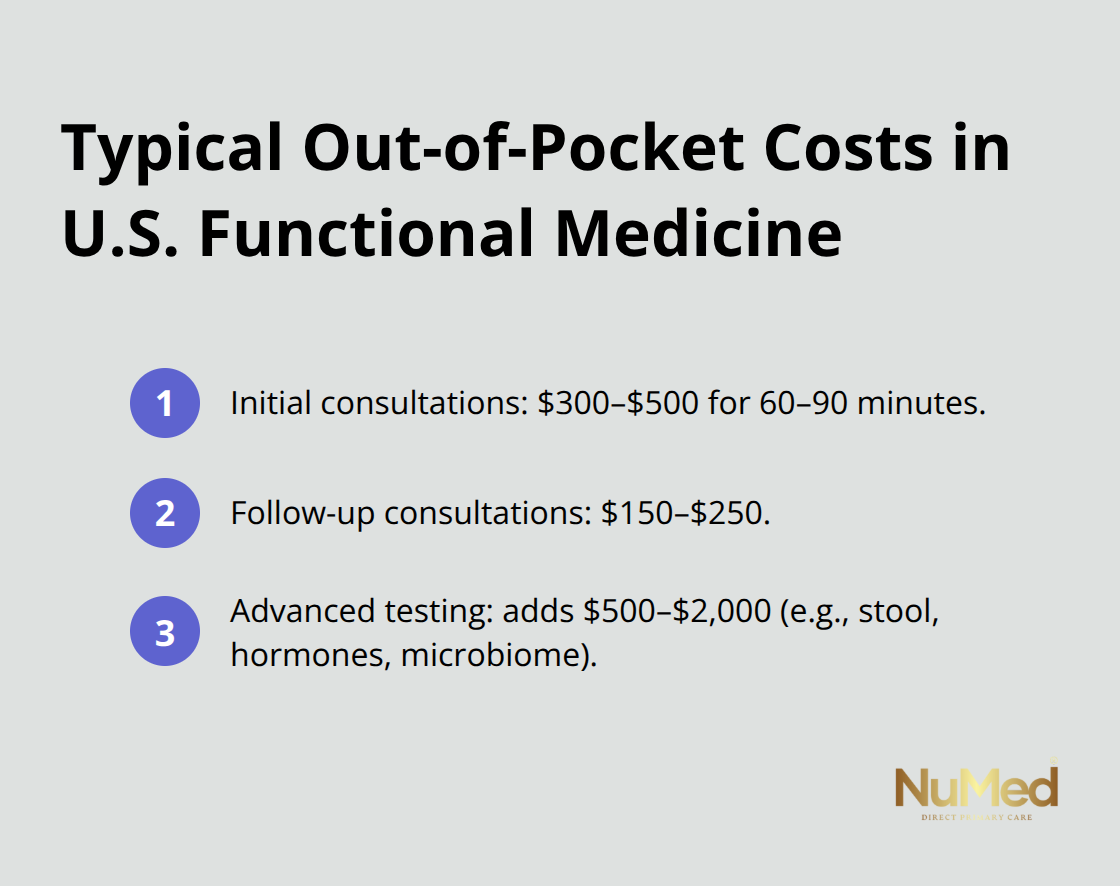
Out-of-pocket expenses create a significant obstacle for many patients. Initial functional medicine consultations typically cost $300 to $500 for visits lasting 60 to 90 minutes, with follow-up consultations ranging from $150 to $250. Advanced testing like comprehensive stool analysis, hormone panels, and microbiome sequencing can add $500 to $2,000 to the total cost. For patients without substantial savings, this financial barrier makes functional medicine inaccessible, regardless of how effective it might be for their condition. Insurance rarely covers these services, leaving patients to pay entirely out of pocket.
Credentialing Problems Undermine Trust
The credentialing problem cuts equally deep. Functional medicine lacks standardized training requirements across practitioners. A physician might complete a weekend seminar in functional medicine and market themselves as a functional medicine specialist, while another invests two years in rigorous postgraduate training through the Institute for Functional Medicine. This variability means patients cannot reliably assess whether their practitioner possesses genuine expertise or simply adopted functional medicine language. Board certification in functional medicine exists through the American Board of Functional Medicine, but many practitioners operate without it.
How to Evaluate Practitioner Qualifications
Patients selecting a functional medicine provider should verify specific credentials, training duration, and whether the practitioner maintains active involvement in continuing education. The inconsistency across the field undermines functional medicine’s credibility. Functional medicine works best when delivered by practitioners with deep training and a genuine commitment to evidence-informed practice, not practitioners treating it as a profitable marketing angle. Look for practitioners who can articulate their training background, explain their diagnostic approach, and demonstrate ongoing professional development in the field.
Final Thoughts
Functional medicine and conventional medicine work best when they operate together rather than in opposition. Conventional medicine excels at acute emergencies, infectious diseases, and rapid diagnosis through standardized protocols, while functional medicine addresses the chronic conditions that conventional approaches often struggle with-autoimmune disorders, metabolic dysfunction, treatment-resistant pain, and fatigue with unclear origins. The question of whether functional medicine is evidence-based healthcare shifts when practitioners integrate both approaches strategically, based on what each patient actually needs.
Real-world outcomes demonstrate that this integration works effectively. Patients with fibromyalgia, autoimmune conditions, and chronic pain report significant improvements when practitioners combine conventional diagnostics with functional medicine’s root-cause investigation. Multimodal evidence proves that addressing nutrition, sleep, stress, and inflammation alongside conventional care produces better functional outcomes than either approach alone, yet conventional medicine’s strength in acute care remains irreplaceable-a patient experiencing a heart attack needs emergency medicine, not a consultation about dietary patterns.
Functional medicine excels where conventional medicine reaches its limits (when standard blood work shows nothing wrong but a patient remains exhausted, when medications suppress symptoms without addressing underlying dysfunction, or when chronic conditions resist standard treatment protocols). These situations demand the personalized, systems-based thinking that functional medicine provides. If you’re interested in exploring how functional medicine might address your health concerns, learn more about our comprehensive approach to wellness.