
Functional medicine doctors operate differently from conventional practitioners, which means their credentials tell a different story. At NuMed DPC, we believe verifying a functional medicine doctor’s credentials is one of the smartest decisions you can make for your health.
The right credentials signal that your doctor has invested in training beyond standard medical school. This guide walks you through exactly how to check those qualifications and ask the right questions.
Why Credentials Matter in Functional Medicine
Functional medicine training operates on a completely different foundation than conventional medical education. A doctor who graduates from medical school and completes a standard residency has not received formal training in functional medicine. The Institute for Functional Medicine offers the gold standard postgraduate training through its Functional Medicine Certification Program, which requires practitioners to complete specific coursework, clinical experience, and examination. This distinction matters enormously because functional medicine demands a different diagnostic framework-one that searches for root causes rather than managing symptoms. When you verify credentials, you confirm that your doctor has invested hundreds of hours in learning how to connect metabolic dysfunction, gut health, hormonal patterns, and immune function to your presenting symptoms. Without this specialized training, a doctor may practice conventional medicine with a functional medicine label, which means you could receive standard pharmaceutical interventions instead of the root-cause investigation you’re seeking.
What Separates Credentialed Practitioners From the Rest
Credentialed functional medicine doctors have completed rigorous postgraduate training that goes far beyond a weekend seminar or online course. The Institute for Functional Medicine’s certification program requires practitioners to demonstrate competency in systems-based medicine, root-cause analysis, and the integration of conventional diagnostics with functional approaches. A practitioner with legitimate credentials can explain exactly how they connect your symptoms to underlying dysfunction across multiple body systems. They understand when to order advanced testing and when standard labs suffice. They know how to screen for drug-supplement interactions and recognize when a patient needs urgent conventional care.
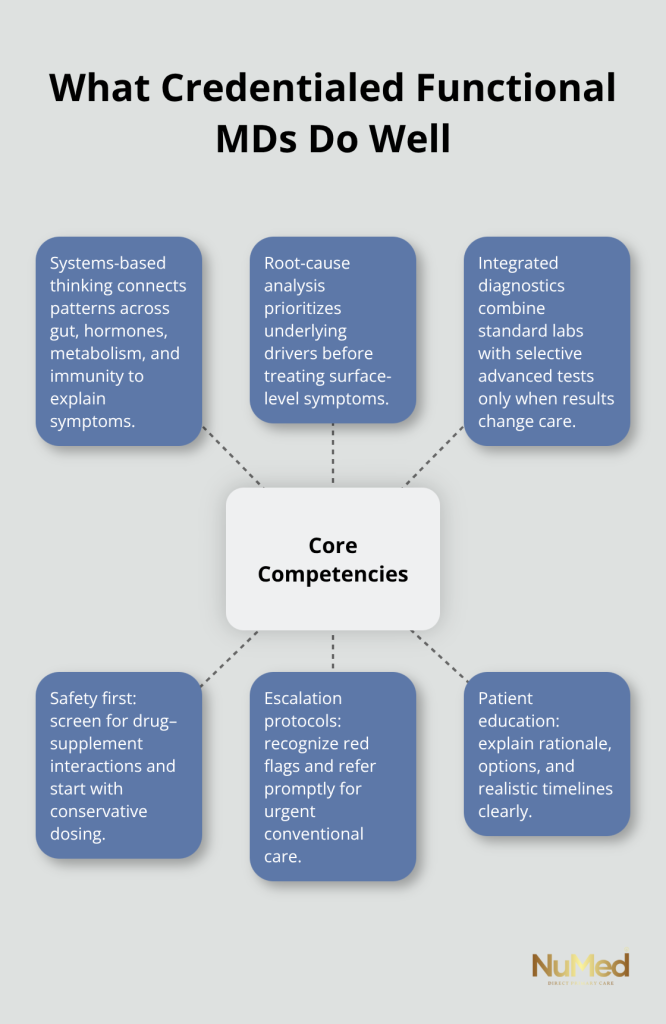
Practitioners without this training often lack the medical foundation to safely integrate both approaches, which puts your health at risk.
The Real Cost of Unverified Credentials
Patients who skip credential verification often pay twice, once in money and once in time. A practitioner without proper functional medicine training may order expensive advanced tests that don’t inform treatment decisions, recommend supplements without safety review, or miss critical conventional diagnoses because they lack the medical foundation to integrate both approaches. The National Practitioner Data Bank and state medical boards maintain records of disciplinary actions, malpractice claims, and license suspensions, and these records exist for your protection. You should verify current licensure in your state through the Federation of State Medical Boards, then cross-check any claimed board certifications directly with ABMS.org or the relevant certifying body’s website.
Red Flags That Signal Credential Problems
Red flags include vague credential descriptions, missing license numbers, credentials from unaccredited programs, or reluctance to provide verification documents. A credentialed functional medicine doctor will have no problem giving you official license numbers and board certification details because those credentials represent genuine expertise and accountability. If a practitioner claims functional medicine training but cannot name the program they completed or provide a way to verify it, that absence itself tells you something important. Practitioners who advertise credentials without offering transparent verification pathways often lack the confidence that comes with legitimate training.
How to Start Your Verification Process
The verification process begins with a simple request: ask your prospective doctor for their license number, board certifications, and the names of the programs where they completed postgraduate training. Write down these details and verify them independently through official channels rather than relying on the practitioner’s website or marketing materials. This approach takes 15 minutes and protects you from practitioners who misrepresent their qualifications. Once you have confirmed their credentials, you can move forward with confidence knowing that your doctor has invested in the specialized training that functional medicine demands.
Verify Credentials Through Official Channels
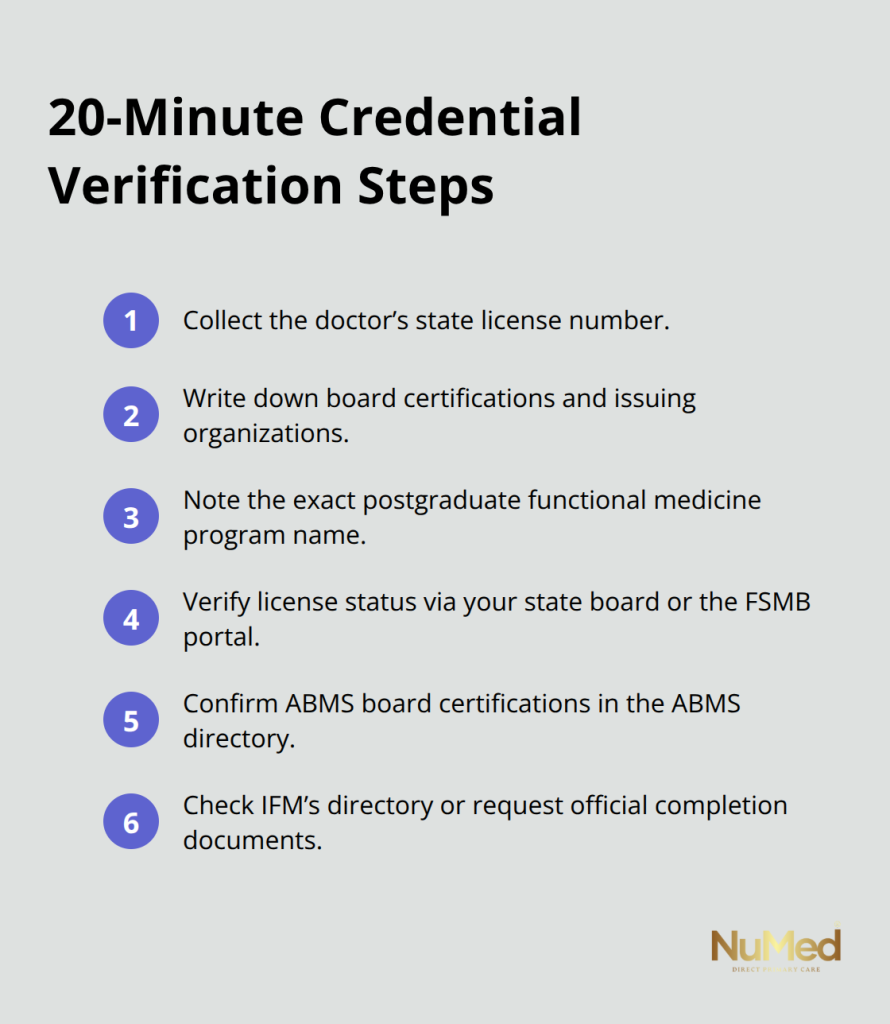
Request three specific items from any functional medicine doctor you’re considering: their state medical license number, their board certifications with issuing organization names, and the name of the postgraduate functional medicine program where they completed training. Do not rely on their website or marketing materials to confirm these details. Instead, take those numbers and names and verify them independently through official sources. This 20-minute process is the single most effective way to separate credentialed practitioners from those who simply market themselves as functional medicine doctors without the training to back it up.
Check State Medical Licensure First
State medical licensure is your first checkpoint and the easiest to verify. Visit your state medical board’s website or use the Federation of State Medical Boards portal to confirm the doctor holds an active, unrestricted license in your state. Pay close attention to the license status field-it should say active, not inactive, suspended, or probationary. If the doctor practices telemedicine, verify they hold licensure in your state specifically, since telehealth regulations vary by state. This single step eliminates practitioners who lack basic medical credentials.
Verify Conventional Board Certifications
Confirm board certifications through ABMS.org if they claim conventional board certification in a specialty like internal medicine or family medicine. The ABMS database lists nearly one million active board-certified physicians and allows you to search by name and verify certification status, expiration dates, and any disciplinary actions. If a functional medicine doctor claims ABMS certification, that credential should appear in this searchable directory. Many functional medicine practitioners hold conventional board certifications alongside functional medicine training, which signals they maintain both conventional medical knowledge and specialized functional training.
Search Functional Medicine Credential Directories
Functional medicine certifications require a different verification approach since the Institute for Functional Medicine manages the gold standard IFMCP credential. Search the IFM’s certified practitioner directory on their website and look for the doctor’s name with the IFMCP designation. If they claim functional medicine training but do not appear in IFM’s official directory, ask which program they completed and request official completion documentation. Verify functional medicine credentials through official channels as well.
Request Specific Program Names and Documentation
A credentialed functional medicine doctor should name their training program specifically-whether it’s the Institute for Functional Medicine, a fellowship program at an academic medical center, or another accredited postgraduate program-and should welcome your independent verification. If they hesitate or provide vague answers, that response tells you something important about their qualifications. Ask them to provide official completion documentation from the program they claim to have finished. This direct approach eliminates ambiguity and confirms whether their credentials hold up under scrutiny. Once you have verified their licenses and certifications through official channels, you can move forward with confidence knowing that your doctor has invested in the specialized training that functional medicine demands.
What Questions Reveal a Doctor’s Real Expertise
The conversation you have with a functional medicine doctor before you commit to care tells you far more than any credential on paper. A doctor with genuine functional medicine training will answer your questions with specificity, grounding their approach in systems-based thinking rather than generic wellness talk. Ask them to walk you through their diagnostic process for a patient presenting with your health concern. A credentialed functional medicine doctor will explain how they connect symptoms across multiple body systems-gut dysfunction, hormonal imbalance, metabolic stress, and immune dysregulation-rather than treating each symptom in isolation.
How They Approach Testing and Treatment Decisions
They should describe the standard labs they order first, explain when and why advanced testing like SIBO breath testing or DUTCH hormone panels becomes necessary, and articulate how test results actually change treatment decisions. If they cannot explain this framework clearly or immediately jump to expensive advanced testing without justifying it, that response signals insufficient training. Ask them specifically about their experience treating your condition. A doctor who has managed dozens of patients with your health issue will describe patterns they’ve observed, common underlying causes they’ve found, and realistic timelines for improvement.
They should mention specific conditions they screen for based on your presenting symptoms. For example, a functional medicine doctor treating fatigue will systematically ask about thyroid dysfunction, iron status, vitamin D deficiency, sleep quality, and gut health before ordering anything advanced. If they give vague answers or suggest testing without explaining the clinical reasoning, they lack the depth of experience that credentials are supposed to represent.
How They Integrate Conventional and Functional Medicine
Ask your prospective doctor how they integrate conventional medicine with functional approaches and what happens when conventional diagnosis becomes necessary. A truly credentialed functional medicine doctor understands that some symptoms require urgent conventional care-chest pain, severe neurological changes, acute infections-and they should have clear protocols for recognizing and referring those situations. Ask them directly about their approach to supplements and medications. A practitioner with proper training will discuss how they screen for drug-supplement interactions, start patients at conservative doses, and monitor for adverse effects.
They should explain their philosophy on when supplements support healing versus when medications are appropriate. This distinction separates practitioners who understand both systems from those who favor one approach over the other without medical justification.
Follow-Up Plans and Collaborative Care
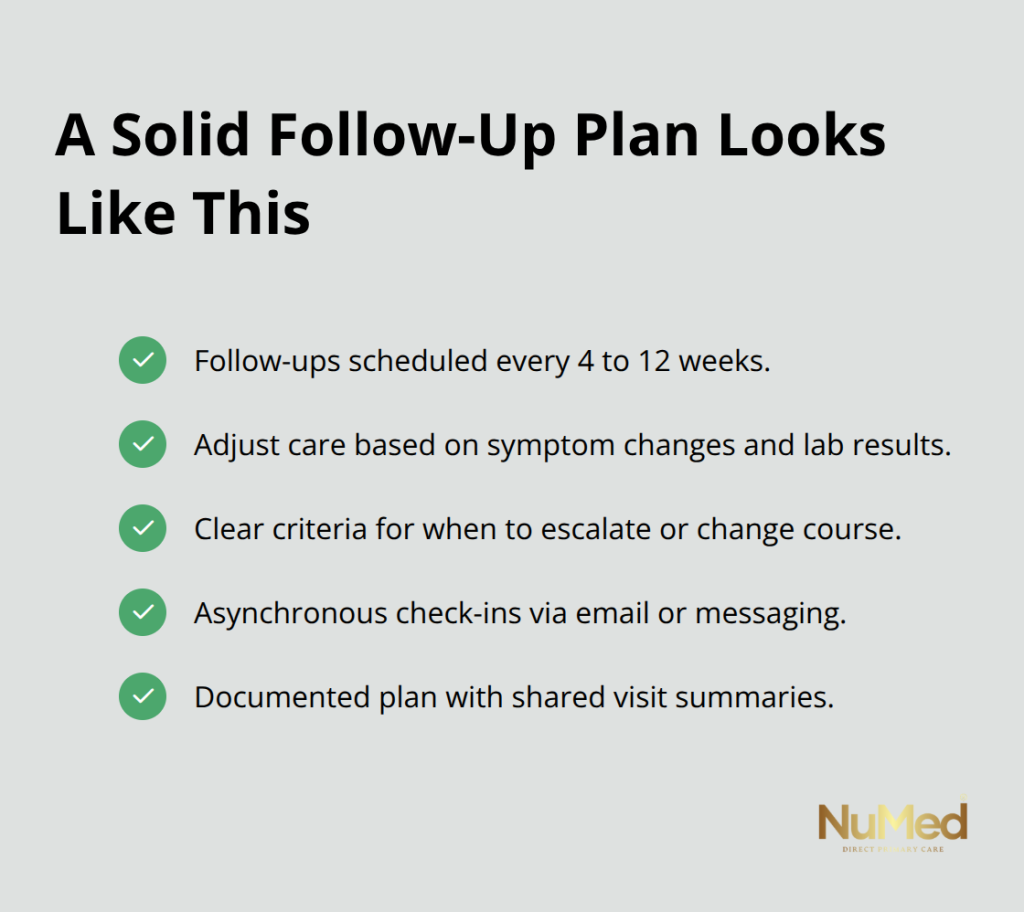
Ask specifically about their follow-up schedule. Functional medicine requires ongoing adjustment based on symptom changes and lab results, not one-time consultations. Most credentialed practitioners schedule follow-ups every 4 to 12 weeks, with communication options between visits through email or messaging. If they offer no structured follow-up plan, that absence suggests they lack the systematic approach that legitimate functional medicine training provides.
Finally, ask how they coordinate with your other doctors. A credentialed functional medicine practitioner will request records from your other providers, communicate findings to them, and adjust their recommendations based on conventional treatments you’re receiving. This collaborative approach protects your safety and prevents conflicting recommendations. Practitioners who work in isolation or discourage you from seeing conventional doctors lack the integration skills that functional medicine demands.
Final Thoughts
Verifying functional medicine doctor credentials takes 20 minutes and protects your health and your money. The process you’ve learned-checking state licensure, confirming board certifications through official databases, and asking direct questions about training-separates practitioners with genuine expertise from those who market themselves as functional medicine doctors without the training to support that claim. Practitioners with legitimate credentials answer your questions with specificity, welcome independent verification, and coordinate with your other doctors to prevent conflicting recommendations.
The real cost of skipping credential verification appears later in expensive tests that don’t inform treatment, supplements recommended without a safety review, or missed diagnoses because your practitioner lacks the medical foundation to integrate both approaches safely. State medical boards and the National Practitioner Data Bank maintain disciplinary records for your protection, and taking time to verify functional medicine doctor credentials through official sources eliminates that risk entirely. These capabilities come from rigorous training, not marketing claims.
We at NuMed DPC believe that proper credentials lead to better health outcomes because they signal genuine expertise and accountability. Our direct primary care model focuses on preventing illness by addressing root causes through personalized, functional medicine care. If you’re ready to work with a credentialed functional medicine practitioner who takes time to understand your unique health needs, contact NuMed DPC to learn how we can support your wellness journey.