Knee pain affects millions of Americans, limiting daily activities and reducing quality of life. At NuMed DPC, we believe natural therapy for knee pain offers practical solutions that work alongside professional medical care.
This guide walks you through proven approaches-from targeted exercises to dietary changes-that address pain at its source. You’ll learn how to build a sustainable plan that fits your lifestyle and supports long-term joint health.
Understanding Knee Pain and Its Root Causes
Knee pain stems from multiple sources, and identifying what drives your discomfort changes how you treat it. Approximately 25% of American adults experience frequent knee pain that limits daily activities, according to clinical data. The most common culprits include osteoarthritis, where cartilage gradually wears down; ligament injuries from sudden movements or sports; meniscus tears that occur during twisting motions; and muscle strains from overuse or weakness in the quadriceps and hamstrings. Tendinitis develops when the tendons around your knee become inflamed from repetitive stress. Bursitis forms when fluid-filled sacs near the knee joint swell and cause localized pain. Each condition requires different management approaches, which is why understanding your specific situation matters before you start treatment.
How Inflammation Drives Your Pain
Inflammation is the body’s protective response, but when it becomes chronic, it perpetuates knee pain and accelerates joint damage. When you injure your knee or develop arthritis, your immune system releases inflammatory chemicals that cause swelling, stiffness, and pain. This inflammation can last weeks or months if left unaddressed, making movement painful and causing you to avoid activity-which then weakens the muscles supporting your knee, creating a painful cycle. Cleveland Clinic research shows that excess body weight amplifies this problem because each additional pound of weight adds approximately four pounds of pressure to your knee during walking. Someone carrying an extra 20 pounds effectively places 80 additional pounds of force on their knees with every step. This mechanical stress triggers inflammatory responses that compound existing pain. Additionally, C-reactive protein correlates with knee pain severity, meaning your body’s inflammatory state isn’t just uncomfortable; it’s measurable and directly linked to your symptoms.
When Professional Evaluation Becomes Essential
You should seek immediate medical evaluation if your knee pain follows a sudden injury, if you hear a popping sound accompanied by immediate swelling, if your knee buckles or feels unstable, or if pain persists beyond two weeks despite home care. Sharp, shooting pain that wakes you at night or prevents you from bearing weight requires professional assessment. Redness, warmth, or fever alongside knee pain may indicate infection. Additionally, if you’ve had previous knee injuries or surgery, a professional evaluation helps prevent re-injury patterns that develop from compensation movements. A healthcare provider can order imaging (X-rays or MRI scans) to identify structural damage like meniscus tears or cartilage loss that home management alone cannot address. A qualified healthcare provider performs a physical examination, assesses your movement patterns, and rules out serious conditions before you start any natural therapy program. This foundation ensures your treatment plan addresses your actual condition rather than symptoms alone, setting the stage for effective natural approaches that work with your body’s healing capacity.
How to Build Your Natural Knee Pain Management Plan
Treating knee pain naturally requires combining targeted movement, dietary intervention, and supplement support into a coordinated strategy. Movement comes first because muscles stabilize your knee joint, and weakness amplifies pain regardless of its cause. Physical therapy exercises directly address this by strengthening the quadriceps, hamstrings, and calf muscles that support your knee.
Targeted Exercises That Strengthen Your Knee
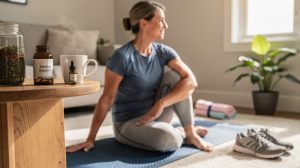
Start with straight-leg raises while sitting with your back supported. Raise one leg and hold for 10 seconds before lowering, repeating 10 times per leg. Progress to lying straight-leg raises where you keep one knee bent while lifting the other leg a few inches off the floor, holding for 5 seconds, and repeating 5 times morning and evening. Wall sits build isometric strength by standing with your back against a wall, sliding down until your knees bend at 90 degrees, and holding for 20 to 30 seconds. Low-impact activities like swimming, stationary cycling, and water aerobics reduce joint stress while maintaining mobility. Mayo Clinic research confirms that consistent low-impact exercise improves knee mobility and reduces stiffness without excessive joint load. Start slowly with 10 to 15-minute sessions and increase duration as tolerated, trying for at least three sessions weekly.
Anti-Inflammatory Eating Reduces Pain at Its Source
Your diet directly influences inflammation levels in your knee joint, making food choices as important as exercise. Fatty fish, including salmon, mackerel, and sardine,s contain omega-3 fatty acids that reduce inflammatory markers, so incorporate these twice weekly into your meals. Leafy greens like spinach and kale contain antioxidants that support joint health, while berries (especially blueberries and cherries) provide anthocyanins that lower inflammation. Turmeric contains curcumin, a standout natural anti-inflammatory compound that some people find particularly effective for knee discomfort. Combine these foods strategically rather than eating them in isolation, creating meals that layer multiple anti-inflammatory benefits. Simultaneously, eliminate processed foods and added sugars because they amplify inflammatory responses in your body. Weight loss reduces knee pain by removing pressure from the knee joint. Every pound lost removes approximately four pounds of pressure from your knees during walking. Even modest reductions in body weight create measurable relief that compounds over time.
Supplements and Temperature Therapy: Complete Your Strategy
Glucosamine and chondroitin supplements help maintain cartilage integrity and may slow joint damage progression, making them worth considering if you have osteoarthritis. Omega-3 supplements provide concentrated anti-inflammatory benefits at higher doses than food sources alone, offering an option if you dislike fish or want additional support. Boswellia (also called Indian frankincense) reduces inflammation and improves joint function for some individuals, though effectiveness varies. Start any new supplement at the recommended dose and track your symptoms for four to six weeks to determine if it reduces your pain, since response times differ between people. Consult with a healthcare provider before starting supplements, especially if you take blood thinners or other medications, because some natural compounds interact with pharmaceutical treatments. Temperature therapy complements these approaches by applying ice for 15 to 20 minutes after activity to reduce swelling and numbness, then alternating with heat to improve blood flow and reduce stiffness. This multi-layered approach combining targeted exercises, anti-inflammatory nutrition, strategic supplementation, and temperature management addresses knee pain through multiple mechanisms simultaneously, creating more robust results than any single intervention alone. As you implement these natural strategies, the next step involves understanding how lifestyle modifications extend these benefits beyond your treatment sessions and into your daily routine.
Sustaining Knee Health Through Daily Choices
Weight management stands as the single most impactful lifestyle factor for knee pain reduction, yet most people underestimate its significance. Cleveland Clinic research demonstrates that each pound of excess weight creates approximately four pounds of additional pressure on your knees during walking, meaning someone 30 pounds overweight experiences 120 extra pounds of force per step. Losing just 10 to 15 pounds produces measurable pain reduction and improved function without requiring extreme dietary measures. You can create a modest calorie deficit through whole foods, lean proteins, and vegetables while eliminating processed foods and added sugars that amplify inflammation. A registered dietitian can provide personalized guidance tailored to your specific situation rather than generic diet advice.
Footwear and Posture Shape Your Knee Mechanics
Your footwear directly influences how force is distributed through your knee joint, making shoe selection more consequential than most people realize. Worn-out athletic shoes with collapsed cushioning force your knee into abnormal positions, increasing pain with every step. You should replace shoes every 300 to 500 miles of activity and choose models with adequate arch support and cushioning appropriate for your foot type, since flat feet and high arches require different support patterns. Posture matters equally because poor alignment cascades down through your knees, creating compensatory stress. Standing with your pelvis tilted forward or backward changes how your quadriceps and hamstrings function, altering knee mechanics.
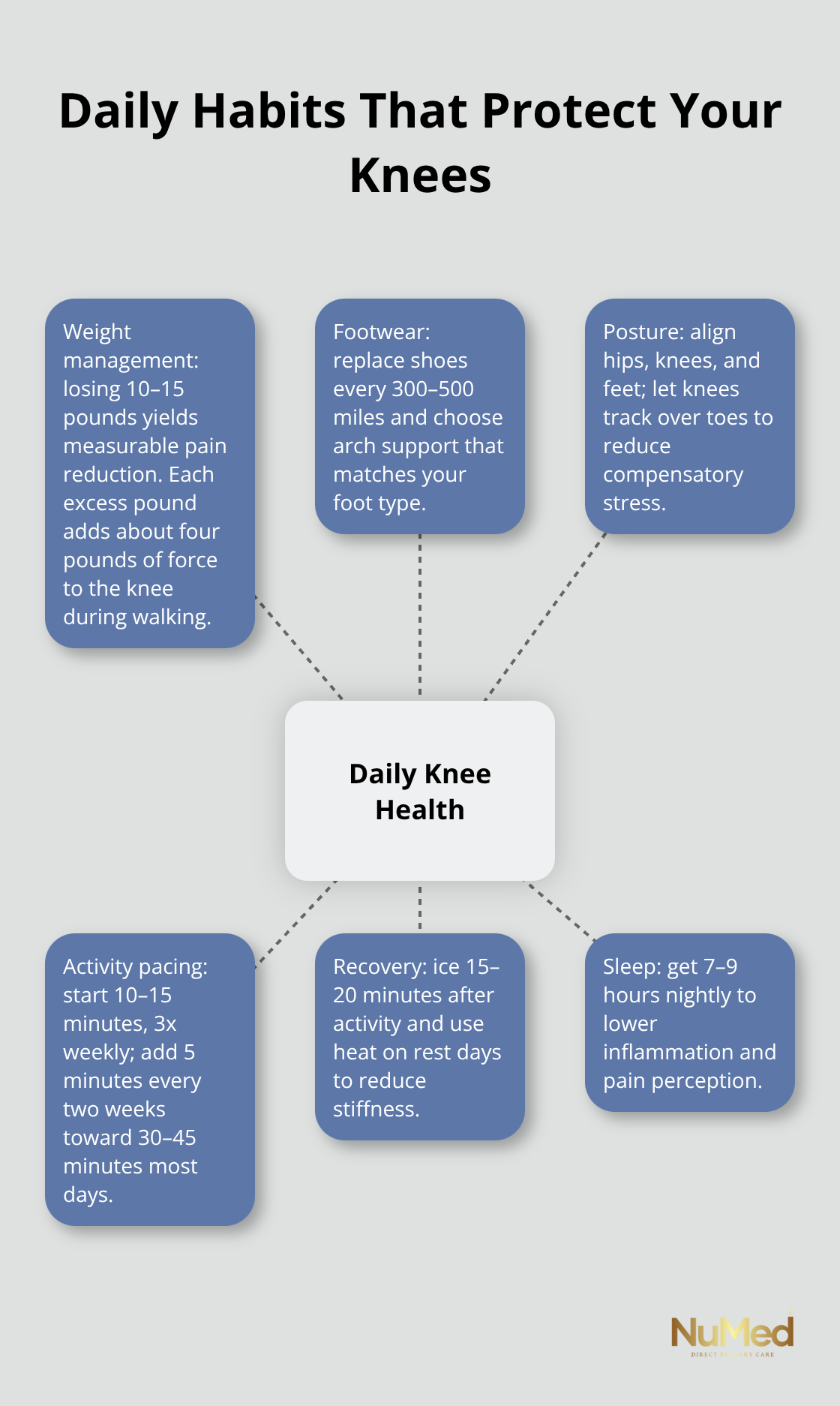
When you walk, your feet should point straight ahead rather than turning inward or outward, your knees should track over your toes, and your core should remain engaged to stabilize your pelvis. A physical therapist can assess your specific postural patterns and identify which corrections will most benefit your knees.
Pacing Activity and Optimizing Recovery
Activity pacing separates people who experience sustained improvement from those whose pain returns after initial gains. Increasing activity too quickly triggers inflammation and pain that discourages continued effort, while progressing too slowly fails to build the strength your knee requires. You should start with 10 to 15-minute sessions of low-impact activity three times weekly, then add five minutes every two weeks as tolerated, targeting 30 to 45 minute sessions most days. Alternating high-activity days with lighter recovery days prevents overload while maintaining consistent stimulus for adaptation. Recovery techniques, including ice application for 15 to 20 minutes after activity and heat therapy on rest day,s accelerate adaptation and reduce soreness. Sleep quality directly affects inflammation and pain perception, making consistent sleep schedules and seven to nine hours nightly essential components of your management strategy. The foundation you build through weight management, proper footwear, postural awareness, and thoughtful activity progression becomes the platform supporting all other natural therapy approaches while preventing future knee problems from developing.
Final Thoughts
Natural therapy for knee pain works best when you combine multiple approaches rather than relying on any single strategy. The exercises strengthen muscles that stabilize your knee, the dietary changes reduce inflammation at its source, and the lifestyle modifications remove the mechanical stress that perpetuates discomfort. Weight management, proper footwear, and activity pacing create the foundation that allows these interventions to work effectively, while temperature therapy and supplements fill specific gaps in your pain management.
Your specific combination depends on your situation-someone with osteoarthritis might prioritize anti-inflammatory foods and glucosamine supplements alongside targeted strengthening exercises, while a person recovering from a ligament injury might emphasize activity pacing and postural correction with ice therapy. Consistency matters more than perfection, as three weeks of regular exercise produce measurable improvements in pain and mobility, and six months of sustained effort build strength that prevents future problems. Most people see meaningful progress within four to six weeks if they implement multiple approaches simultaneously, though individual timelines vary.
Professional healthcare support accelerates this process significantly by identifying whether your pain stems from arthritis, injury, or another cause, ensuring your treatment addresses the actual problem. At NuMed DPC, we focus on preventing illness by addressing root causes through personalized care that combines functional medicine, health coaching, and extensive lab services tailored to your unique needs. If your pain persists beyond two weeks despite consistent effort, if you experience sudden swelling or instability, or if you’re uncertain whether your current approach is working, professional evaluation clarifies your path forward.