
Menopause brings significant hormonal shifts that affect everything from your metabolism to your mood. At NuMed DPC, we believe that wellness strategies for menopause work best when tailored to your unique body and health history.
This guide walks you through practical nutrition, lifestyle, and medical approaches that can help you navigate this transition with confidence and feel your best.
What Happens to Your Body During Menopause
Menopause involves a dramatic drop in estrogen and progesterone production, typically beginning around age 51, though perimenopause can start in your 30s or 40s. This hormonal shift doesn’t just trigger hot flashes-it fundamentally alters your metabolism, bone density, cardiovascular function, and brain chemistry.
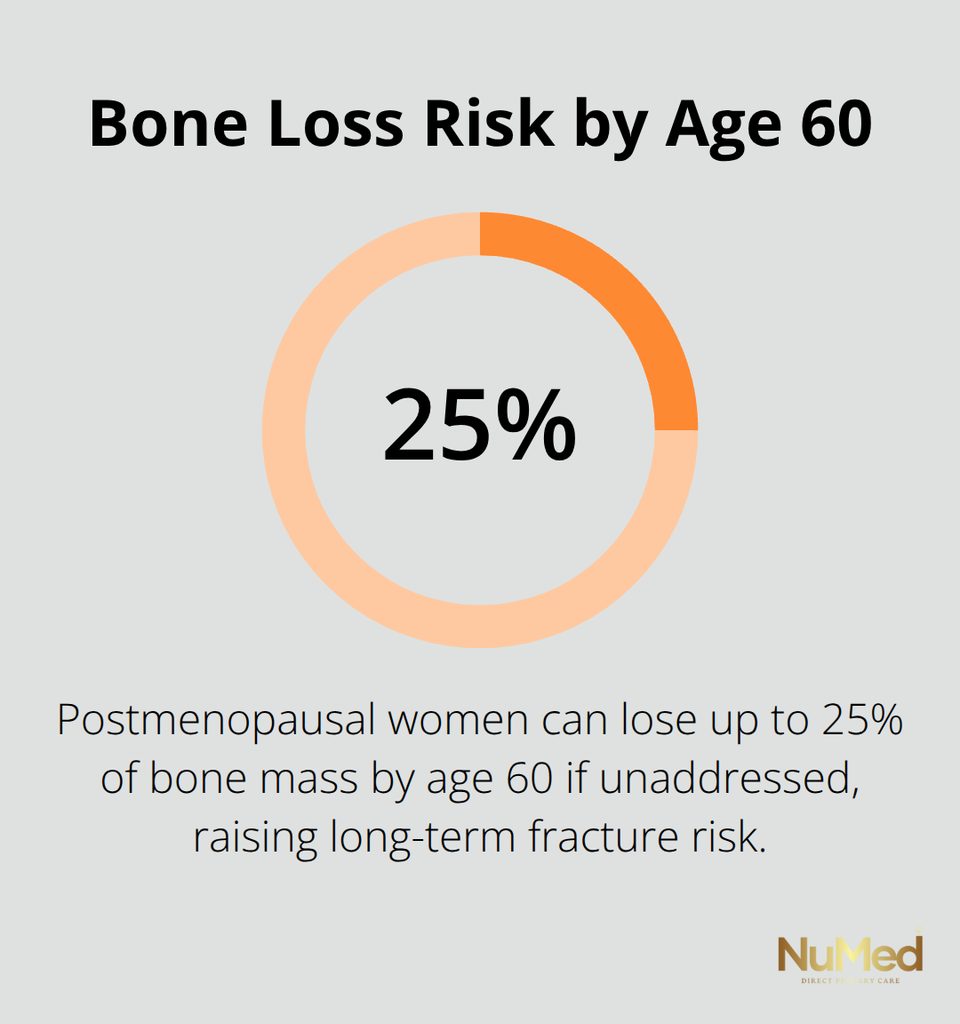
Estrogen decline reduces your exercise capacity by making workouts feel harder, accelerates muscle loss at a rate that compounds yearly, and lowers your resting metabolism by approximately 250 to 300 calories per day. Your bones become particularly vulnerable during this window. Women can lose up to 25 percent of bone mass by age 60 if left unaddressed, creating a direct pathway to osteoporosis and fracture risk that persists for decades. Beyond skeletal health, declining estrogen increases your cardiovascular disease risk, making heart disease the leading cause of death in postmenopausal women-a fact that often surprises patients who focus only on hot flashes and mood swings.
Symptoms That Signal Systemic Change
The symptoms you experience during menopause reflect real physiological disruption rather than mere discomfort. Hot flashes and night sweats stem from destabilized thermoregulation in your hypothalamus. Sleep disruption compounds this problem, creating a cycle where poor sleep worsens hot flashes while night sweats prevent restorative rest. Mood changes and cognitive shifts occur because estrogen influences serotonin and dopamine production directly. Weight gain, particularly around your midsection, reflects reduced insulin sensitivity and metabolic slowdown. Vaginal dryness and urinary symptoms develop from declining vaginal and urethral tissue elasticity. These symptoms are not character flaws or inevitable suffering-they are measurable biological events that respond to targeted interventions. A 2024 meta-analysis examining 26 trials found that structured exercise produces significant antidepressant effects in postmenopausal women, with mind-body practices like yoga and tai chi showing particularly strong benefits for both mood and sleep quality. This research demonstrates that proactive strategies address root causes rather than masking symptoms.
Why Waiting Costs You Years of Health
Postponing menopause management until symptoms become unbearable means you miss the critical window for preventing long-term complications. The perimenopause and early postmenopause years are when interventions for bone health, cardiovascular protection, and weight management yield maximum benefit. A strength training program started now prevents sarcopenia rather than requiring you to rebuild muscle years later. Consistent cardiovascular exercise started now protects your heart and insulin sensitivity while your body remains responsive to these changes. Optimized nutrition started now stabilizes your weight rather than forcing you to fight metabolic resistance that compounds over time. The best time to address menopause is before symptoms derail your quality of life and before preventable diseases take root. Waiting means accepting preventable bone loss, accepting cardiovascular risk that could have been mitigated, and accepting metabolic damage that becomes harder to reverse. Your body during menopause is not broken-it is transitioning, and that transition responds powerfully to intentional, evidence-based action.
How Your Metabolism and Muscle Respond to Hormonal Shifts
Estrogen plays a direct role in how your body burns calories and maintains muscle tissue. The 250 to 300 calorie daily metabolic reduction you experience is not a minor inconvenience-it compounds to approximately 2,500 to 3,000 calories per week, equivalent to gaining one pound every 10 to 12 days without any change in your eating habits. Muscle loss accelerates during menopause because estrogen supports protein synthesis and muscle fiber preservation. Without intentional resistance training, you lose muscle mass faster than at any other life stage, and this loss directly reduces your metabolic rate further (a vicious cycle). Exercise counteracts this mechanism by stimulating muscle protein synthesis and preserving lean tissue, which in turn maintains your metabolic rate and supports long-term weight management. Understanding these physiological realities helps you recognize that weight changes during menopause are not failures of willpower-they are predictable biological responses that require specific, targeted strategies rather than generic diet approaches.
The Window for Prevention Is Now
The perimenopause and early postmenopause years represent your optimal window for preventing bone loss, cardiovascular disease, and metabolic dysfunction. Interventions applied during this phase produce substantially better outcomes than attempts to reverse damage years later. Starting strength training now builds bone density and muscle mass while your body still responds robustly to these stimuli. Establishing cardiovascular exercise patterns now protects your heart and maintains insulin sensitivity at levels that become harder to achieve as you move further into postmenopause. Addressing nutrition and weight now prevents the metabolic resistance that develops over years of hormonal decline. This is not about perfection or dramatic overhaul-it is about consistent, evidence-based action applied at the moment when your body responds most effectively. The strategies outlined in the following sections work because they address the specific physiological changes your body undergoes, and they work best when you implement them now rather than waiting for crisis or disease to force your hand.
Building Your Nutrition and Movement Foundation
Nutrition during menopause demands specificity because your body’s nutrient needs shift alongside hormonal changes. A Mediterranean-style eating pattern with emphasis on vegetables, lean protein, and healthy fats provides the foundation that works. Fill half your plate with vegetables and fruit, dedicate a quarter to lean protein sources, and allocate the final quarter to whole grains. This distribution matters because protein intake should reach approximately 1 to 1.2 grams per kilogram of body weight daily to counteract the accelerated muscle loss happening in your body right now. If you weigh 70 kilograms, that means 70 to 84 grams of protein spread across your meals, not concentrated in one. Soy foods including tofu, tempeh, and edamame contain phytoestrogens that modestly reduce hot flashes and are safe for consumption without increasing breast cancer risk.
Micronutrients That Protect Your Bones and Heart
Calcium and vitamin D become non-negotiable: target 1,000 to 1,200 milligrams of calcium daily and 800 to 1,000 international units of vitamin D from sources like fatty fish, fortified dairy, leafy greens, and sardines. Fiber intake should reach 30 to 45 grams daily from whole grains, legumes, fruits, and vegetables to support your metabolism and reduce inflammation. What matters most is consistency rather than perfection. Track your actual food intake for one week using a simple journal to identify where your protein and fiber fall short, then adjust specific meals rather than overhauling everything at once.
How Exercise Counteracts Metabolic Decline
Exercise is not optional during menopause because it directly counters the physiological damage happening in your body. Your target is 150 minutes of moderate aerobic activity weekly, accomplished through brisk walking, cycling, or dancing rather than requiring gym membership. Layer in two to three strength training sessions weekly, each lasting 30 to 45 minutes, focusing on compound movements that engage multiple muscle groups simultaneously. Include weight-bearing exercises like walking or jogging to build bone density, and add resistance band work or bodyweight movements if you lack gym access.
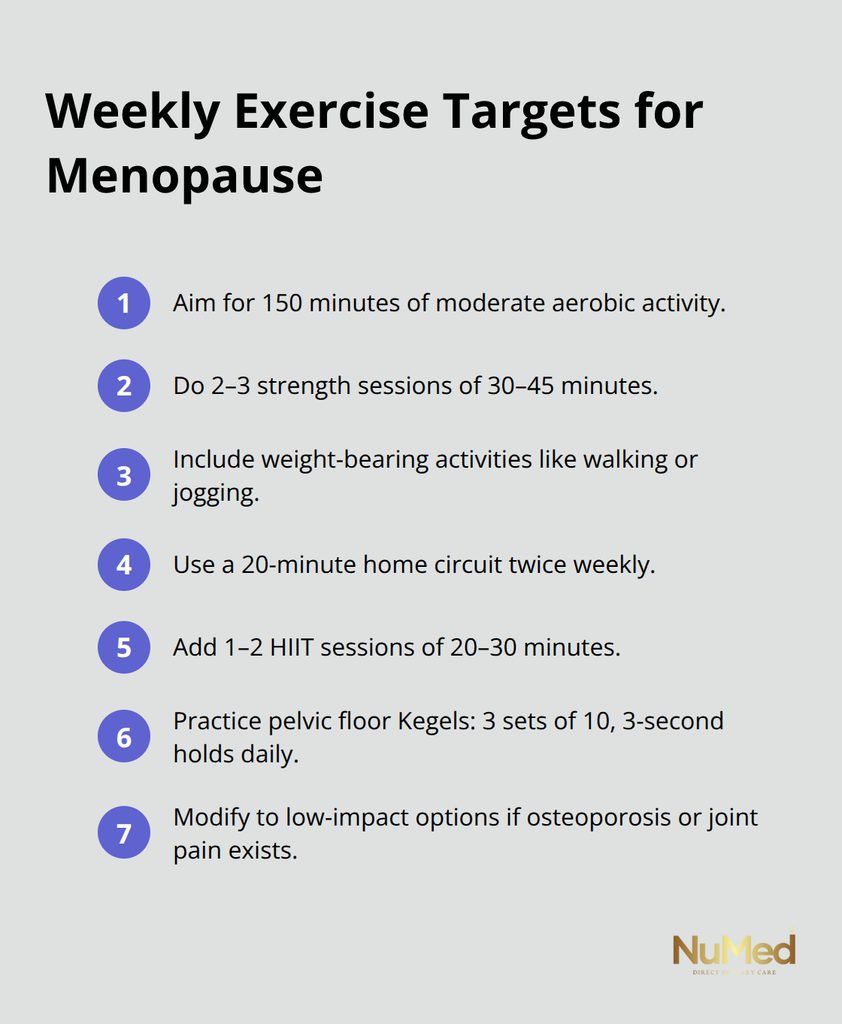
A 20-minute circuit performed twice weekly at home using bodyweight exercises, resistance bands, and low-impact cardio creates measurable results without requiring expensive equipment. One to two sessions of high-intensity interval training lasting 20 to 30 minutes weekly amplifies metabolic benefits and cardiovascular adaptation. Pelvic floor exercises through Kegel training deserve specific attention because they reduce urinary symptoms that affect quality of life during menopause. Start with three sets of 10 contractions daily, holding each for three seconds. If osteoporosis or joint pain exists, modify high-impact movements by choosing elliptical machines, water aerobics, or brisk walking instead. The research is unambiguous: structured exercise produces significant antidepressant effects in postmenopausal women, with mind-body practices showing particularly strong benefits for both mood and sleep.
Sleep and Stress as Active Health Interventions
Sleep quality during menopause requires environmental manipulation because night sweats and hormonal fluctuations disrupt your natural sleep architecture. Your bedroom temperature should stay between 60 and 67 degrees Fahrenheit, and darkness must be complete through blackout curtains or eye masks. Moisture-wicking sheets specifically designed for hot sleepers prevent the repeated wake-up cycle that compounds sleep deprivation. Limit caffeine after 2 PM and alcohol in the evening because both trigger hot flashes and fragment sleep architecture. Hydrate throughout the day but reduce fluid intake two hours before bed to minimize nighttime urination. Try for 7 to 8 hours nightly, understanding that this is not luxury but foundational medicine. A warm bath 60 to 90 minutes before bed lowers your core temperature afterward, supporting sleep onset.
Mindfulness and Symptom Tracking for Personalized Adjustments
Mindfulness practice for 5 to 10 minutes daily reduces overall menopausal symptoms, anxiety, and depressive symptoms according to 2025 meta-analysis research. You need not meditate silently; walking meditation, guided breathing applications, or simple body scans count. Track your sleep patterns, hot flash frequency, and mood using a symptom log for two weeks to identify specific triggers, then adjust one variable at a time rather than overhauling everything simultaneously. This data becomes invaluable when consulting with a menopause-focused clinician who can align medical interventions with your documented patterns. The information you collect transforms vague complaints into measurable patterns that guide treatment decisions and reveal which lifestyle modifications produce the greatest impact for your unique body. With this foundation of nutrition, movement, sleep, and mindfulness established, your body becomes primed to respond to the medical and functional approaches that address menopause at a deeper level.
Medical Management and Testing for Menopause
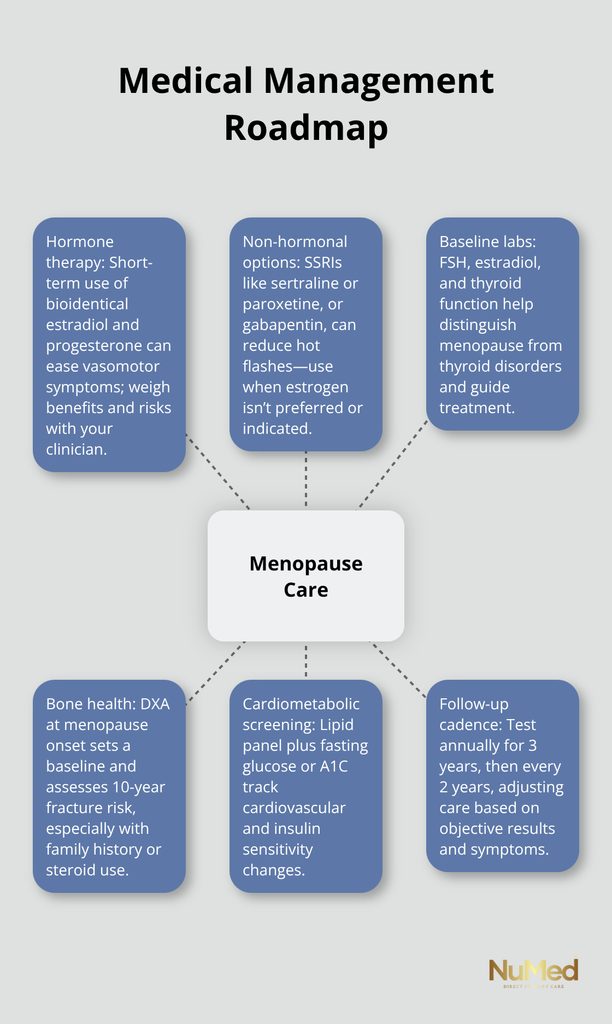
Hormone replacement therapy remains the most effective intervention for moderate to severe vasomotor symptoms, but the decision to use it requires honest conversation about your specific symptom severity, personal health history, and risk tolerance. Standard hormone therapy using bioidentical estradiol and progesterone addresses hot flashes, night sweats, and sleep disruption more effectively than lifestyle changes alone, particularly during the first five years of menopause when symptoms peak. The evidence supports short-term use in women without contraindications, though the decision belongs entirely to you after reviewing both benefits and risks specific to your situation.
Alternative Medications When Hormone Therapy Isn’t Right for You
Some women find symptom relief through selective serotonin reuptake inhibitors like sertraline or paroxetine, which reduce hot flashes without hormone replacement, making them valuable for women who cannot or choose not to use estrogen. Gabapentin offers another option, particularly effective for night sweats, though it requires consistent dosing to maintain benefit. The critical point is that no single approach works universally-your treatment must match your symptoms, your health risks, and your preferences after receiving complete medical information.
Essential Lab Work and Baseline Testing
Your initial assessment should include fasting blood work measuring follicle-stimulating hormone, estradiol, and thyroid function because thyroid disorders mimic menopause symptoms and require separate treatment. Bone density screening through dual-energy X-ray absorptiometry at menopause onset establishes your baseline and identifies your fracture risk over the next 10 years, particularly if you have family history of osteoporosis or use corticosteroids. Lipid panels reveal whether your cardiovascular risk has shifted with hormonal changes, and fasting glucose or hemoglobin A1C testing shows whether insulin sensitivity has declined.
This testing framework transforms menopause management from guesswork into precision medicine aligned with your actual physiology.
Ongoing Monitoring and Data-Driven Adjustments
Repeat testing annually during the first three years of menopause, then every two years afterward, tracks whether your interventions produce measurable improvements in bone density, cardiovascular markers, and metabolic health. A functional medicine clinician reviews these results in context of your symptoms and adjusts your nutrition, exercise, and medical treatment based on objective data rather than assumptions. The extended appointment time and direct access to your physician mean your lab results receive thorough interpretation and your treatment plan reflects your complete health picture rather than a generic protocol.
Final Thoughts
Menopause management succeeds when it addresses your specific body rather than following generic protocols. The wellness strategies for menopause outlined in this guide target the actual physiological changes happening inside you-metabolic slowdown, bone loss, cardiovascular risk, and hormonal shifts. Nutrition focused on adequate protein and fiber, consistent exercise combining strength and aerobic work, optimized sleep, and stress management form the foundation that your body needs.
Your menopause plan must reflect your unique circumstances, not someone else’s experience. Your symptom severity differs from your friend’s, your health risks differ based on your family history and personal medical background, and your preferences about hormone therapy, exercise intensity, and dietary changes deserve respect. This is why individualized care matters during menopause-because one-size-fits-all approaches consistently fail.
Taking control of your menopause journey means acting now during the critical window when interventions produce maximum benefit. Track your symptoms, follow through with exercise and nutrition changes, and work with a clinician who treats menopause as the serious health transition it is. Start building the health outcomes you deserve with support from NuMed DPC.