
Hormone imbalance symptoms often go unrecognized because they mimic other conditions. Fatigue, mood changes, weight gain, and sleep problems might seem unrelated, but they frequently point to underlying hormonal issues.
We at NuMed DPC created this hormone imbalance symptoms checklist to help you identify patterns in your health. A quick screening tool won’t diagnose your condition, but it gives you concrete information to discuss with your healthcare provider.
What Women Should Track When Hormones Shift
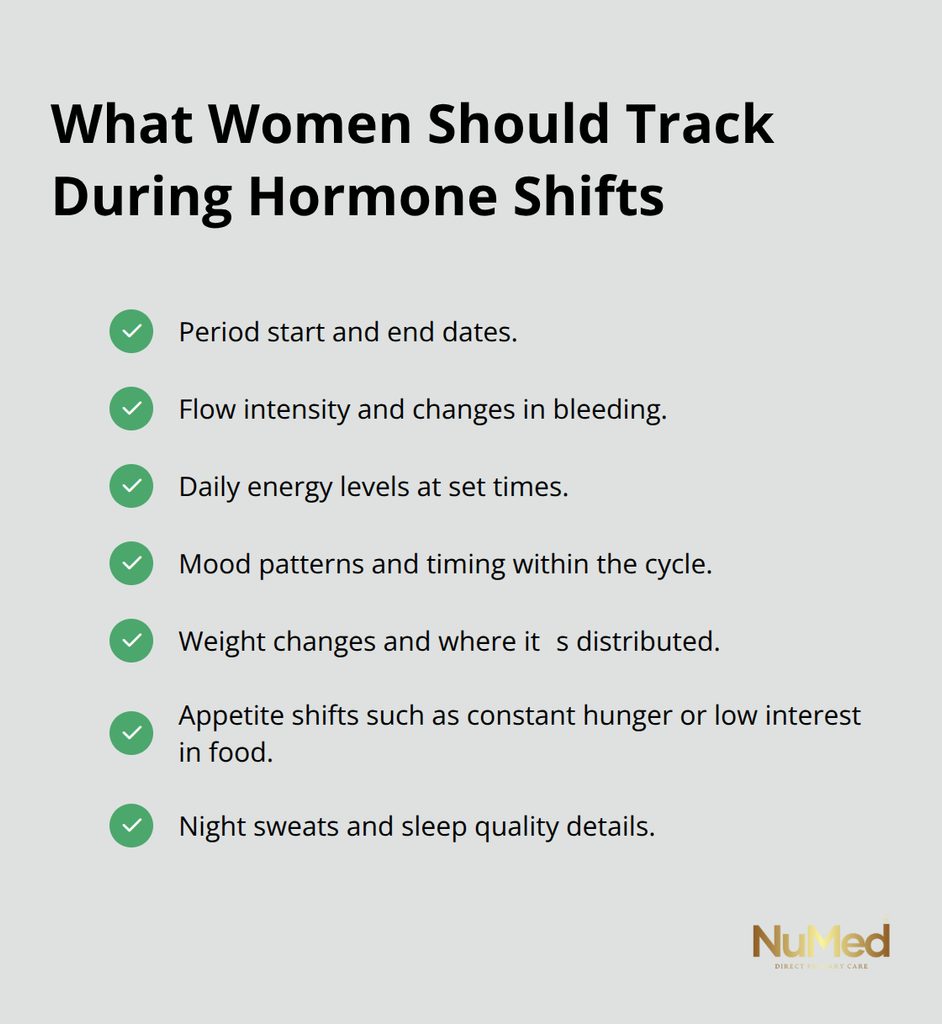
Women experience hormone fluctuations throughout their lives, and recognizing the specific patterns these create matters far more than knowing hormone names. Irregular periods are one of the clearest signals. If your cycle shifts from predictable to erratic-arriving 10 days early, then 15 days late-or if bleeding becomes significantly heavier, these changes warrant attention. Track the exact dates your period starts and ends, plus the flow intensity, because this data helps your provider identify whether your cycle is genuinely disrupted or simply responding to stress.
Fatigue That Sleep Doesn’t Fix
Fatigue that doesn’t improve with extra sleep is equally telling. If you sleep eight hours and still feel exhausted by mid-afternoon, or if climbing stairs leaves you winded when it didn’t before, hormonal shifts frequently cause this. Log your energy levels at specific times each day for two weeks, noting what you ate, how much you slept, and your stress level. This reveals whether fatigue links to hormonal patterns or other factors.
Mood Changes and Weight Shifts
Mood instability tied to hormonal imbalance feels different from typical stress. You might notice irritability that seems disproportionate to what’s happening around you, or anxiety that spikes on certain days of your cycle. Women with female hormone cycles may also experience sudden depression or emotional numbness. Weight gain concentrated around your belly, combined with difficulty losing weight despite diet changes, suggests hormonal involvement-especially if it happens quickly. Track not just your weight but where you gain or lose, plus your appetite patterns. Some women report constant hunger, while others lose interest in food.
Sleep Disruption and Night Sweats
Night sweats and sleep disruption are equally important signals. If you wake multiple times soaking wet, or if you fall asleep easily but can’t stay asleep, hormonal changes frequently cause this. These symptoms together-irregular periods, fatigue, mood swings, weight changes, and sleep problems-form a pattern your healthcare provider can actually work with. Writing down when each symptom appears, how long it lasts, and what makes it better or worse transforms vague complaints into actionable information. This concrete data is what separates productive healthcare conversations from frustrating ones where nothing gets addressed. Your provider uses these specific details to narrow down which hormones may be involved and what testing makes sense for your situation.
What Men Should Track When Testosterone Drops
Men often dismiss fatigue, mood changes, and sexual dysfunction as stress or aging, missing the hormone imbalance signals happening in their bodies. Unlike women’s cyclical hormonal patterns, men’s testosterone naturally declines about 1% per year after age 30, but when that decline accelerates or drops sharply, the symptoms become impossible to ignore.
Sleep Duration and Quality Matter Most
Sleep quality directly impacts testosterone production; getting fewer than 8 hours can drop levels by up to 15% the next day. A man sleeping six hours nightly faces compounding hormone deficits that worsen over weeks. Track your actual sleep duration and quality for two weeks, noting how many times you wake and whether you feel rested.
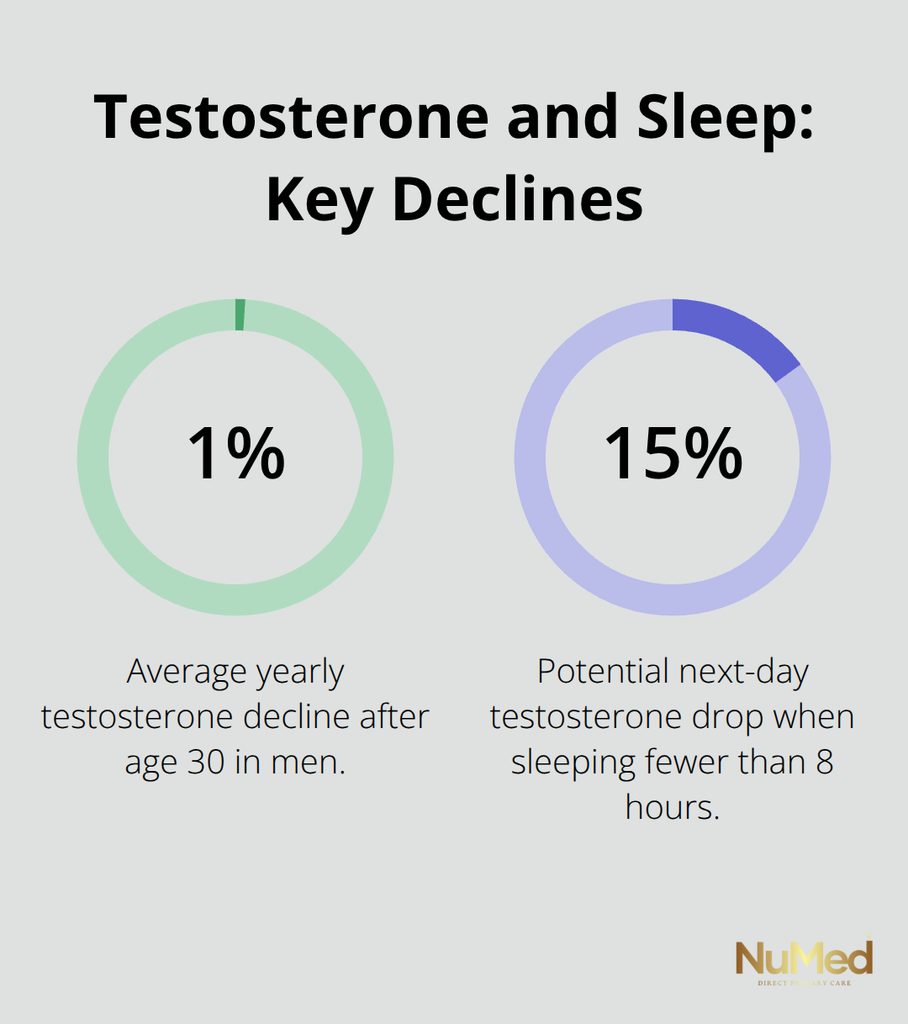
If you consistently sleep less than seven hours or wake multiple times nightly, this directly suppresses testosterone and compounds other symptoms you might be experiencing.
Energy Crashes and Workout Performance
Energy crashes that hit mid-afternoon or prevent you from completing workouts signal testosterone involvement. A man with healthy testosterone levels maintains steady energy throughout the day and recovers quickly after exercise. If you find yourself needing naps, struggling to finish a workout you previously completed easily, or feeling winded during activities that once felt effortless, log these specific instances with dates and times. This concrete data reveals whether testosterone decline is affecting your physical capacity.
Mood Irritability and Emotional Changes
Mood irritability tied to hormone imbalance feels different from normal frustration-you might snap at minor inconveniences, feel uncharacteristically anxious about work deadlines, or experience emotional numbness where you previously felt engaged. Track mood patterns alongside your sleep log, because poor sleep directly worsens irritability and creates a cycle where low testosterone reduces sleep quality, which further lowers testosterone. This feedback loop accelerates the problem if left unaddressed.
Sexual Function and Weight Distribution
Changes in sexual function and libido are equally concrete to track: note frequency of sexual interest, ability to achieve or maintain erections, and whether this represents a real change from your baseline. Carrying excess belly fat is directly linked to lower testosterone; weight loss around the midsection can improve testosterone balance. Record your weight weekly and specifically note where you gain or lose weight, plus any changes in muscle strength during workouts-loss of strength despite consistent training strongly suggests hormonal involvement rather than simple deconditioning. Men with hormone imbalances often experience rapid weight gain concentrated around the abdomen combined with loss of muscle definition, even when diet and exercise remain unchanged. This specific pattern differs from gradual weight gain from lifestyle changes and warrants professional evaluation.
The concrete data you gather-sleep hours, energy crashes at specific times, mood irritability frequency, sexual function changes, and weight distribution shifts-gives your healthcare provider actual information to work with rather than vague complaints that get dismissed as stress or aging. With this detailed tracking complete, you’re ready to move forward with the next critical step: preparing your healthcare provider with organized, actionable information that leads to proper testing and diagnosis.
Organizing Your Symptoms Into Actionable Data
The difference between a vague health complaint and a diagnosis-ready conversation with your provider comes down to organization. Stop tracking symptoms in your head or scattered notes on your phone. Instead, create a simple document-spreadsheet, notes app, or printed log-where you record the exact date, time of day, symptom, severity on a scale of 1 to 10, and what you were doing when it occurred. This specificity matters because your provider needs patterns, not impressions.
Document Patterns, Not Impressions
If you write that fatigue hits at 3 p.m. every Tuesday and Thursday, that’s data. If you say you’re tired sometimes, your provider has nothing concrete to work with. For women tracking menstrual changes, note the first day bleeding starts, the last day it stops, flow intensity (light, moderate, heavy), and any clots or unusual symptoms. For men tracking testosterone-related symptoms, log sleep hours nightly for at least two weeks, energy levels at morning and afternoon, workout performance compared to your baseline, and specific sexual function changes. The goal is creating a timeline that reveals whether symptoms cluster around specific times, days, or circumstances. A two-week tracking period minimum gives your provider enough data to spot real patterns versus random fluctuations.
Prepare Specific Questions for Your Provider
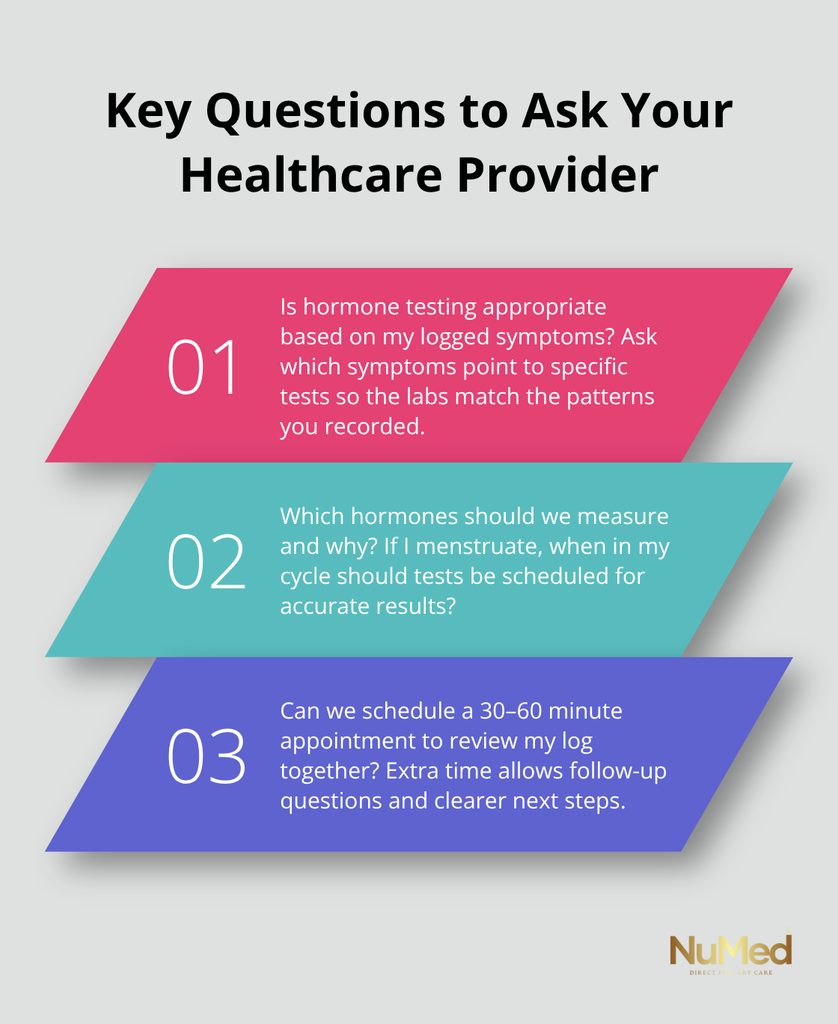
When you meet with your healthcare provider, bring your organized data and specific questions about what testing makes sense for your situation. Ask whether hormone testing is appropriate given your tracked symptoms, what specific hormones your provider wants to measure, and when testing should occur relative to your cycle if you menstruate. Longer appointments-30 to 60 minutes-allow you to walk through your symptom log together rather than rushing through a standard 15-minute visit. This extended time means your provider can ask follow-up questions and connect symptoms you might not have realized were related.
Let Your Provider Interpret the Data
Avoid self-diagnosing based on internet searches; instead, present your data and let your provider interpret it. Many websites claim specific symptoms always mean specific hormone imbalances, but hormone levels fluctuate naturally, and symptoms overlap with anemia, sleep disorders, infections, nutritional deficiencies, medication effects, and mental health conditions. Your provider uses your symptom patterns alongside lab results and medical history to reach an actual diagnosis. If your current provider dismisses your tracked symptoms or refuses to order testing despite a clear pattern, that’s a signal to seek a second opinion. You deserve a provider who takes your health data seriously and explains their reasoning for any testing decisions.
Final Thoughts
Your hormone imbalance symptoms checklist transforms vague health complaints into concrete data that a provider can actually work with. Tracking sleep patterns, energy crashes, mood shifts, or menstrual changes over two weeks gives your healthcare provider the specific information needed to guide testing decisions and treatment plans. Many traditional primary care offices rush through 15-minute visits where detailed symptom tracking gets overlooked, but at NuMed DPC, appointments run 30 to 60 minutes so your provider walks through your data with you, asks clarifying questions, and explains which tests make sense for your situation.
Hormone levels fluctuate naturally, and symptoms overlap with dozens of other conditions, so interpretation requires clinical judgment informed by your unique circumstances. Your provider needs to understand your complete picture: when symptoms started, how they’ve progressed, what makes them better or worse, and how they affect your daily life. A provider who dismisses your tracked data or refuses testing despite clear patterns isn’t serving your health, and you deserve someone who takes your hormone imbalance symptoms checklist seriously.
We at NuMed DPC believe hormone imbalances warrant thorough, personalized assessment without insurance hassles or surprise bills. Our direct primary care model includes extensive lab services and transparent pricing so you get answers about what’s happening with your hormones. If you’ve tracked your symptoms and you’re ready for professional evaluation, visit NuMed DPC to learn how our approach to healthcare can help you identify and address your hormonal health.