

For Functional health, most people visit their doctor only after symptoms appear. By then, disease has already taken root.
Functional diagnostics exploration works differently. We at NuMed DPC use advanced testing to identify imbalances early.
Why Conventional Tests Miss Early Warning Signs
The Reactive Model of Standard Medicine
Conventional medicine operates on a reactive model. A standard blood panel checks for established disease markers-high cholesterol, elevated glucose, abnormal thyroid-stimulating hormone levels. These tests answer one question: Do you have this disease right now? They don’t answer what matters most: Are you heading toward disease?
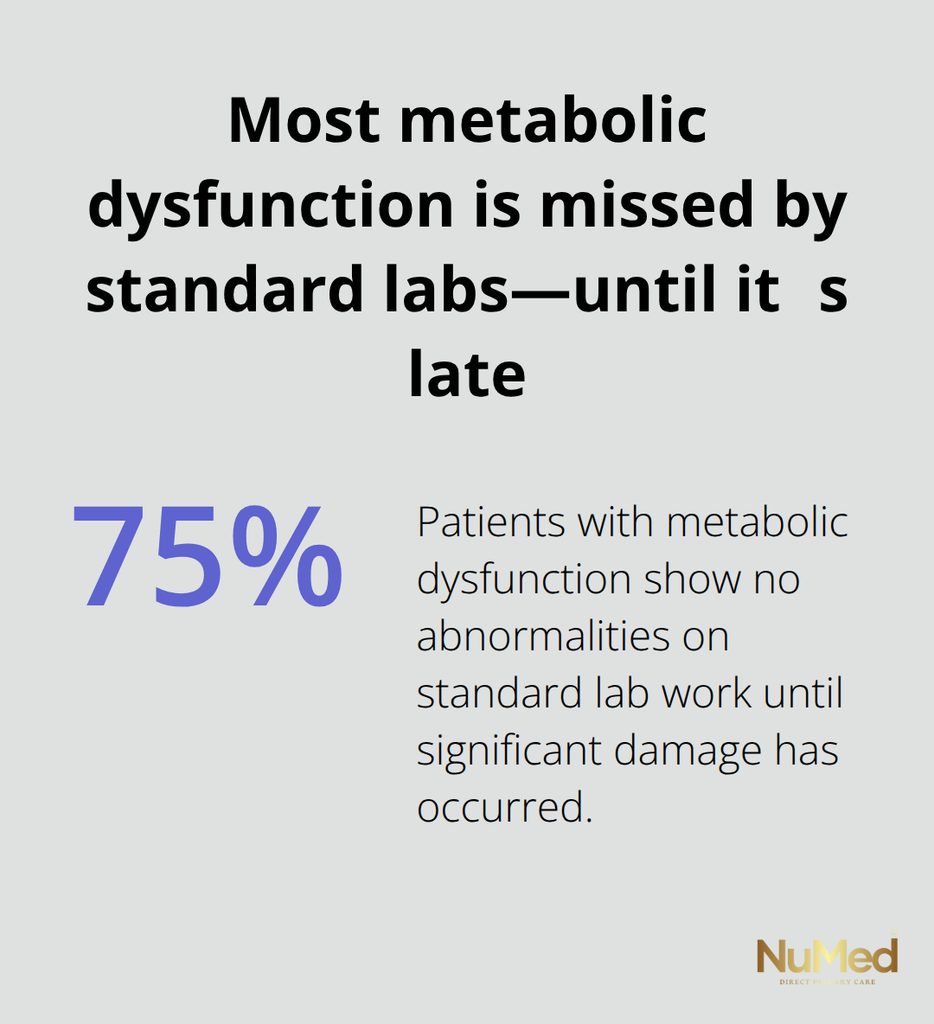
According to research from the Cleveland Clinic, approximately 75% of patients with metabolic dysfunction show no abnormalities on standard lab work until significant damage has occurred. This gap between feeling unwell and receiving a diagnosis leaves patients frustrated and untreated for months or years.
The Problem With Population-Based Reference Ranges
Conventional testing uses reference ranges designed for population averages, not individual optimization. A TSH level of 2.5 might fall within the normal range but represent a significant decline from your personal baseline of 1.2, signaling emerging thyroid dysfunction that standard medicine won’t flag.
Your body has its own optimal operating point. When your results drift from that point-even while staying within the “normal” zone-dysfunction has already started. Standard medicine misses this critical shift because it compares you to a population average, not to yourself.
How Functional Diagnostics Identifies Hidden Imbalances
Functional diagnostics takes a completely different approach. This model analyzes 40 to 50 biomarkers instead of the standard 10 to 15, looking for patterns and imbalances that precede disease. Practitioners examine fasting insulin levels, inflammatory markers like high-sensitivity C-reactive protein, homocysteine, and lipid particle size measurements that reveal metabolic stress long before diabetes or heart disease develops.
Functional practitioners interpret your results against optimal ranges, not just disease ranges. A fasting insulin of 8 mU/L might be technically normal but indicates insulin resistance developing in your cells. This distinction matters enormously for early intervention.
Connecting Lab Data to Your Unique Story
Functional diagnostics also integrates your lab data with your personal history, symptom timeline, and lifestyle factors. Someone with elevated inflammatory markers combined with chronic joint pain and a history of poor sleep receives a completely different analysis than someone with identical lab numbers but no symptoms.
This comprehensive approach identifies the root dysfunction-whether it’s gut dysbiosis, chronic inflammation, mitochondrial stress, or hormonal dysregulation-rather than waiting for a disease label to appear. The next step involves mapping exactly how these imbalances connect to your specific symptoms and daily life.
Functional: How We Map Your Symptoms to Lab Findings
Functional root cause analysis starts with your complete history, not just your chief complaint. We at NuMed DPC invest time in understanding when symptoms began, what makes them worse or better, your stress patterns, sleep quality, dietary habits, and past infections or injuries. This detailed timeline reveals patterns that standard doctor visits miss entirely. A patient reporting fatigue for three years combined with brain fog and weight gain tells a completely different story than someone experiencing sudden energy loss over two weeks. The timeline itself points toward metabolic dysfunction rather than acute illness.
Building Your Personal Baseline
Once we establish your symptom history, advanced biomarker testing begins. Functional practitioners order 40 to 50 markers compared to conventional medicine’s standard 10 to 15. These include fasting insulin, inflammatory markers like high-sensitivity C-reactive protein, homocysteine, vitamin D, magnesium, omega-3 index, and lipid particle size. Each marker gets interpreted against optimal functional ranges rather than disease thresholds, creating a picture of your metabolic health before pathology develops.
Connecting Lab Data to Your Lived Experience
The critical step happens when we connect these lab findings directly to your specific symptoms and lifestyle. Elevated fasting insulin combined with afternoon energy crashes and increased belly fat points toward insulin resistance driving your fatigue. High inflammatory markers paired with joint pain and digestive complaints suggest gut dysbiosis or food sensitivities requiring targeted dietary intervention. A practitioner examining your results in isolation might recommend standard diabetes prevention or anti-inflammatory medication. But connecting your labs to your actual life circumstances reveals whether you need circadian rhythm adjustment, specific nutrient repletion, elimination of trigger foods, or stress management protocols (the difference between generic treatment and personalized intervention). This connection between data and your daily experience transforms abstract numbers into a personalized road map for intervention before disease establishes itself.
From Data to Targeted Intervention
Your lab results and symptom patterns now point toward specific dysfunction. Practitioners identify whether insulin resistance, chronic inflammation, nutrient deficiencies, hormonal dysregulation, or mitochondrial stress drives your health problems. This precision matters enormously because different root causes require completely different treatment approaches. Someone with fatigue from vitamin B12 deficiency needs supplementation and dietary changes, while someone with fatigue from insulin resistance needs metabolic intervention and lifestyle modification.
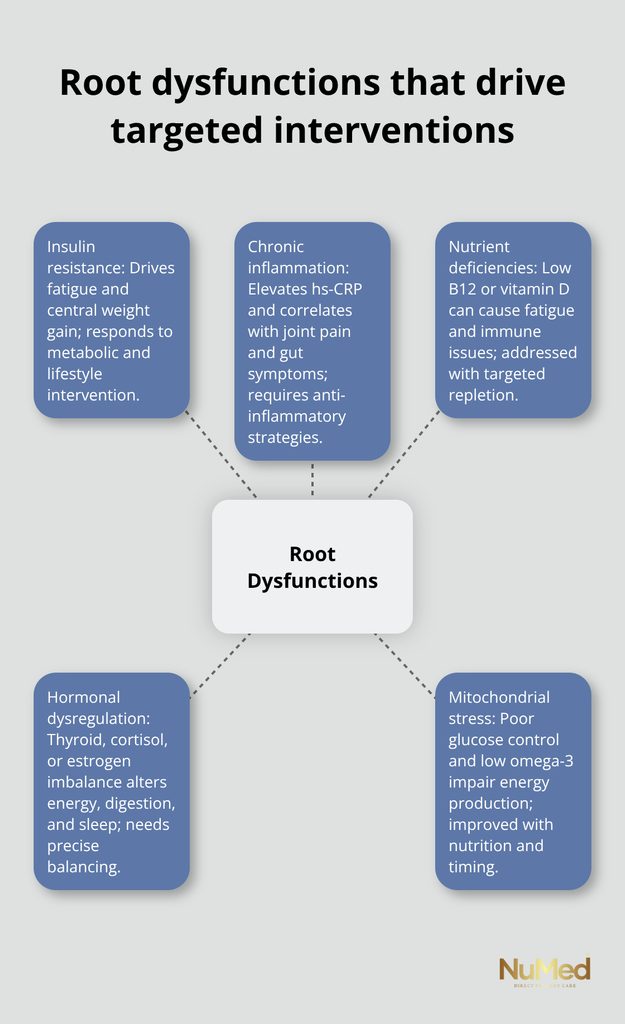
The next phase involves translating these findings into real-world applications that address your specific imbalances and restore your health.
How Functional Diagnostics Transforms Three Common Health Problems
Fatigue: Finding Energy When Standard Tests Show Nothing
Fatigue dominates functional medicine practices. Patients arrive exhausted after months or years of normal lab work and generic advice to sleep more. Functional diagnostics reveals why. A 45-year-old woman with three years of afternoon crashes had normal TSH on conventional testing, but functional analysis showed free T3 at 2.8 pg/mL when optimal ranges start at 3.5 pg/mL. Her thyroid wasn’t diseased-it was underperforming relative to her needs. Adding targeted T3 support and addressing iron stores revealed through comprehensive iron panels (not just ferritin) restored her energy within eight weeks.
Another patient with identical fatigue complaints actually had fasting insulin of 12 mU/L paired with a low omega-3 index of 4%, both technically normal on standard tests but indicating mitochondrial stress and metabolic dysfunction. This patient needed carbohydrate timing adjustments and fish oil supplementation, not thyroid medication. The same symptom requires completely different interventions when root causes get identified accurately. Functional diagnostics catches these distinctions that conventional medicine misses entirely.
Digestive Issues: Moving Beyond IBS Diagnoses
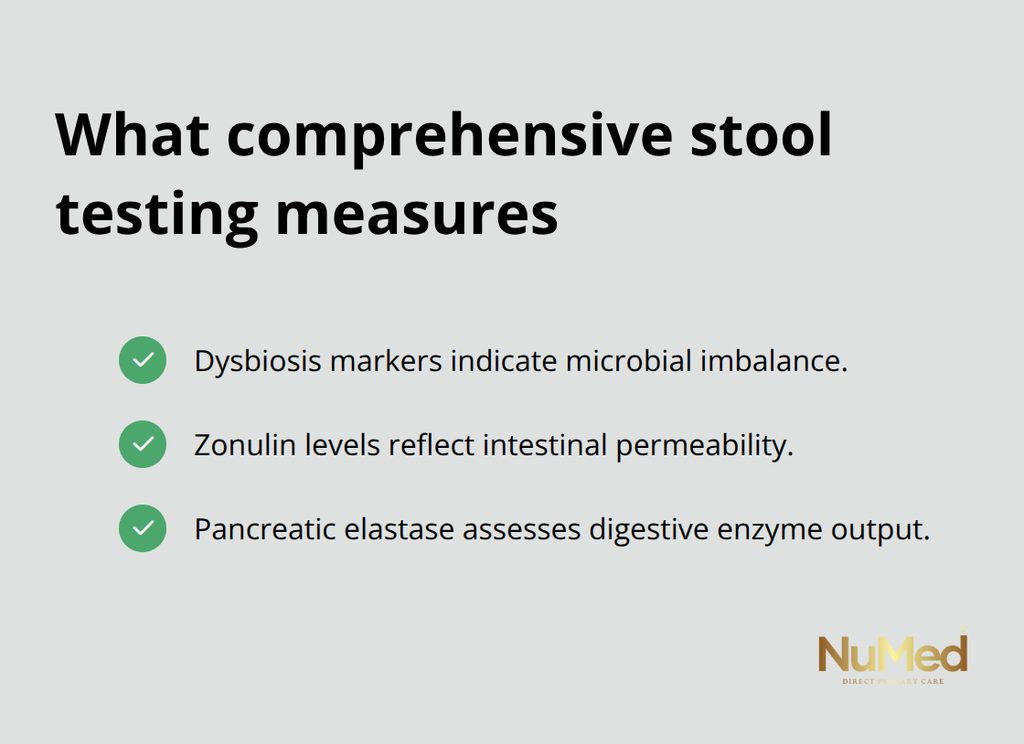
Digestive complaints represent another area where functional testing changes outcomes dramatically. Standard gastroenterology often finds nothing wrong during endoscopy or colonoscopy, leaving patients with IBS diagnoses and no real solutions. Functional labs reveal the actual problem through comprehensive stool analysis measuring dysbiosis markers, zonulin levels indicating intestinal permeability, and pancreatic elastase showing digestive capacity.
One patient with bloating and irregular stools had normal colonoscopy but showed elevated zonulin and low beneficial bacteria on functional testing. Eliminating inflammatory foods, repairing the gut lining with L-glutamine and bone broth, and rebalancing microbiota with targeted probiotics resolved symptoms in six weeks. Metabolic imbalances compound these digestive issues. High fasting glucose combined with elevated inflammatory markers and low vitamin D points toward insulin resistance driving inflammation throughout the gut. These patients need blood sugar stabilization and vitamin D repletion to 50-60 ng/mL, not just dietary fiber recommendations.
Hormonal Dysregulation: Addressing Root Causes of Digestive Dysfunction
Hormonal dysregulation creates similar patterns in digestive health. Elevated cortisol from chronic stress impairs digestion and increases intestinal permeability, while estrogen imbalance affects motility and bacterial balance. Functional diagnostics identifies which imbalance dominates, allowing practitioners to address root dysfunction rather than treating symptoms superficially.
Final Thoughts
Functional diagnostics exploration represents a fundamental shift from reactive disease management to proactive health optimization. Rather than waiting for disease to develop, this approach identifies the imbalances driving your symptoms while intervention remains most effective. The same symptoms-fatigue, digestive dysfunction, hormonal dysregulation-stem from completely different root causes, and standard testing misses these distinctions because it compares you to population averages rather than your optimal baseline.
Personalized treatment plans built on accurate root cause identification work dramatically better than generic protocols. Someone with fatigue requires completely different intervention depending on whether thyroid underperformance, insulin resistance, or nutrient deficiency drives the problem. A patient with digestive complaints needs targeted solutions based on whether dysbiosis, intestinal permeability, or hormonal imbalance creates the dysfunction, and this precision transforms abstract lab numbers into actionable interventions tailored to your specific situation.
We at NuMed DPC practice functional diagnostics exploration through extensive lab services and functional medicine approaches designed around your unique needs. Our direct primary care model focuses on preventing illness through root cause identification rather than managing established disease. If you’re ready to move beyond standard medicine’s reactive approach and identify what’s actually driving your health problems, visit NuMed DPC to learn how functional diagnostics can transform your health outcomes.