Ketamine has emerged as a powerful tool for treating depression, anxiety, and other mental health conditions that don’t respond well to traditional medications. At NuMed DPC, we recognize that understanding your ketamine treatment plan is essential before starting therapy.
This guide walks you through what ketamine is, how the treatment process works, and what safety measures protect you throughout your care.
What Ketamine Actually Does in Your Body
How Ketamine Works at the Neurological Level
Ketamine entered medical practice in the 1970s as an anesthetic for surgery and emergency procedures, and the FDA approved esketamine nasal spray in 2019 specifically for treatment-resistant depression in adults. The drug operates through a mechanism completely different from traditional antidepressants. Instead of increasing serotonin levels like SSRIs do, ketamine blocks glutamate signals in the brain and promotes synaptogenesis-the formation of new neural connections. By activating AMPA pathways, ketamine increases the release of BDNF (brain-derived neurotrophic factor), which stimulates neuroplasticity and the formation of new neural connections. This action happens rapidly, which is why some patients report mood improvements within hours or even during a single infusion, rather than the two to four weeks typical antidepressants require.
Clinical Evidence and Response Rates
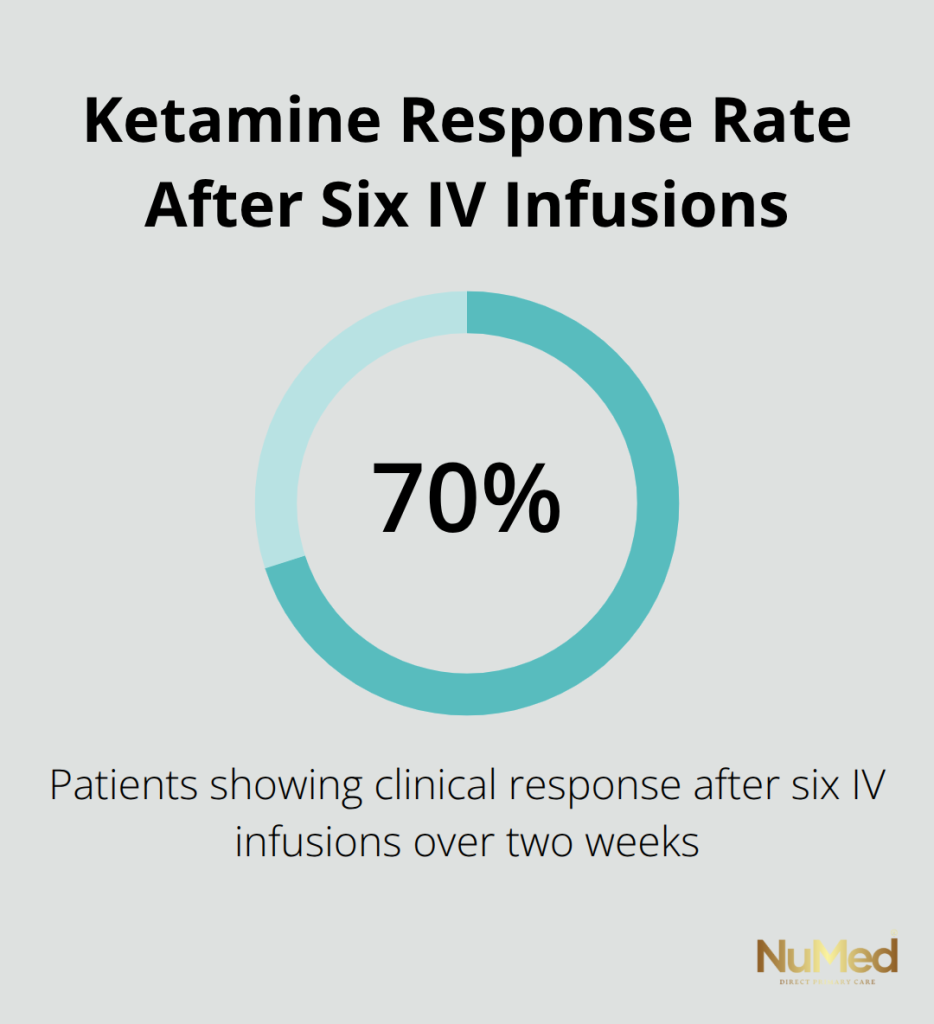
Research published in the American Journal of Psychiatry shows that six IV infusions over two weeks yielded roughly a 70% response rate, with benefits lasting about 18 days on average. The drug also creates what researchers call a neuroplastic window, a temporary period when your brain becomes more malleable and responsive to therapy. This window opens wider when you pair ketamine with psychological support rather than use it alone.
The combination of medication and therapy produces stronger, more durable outcomes than either approach in isolation.
Medical-Grade Versus Street Ketamine
The critical distinction between medical-grade ketamine and street ketamine comes down to purity, dosing precision, and clinical oversight. Medical ketamine is pharmaceutical-grade, manufactured under strict quality controls, and administered in carefully calibrated doses by board-certified anesthesiologists in monitored clinical settings. A typical starting dose for depression is 0.5 milligrams per kilogram of body weight delivered intravenously over 40 minutes, with dosing adjusted based on your individual response and vital signs. Street ketamine contains unknown substances, inconsistent concentrations, and carries risks of contamination and overdose.
Safety Through Clinical Supervision
The medical setting provides continuous heart rate and blood pressure monitoring throughout treatment and for 30 to 120 minutes afterward, with trained staff ready to manage any side effects immediately. Serious adverse events occur in roughly 0.1% of supervised medical treatments. Ketamine’s safety and efficacy depend entirely on this clinical framework-the right dose, the right environment, the right supervision, and integration with therapy afterward. Understanding what happens during your actual treatment sessions helps you prepare mentally and physically for the experience ahead.
What Happens During Your Ketamine Treatment
Pre-Treatment Screening and Medical Assessment
Your ketamine journey begins weeks before your first infusion. A thorough medical history review identifies whether ketamine suits your needs. This screening process matters because certain conditions contraindicate treatment entirely. If you have a history of psychosis, aortic dissection, uncontrolled hypertension, a recent heart attack, liver disease, or are pregnant or breastfeeding, ketamine is not appropriate. Active substance use risk also disqualifies you from treatment. Your clinician reviews all current medications because benzodiazepines and opioids reduce ketamine’s effectiveness. High-dose benzodiazepines specifically lower response rates, so your care team may ask you to adjust your regimen before starting.
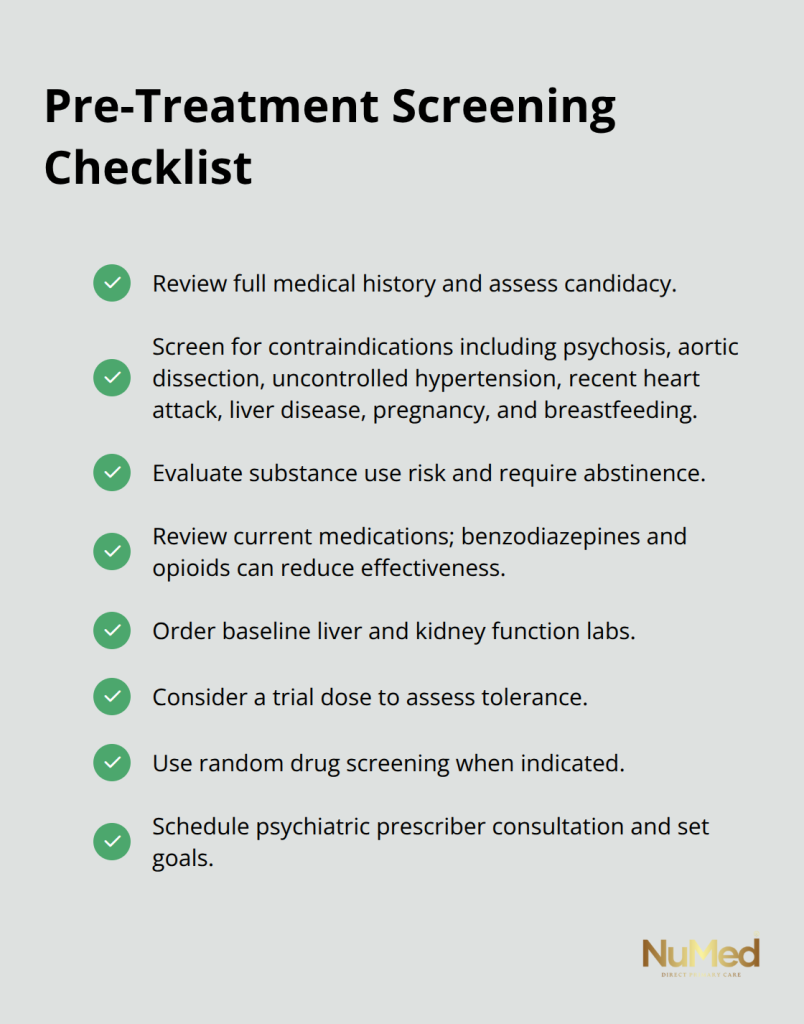
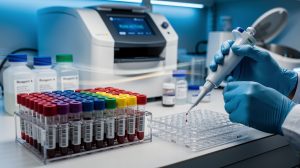
Baseline labs assess liver and kidney function since these organs process ketamine. Some clinics use a trial dose to measure your tolerance, and random drug screening confirms abstinence from substances that interact with treatment. This preparation phase typically spans one to two weeks and includes a psychiatric prescriber consultation to establish your treatment goals.
Preparation Day Protocol
You arrive at your infusion appointment fasting from solids for at least two hours and clear liquids for 30 minutes beforehand (following the same protocols as outpatient surgery). A board-certified anesthesiologist places an IV line and begins infusing ketamine at your individualized dose, typically 0.5 milligrams per kilogram of body weight over 40 minutes. Vital signs are monitored continuously throughout and for 30 to 120 minutes after the infusion ends. The actual infusion session lasts 40 to 60 minutes and occurs in a calm, quiet clinical environment designed to support your experience.
What You Experience During the Infusion
Most people experience relaxation, warmth, or mild lightheadedness within minutes of infusion start. Dissociative experiences often occur, including detachment from surroundings or altered time perception, but these fade within 10 to 15 minutes after infusion ends. Grogginess may persist for 30 to 60 minutes, which is why you cannot drive home. You must arrange transportation in advance and plan to rest for the remainder of your treatment day.
Immediate and Short-Term Response
Some patients notice immediate mood improvements during the session, while others report gradual shifts over the following 24 to 48 hours. Track your response using a simple journal focused on mood, energy, sleep, and daily engagement. Contact your clinic if headaches, nausea, or other concerns emerge, as dosing adjustments can be made for future sessions to minimize side effects while maintaining efficacy.
Integration and Ongoing Monitoring
Integration work after treatment, whether through therapy or journaling, solidifies benefits and guides your ongoing care plan. This post-treatment phase determines how well you translate the neuroplastic window into lasting change. Your clinician works with you to identify patterns in your response and adjust your treatment schedule accordingly. Some patients require multiple sessions spaced over weeks, while others benefit from maintenance infusions at longer intervals. The side effects you experience during one session often inform how your care team modifies the next appointment, making each treatment more tailored to your individual physiology and therapeutic goals.
Safety Considerations and Potential Side Effects
Common Short-Term Effects and Real-Time Management
Ketamine’s side effect profile differs markedly from traditional antidepressants, appearing rapidly during treatment and resolving quickly afterward. Common short-term effects include anxiety or restlessness, blurred vision, dissociation, elevated blood pressure, and nausea. These effects typically fade within minutes to hours after your infusion ends.
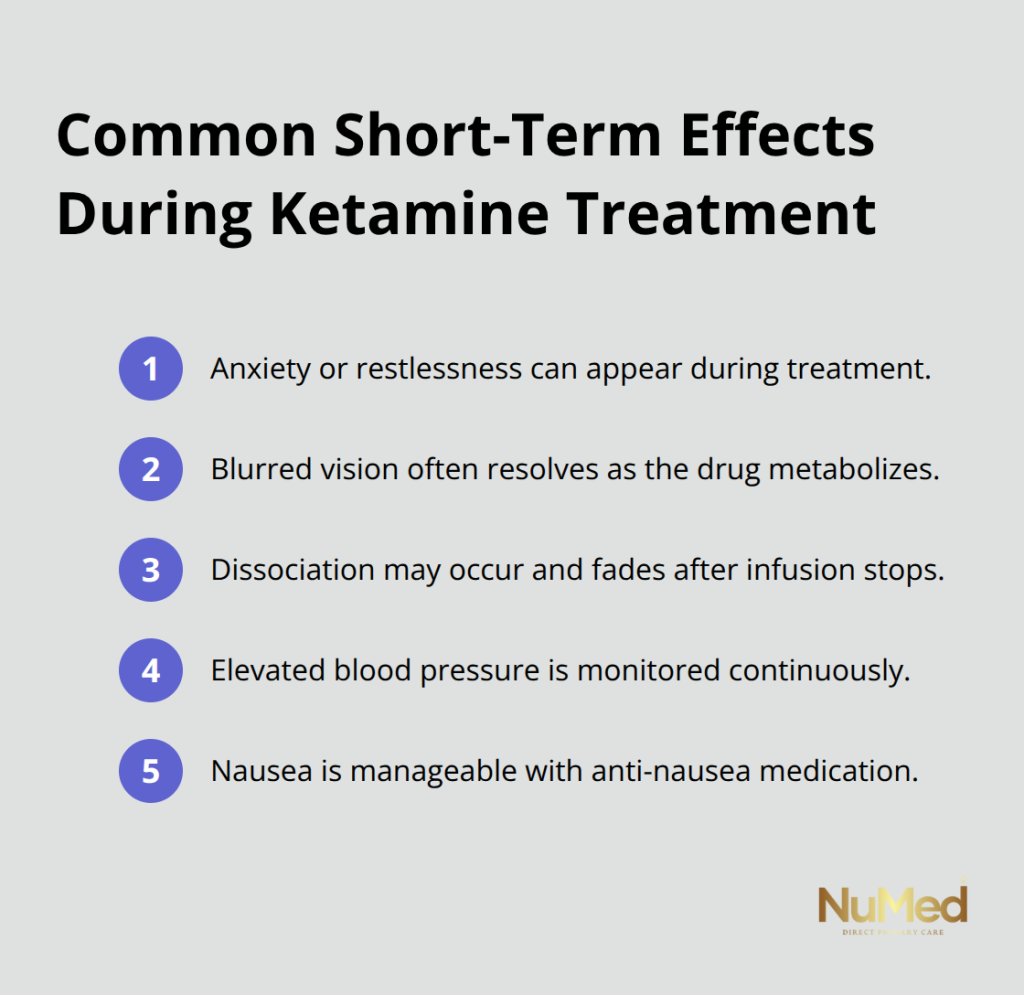
Blurred vision clears as the drug metabolizes, dissociation diminishes once the infusion stops, and nausea responds well to anti-nausea medication administered during your session if needed. Blood pressure elevation occurs in some patients, particularly during infusions, which is why continuous monitoring throughout treatment and for 30 to 120 minutes afterward protects you. Your clinician adjusts the infusion rate based on your vital signs in real time, slowing delivery if your blood pressure rises or heart rate accelerates. This active monitoring means bothersome side effects can be minimized during the session itself rather than managed afterward.
Understanding Dissociation During Treatment
Many patients experience mild dissociation during ketamine treatment as a normal part of treatment, describing dream-like states with heightened sensory perception or time distortion. This dissociation is temporary and expected; it typically resolves within 10 to 15 minutes after infusion completion. Some clinics use eye masks and calming music during sessions to enhance comfort and reduce anxiety during dissociative experiences. The dissociative window actually creates the neuroplastic opportunity that makes ketamine therapeutically effective, so clinicians view this response as a sign that treatment is working as intended.
Rare but Serious Risks Requiring Careful Screening
Rare but serious risks require careful screening before treatment begins. Allergic reactions to ketamine are uncommon but possible, making your medical history review critical. Long-term or high-dose ketamine use can cause bladder problems including cystitis and uropathy, and liver dysfunction risk with ketamine therapy in susceptible individuals. This is why baseline liver and kidney function labs are mandatory before treatment and why your clinician monitors these organs with follow-up testing if you require multiple infusions. Hallucinations occur rarely and typically only in patients with undiagnosed psychosis or active substance use, both of which your screening process identifies and excludes. Serious adverse events remain uncommon in supervised medical settings when appropriate screening and monitoring protocols are followed.
Patient Selection and Contraindication Screening
Patient selection matters profoundly for safety. Contraindications include aortic dissection or aneurysm, uncontrolled hypertension, recent heart attack, history of psychosis, active substance use, liver disease, pregnancy, and breastfeeding. Your clinician also screens for medication interactions, particularly with MAOIs and high-dose benzodiazepines, which reduce ketamine’s effectiveness and increase side effect risk. If you take opioids or benzodiazepines regularly, your care team may adjust your dosing schedule before starting ketamine. Long-term safety data remain limited since ketamine for mental health conditions is relatively new outside anesthesia, but existing evidence from repeated infusion studies shows that properly dosed, carefully monitored treatment carries a manageable risk profile. Rigorous screening and monitoring throughout your care plan ensure that only appropriate candidates proceed to treatment and that those who do receive comprehensive safety oversight.
Final Thoughts
Ketamine therapy produces measurable results for patients whose depression, anxiety, and chronic pain have resisted conventional treatments. Six IV infusions over two weeks yield roughly a 70% response rate, with many patients reporting mood improvements within hours rather than weeks. This rapid action, paired with ketamine’s ability to create a neuroplastic window where your brain becomes more responsive to therapy, sets it apart from traditional antidepressants that require months to take effect.
Your ketamine treatment plan succeeds when three elements align: proper patient selection through rigorous screening, precise dosing and administration by trained clinicians, and meaningful integration work afterward. The medical setting provides continuous monitoring that keeps serious adverse events to approximately 0.1%, making supervised ketamine therapy substantially safer than unsupervised alternatives. Success depends on understanding what to expect before, during, and after each session, preparing your body and mind, and committing to the integration phase where lasting change actually takes root.
If you are considering ketamine therapy, your next step is a consultation with a qualified clinician who can review your medical history, assess whether you are a suitable candidate, and discuss what a personalized treatment plan looks like for your specific situation. At NuMed Direct Primary Care, we focus on addressing root causes of illness through compassionate, holistic healthcare tailored to your unique needs. Whether ketamine is part of your path forward or another approach better suits your circumstances, we stand ready to help you restore your mental health and quality of life through evidence-based care.