
Most people wait until they’re sick to see a doctor. At NuMed DPC, we believe that’s backwards.
A wellness-focused care model shifts the focus from treating disease to preventing it in the first place. When you address health problems early and make sustainable lifestyle changes, you avoid expensive interventions down the road. This approach benefits your wallet, your health, and the entire healthcare system.
How Prevention Cuts Costs Before They Spiral
Early Detection Stops Expensive Complications
Early detection fundamentally changes the financial trajectory of healthcare. When conditions are caught in their initial stages, treatment costs drop dramatically. Managing hypertension with medication and lifestyle changes costs roughly $1,500 to $3,000 annually, whereas treating a stroke resulting from uncontrolled hypertension can exceed $250,000 in acute care alone.
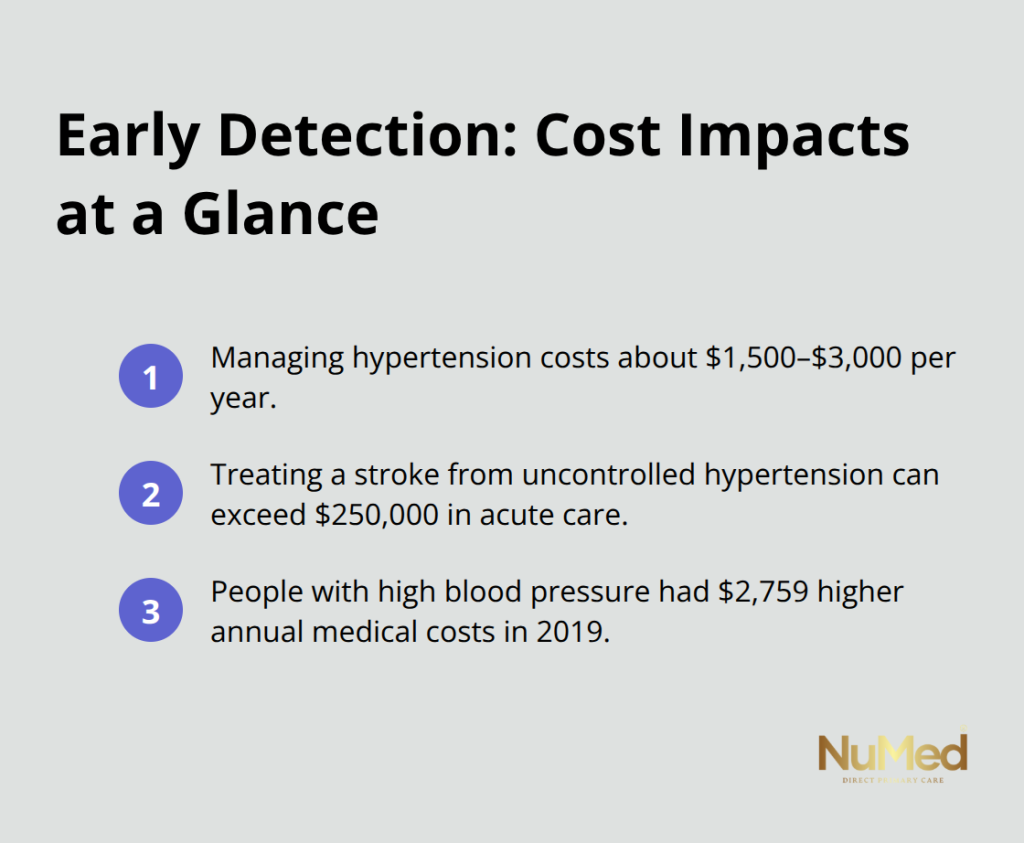
Annual medical costs for people with high blood pressure were $2,759 higher than for people without high blood pressure in 2019. Regular preventive screenings and monitoring catch issues like elevated blood sugar, cholesterol imbalances, and early-stage cardiovascular disease before expensive interventions become necessary. Patients receive guidance on medication adherence, dietary adjustments, and physical activity modifications when they’re still manageable, not after complications develop.
Chronic Disease Management Requires Consistent Patient Engagement
Chronic diseases like diabetes and hypertension drive the majority of U.S. healthcare spending, yet many patients struggle with adherence because traditional care models lack continuity. Direct Primary Care eliminates the friction that prevents engagement: no copays, same-day appointments, and direct access to your provider mean you actually use preventive services. Patients get coaching, medication adherence help, remote monitoring, and coordinated referrals, which cuts complication risk and improves quality of life. Hospital admissions for preventable complications decline when patients receive consistent primary care focused on education and early adjustment of treatment plans.
Personalized Monitoring Transforms How Patients Manage Their Health
The wellness-first approach transforms chronic disease from a series of crisis events into a managed condition. Patients who receive personalized monitoring and support prevent deterioration and reduce reliance on emergency services. This consistent engagement, supported by direct access to providers and transparent communication, allows treatment plans to adapt as health needs change. The foundation for better outcomes is now in place, setting the stage for how personalized medicine takes prevention even further.
Personalized Medicine Matches Treatment to Your Actual Health
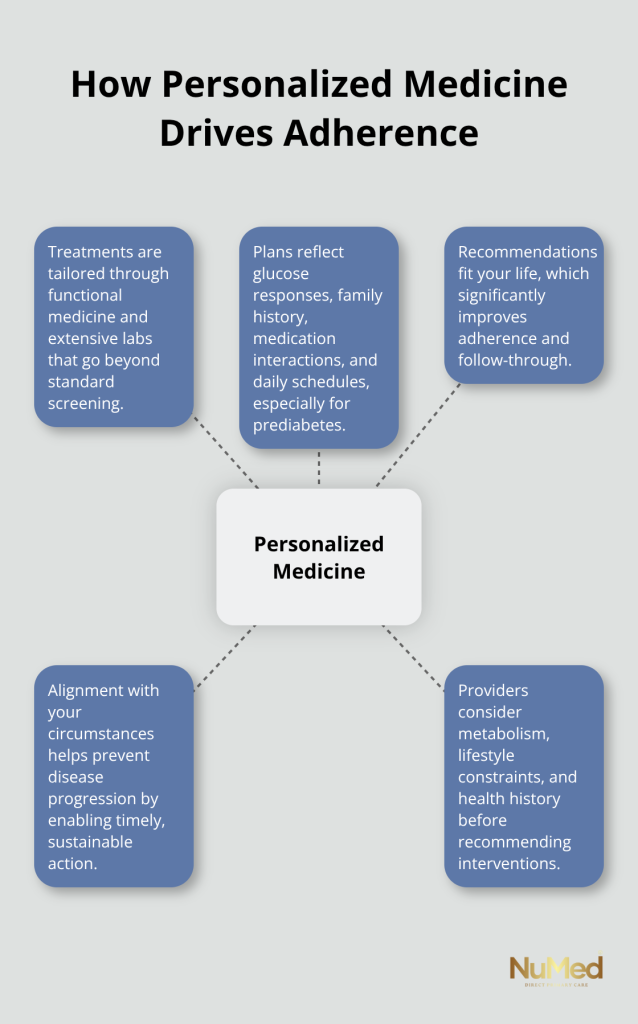
One-size-fits-all treatment protocols fail because no two patients are identical. Personalized medicine in a wellness-focused model means your provider understands your specific genetic predispositions, metabolic patterns, lifestyle constraints, and health history before recommending any intervention. Your provider tailors treatments to your unique needs through functional medicine and extensive lab services that go beyond standard screening. A patient with prediabetes doesn’t receive generic dietary advice; instead, their provider reviews their specific glucose response patterns, family history of diabetes, medication interactions, and daily schedule to design an actionable plan. This specificity dramatically improves adherence because the recommendations fit your life, not an imaginary patient’s life. When treatment aligns with your individual circumstances, you’re far more likely to follow through, which directly impacts whether you actually prevent disease progression or watch complications develop anyway.
Root Cause Identification Stops Symptom Cycling
Traditional care treats symptoms in isolation, which means patients shuttle between providers addressing separate problems without anyone connecting the dots. High blood pressure, fatigue, and weight gain might stem from undiagnosed sleep apnea, thyroid dysfunction, or chronic stress-yet conventional medicine often prescribes medications for each symptom independently. Root-cause medicine investigates the underlying drivers of your health problems by identifying and treating the biological, lifestyle, and environmental factors driving chronic illness. Your provider examines metabolic markers, sleep patterns, stress levels, and nutritional status to identify what’s actually causing your symptoms. This root-cause approach prevents the medication spiral where treating one symptom creates side effects requiring additional medications. Addressing the actual problem (whether that’s a nutritional deficiency, hormonal imbalance, or environmental stressor) resolves multiple symptoms simultaneously and reduces your total medication burden.
Continuous Adjustment Keeps Your Care Plan Effective
Health needs change across months and years, yet many patients remain on static treatment plans designed years earlier. Wellness-focused personalized care incorporates regular monitoring and plan adjustments based on your evolving health data. Direct access to your provider through telehealth and same-day appointments means you don’t wait months between visits to address emerging concerns or medication side effects. When lab results indicate your cholesterol medication needs adjustment, your provider modifies it immediately rather than waiting for your annual appointment. Health coaching included in personalized care helps you implement changes gradually and sustainably, with your provider tracking what actually works for your metabolism and lifestyle. This continuous feedback loop transforms healthcare from a static annual event into an active partnership where your treatment plan evolves as you do.
Your provider’s ability to adjust your care in real time creates the foundation for stronger patient-provider relationships-relationships that ultimately determine whether you stick with your health plan or abandon it when life gets complicated.
Building Strong Patient-Provider Relationships for Better Health Outcomes
Extended Appointment Times Create Space for Real Understanding
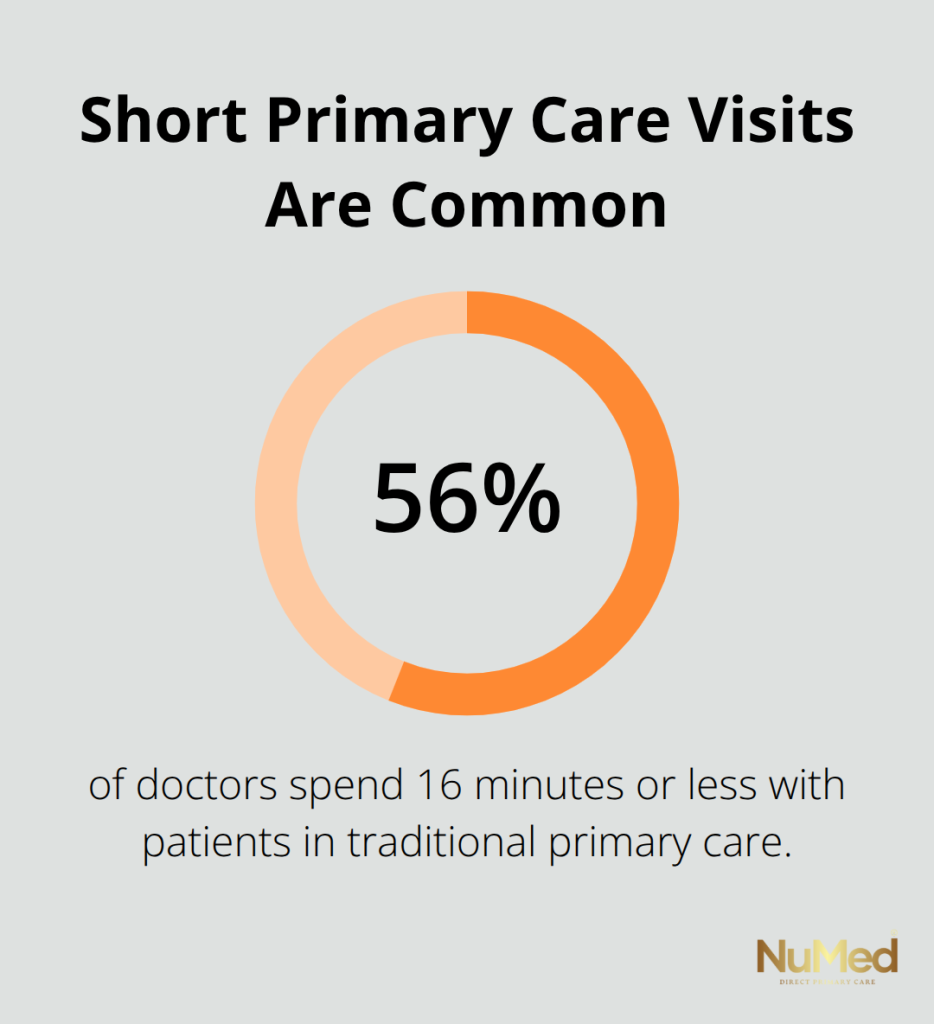
The difference between rushed appointments and unhurried conversations fundamentally shapes whether patients follow medical advice. In traditional primary care, 56% of doctors spend 16 minutes or less with patients, forcing providers to focus on the presenting complaint and skip preventive discussions entirely. Extended appointment times allow your provider to understand your complete health picture, discuss lifestyle factors that drive disease, and develop realistic treatment plans you’ll actually maintain.
When your provider spends 45 minutes with you instead of 15, they learn that you skip doses because of side effects, that your work schedule makes morning exercise impossible, or that family stress raises your blood pressure. This depth of understanding transforms recommendations from generic advice into actionable steps tailored to your specific circumstances.
Direct Access Removes Barriers to Timely Care
Direct access to your provider through same-day appointments and telehealth removes the scheduling friction that prevents people from addressing health concerns early. You contact your provider when you notice symptoms emerging, not months later when complications force an emergency room visit. This accessibility means medication adjustments happen immediately when you experience side effects, questions receive answers without waiting for appointments, and emerging health problems receive attention before they escalate. The ability to reach your provider when you need support transforms healthcare from a scheduled event into an active partnership available when problems arise.
Trust Develops Through Genuine Collaboration
Trust develops through consistent communication and genuine collaboration on treatment decisions, not through transactional interactions. When your provider knows your health history deeply, understands your values and lifestyle constraints, and actively involves you in choosing treatment approaches, you’re far more likely to follow through with recommendations. Research shows that patients who feel heard and involved in decision-making achieve better adherence outcomes, whereas patients receiving prescriptions without discussion experience poor adherence that can lead to disease progression and increased hospitalization rates. Your provider explains why they’re recommending a specific medication, what alternatives exist, and how the treatment aligns with your personal health goals. This collaborative approach means you’re not passively receiving orders but actively partnering in your own care.
Personalized Plans Sustain Long-Term Health Changes
When treatment plans reflect your preferences and circumstances, you maintain them through difficult periods instead of abandoning them when motivation wanes. The relationship becomes the foundation for sustainable health change, making the difference between temporary compliance and lasting transformation of your health trajectory. Your provider’s commitment to understanding your life, not just your symptoms, creates accountability and support that extends far beyond what traditional medicine offers. This partnership approach ensures that health recommendations fit your reality, making adherence achievable rather than aspirational.
Final Thoughts
A wellness-focused care model fundamentally reshapes how healthcare delivers results. Prevention stops disease before it starts, personalized treatment ensures your plan actually fits your life, and strong patient-provider relationships transform recommendations into sustainable habits. These three elements work together to produce outcomes that traditional medicine simply cannot match.
The evidence demonstrates that early detection prevents expensive complications, consistent engagement with your provider manages chronic disease effectively, and treatment plans tailored to your individual health profile drive adherence. When your provider understands your genetics, metabolism, lifestyle constraints, and health history, they design interventions you can maintain long-term rather than abandon. This personalization extends beyond medication to encompass nutrition guidance, exercise recommendations, stress management, and health coaching that address your actual circumstances.
At NuMed DPC, we build our practice around these principles, focusing on preventing illness through root-cause analysis, offering extensive lab services, and functional medicine tailored to your specific health profile. Our health coaching and transparent pricing remove barriers that prevent engagement, allowing you to prioritize prevention without financial stress. Experience the difference that genuine wellness-focused care delivers.