

Most people wait until they’re sick to see a doctor. At NuMed DPC, we believe wellness and preventive care should come first.
When you catch health problems early, you avoid expensive treatments down the road. This blog post shows how preventive care reduces costs, what a comprehensive wellness strategy looks like, and why direct primary care is the ideal model for lifelong health.
How Preventive Care Cuts Healthcare Costs
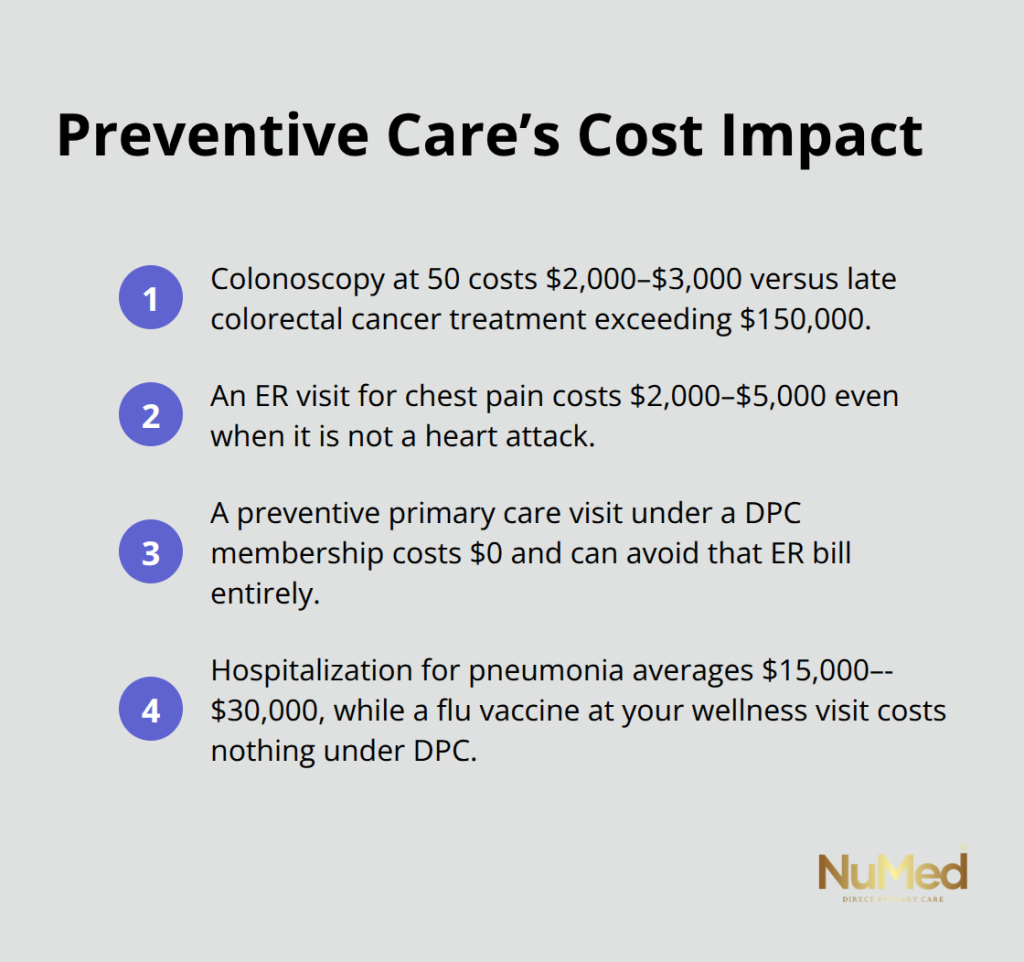
Waiting until the disease develops is expensive. When you catch conditions early, treatment costs plummet dramatically. Colorectal cancer detected at stage one has a five-year survival rate above 90 percent and costs far less to treat than stage four cancer, which drops below 15 percent survival and requires intensive chemotherapy, surgery, and prolonged hospitalization. Early detection of high blood pressure through routine screening prevents strokes and heart attacks that can cost $100,000 to $500,000 in emergency care and long-term rehabilitation. A single colonoscopy at age 50 costs around $2,000 to $3,000 but prevents colorectal cancer treatment that exceeds $150,000 when caught late. These numbers show why preventive screening pays for itself within months, not years.
Chronic Disease Management Prevents Costly Complications
Chronic diseases like diabetes, hypertension, and high cholesterol develop silently and damage your organs until a crisis forces expensive intervention. Uncontrolled diabetes leads to kidney disease requiring dialysis at $35,000 to $50,000 annually, amputations costing $30,000 to $60,000, and vision loss requiring specialized care. Blood pressure monitoring through regular visits catches hypertension before it triggers a stroke. When you manage these conditions through consistent check-ups, medication adjustments, and lifestyle coaching, you avoid the cascade of complications. NuMed DPC includes comprehensive lab services and ongoing monitoring in our membership, allowing continuous tracking of cholesterol, glucose, and blood pressure without surprise costs or insurance delays.
Proactive Care Reduces Emergency Room Visits
Americans made 145 million emergency room visits in 2023, many for conditions that routine primary care could have prevented or managed at home. An ER visit for chest pain costs $2,000 to $5,000 even when it’s not a heart attack. A preventive visit addressing shortness of breath, stress, or medication adjustment costs $0 under a DPC membership and prevents that ER bill entirely. Patients with established relationships with their primary care provider access same-day or next-day appointments, treating acute issues before they escalate. Hospitalization for pneumonia averages $15,000 to $30,000; a flu vaccine at your annual wellness visit costs nothing under DPC membership and prevents this scenario. Practices with strong preventive care programs see 20 to 30 percent fewer ER visits among their patient populations compared to those relying on urgent-care-only models.
What Comprehensive Wellness Requires
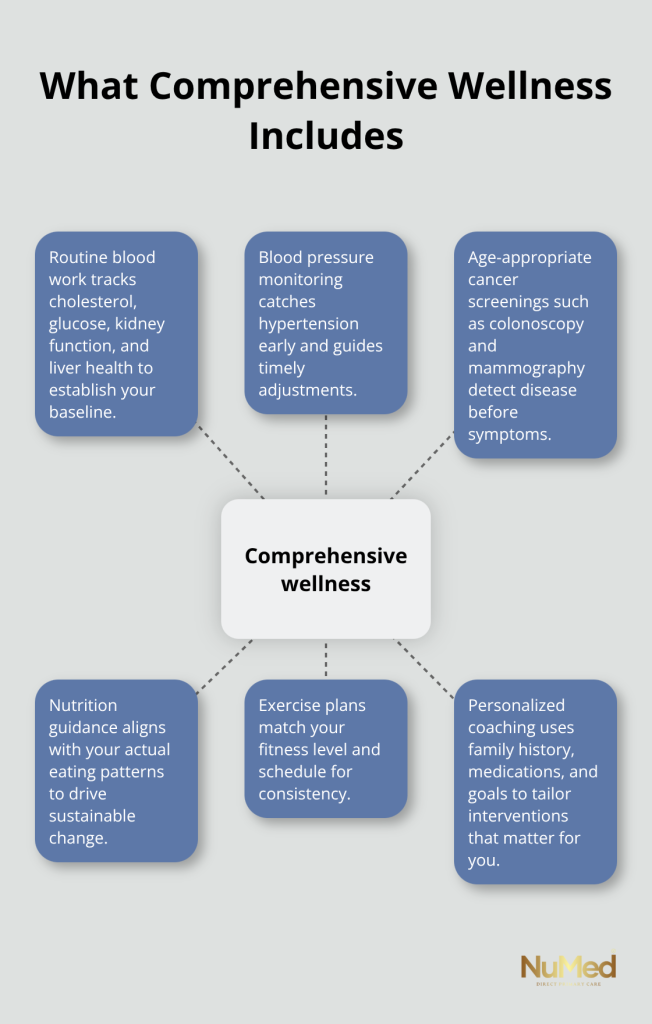
Preventive care extends beyond occasional screenings. You need regular health assessments, lifestyle modifications, and personalized coaching to address your specific risk factors. A comprehensive wellness strategy combines routine blood work, blood pressure monitoring, and age-appropriate cancer screenings with nutrition guidance and exercise plans tailored to your health profile. Your primary care provider should know your family history, current medications, and personal health goals well enough to recommend screenings and interventions that matter for you. This personalized approach (rather than a one-size-fits-all model) transforms preventive care from a checklist into a meaningful partnership focused on your long-term health.
Many patients find that membership medicine leads to reduced out-of-pocket costs and better health outcomes through continuous care coordination.
Building Your Personal Wellness Blueprint
A comprehensive wellness strategy isn’t something your doctor hands you on a printed sheet. It’s a living plan that evolves as your health changes, your risk factors shift, and your life circumstances transform. Your wellness plan starts with knowing your baseline-this means blood work that measures cholesterol, glucose, kidney function, and liver health, not just a quick blood pressure check. Women over 40 should have baseline mammograms; anyone over 50 needs a colonoscopy to establish whether precancerous polyps exist. Men over 50 should discuss prostate screening with their provider based on individual risk factors. These initial assessments create your health map, showing exactly where you stand and what requires attention.
Frequent Assessments Drive Real Change
The difference between a wellness strategy that works and one that fails is frequency and accountability. Annual physicals miss the window for meaningful intervention. Quarterly or semi-annual visits with your primary care provider create touchpoints where blood pressure trends become visible, weight changes signal metabolic shifts, and medication adjustments can happen before problems escalate. Research from the American Journal of Preventive Medicine shows that patients with quarterly primary care visits demonstrate better chronic disease management and lower hospitalization rates than those seeing providers once yearly. Your provider should track your progress on specific metrics-resting heart rate, fasting glucose, LDL cholesterol-and adjust your approach when numbers drift. This requires a provider who knows your history, your challenges, and your goals well enough to coach you toward realistic changes rather than demanding perfection.
Lifestyle Changes Require Coaching, Not Lectures
Telling someone to exercise more or eat better produces no results. Health coaching transforms vague intentions into specific actions. Your provider should help you identify one or two concrete changes to focus on first, perhaps swapping afternoon soda for water or adding a 15-minute walk three times weekly, rather than overhauling your entire life at once. Nutrition guidance should address your actual eating patterns and preferences, not generic diet rules. A person who loves cooking benefits from learning how to prepare heart-healthy meals they actually enjoy; someone too busy for meal prep needs strategies for selecting better options when eating out. Exercise recommendations should match your fitness level and schedule. A sedentary office worker starting with three 20-minute walks weekly succeeds far more often than one told to join a gym and exercise five days per week. Your provider should revisit these goals at each visit, celebrate progress, troubleshoot obstacles, and adjust expectations based on what works in your real life, not in theory.
Personalized Plans Address Your Actual Health Risks
One-size-fits-all wellness fails because your health risks differ from everyone else’s. Your family history, current medications, lifestyle, and personal preferences shape which interventions matter most. Someone with a family history of early heart disease needs aggressive cholesterol management and stress reduction strategies; someone with diabetes risk needs different nutrition and exercise priorities. Your provider tailors recommendations to your specific situation rather than applying a standard checklist. This personalized approach (combined with regular follow-up visits) transforms preventive care from a box-checking exercise into a meaningful partnership focused on your actual health trajectory. The next step in your wellness journey involves understanding how your primary care provider coordinates with specialists and other healthcare resources to support your long-term health goals.
Why Your Primary Care Provider Matters More Than You Think
The relationship between you and your primary care provider determines whether preventive care actually happens or becomes another item you keep meaning to schedule. In traditional insurance-based care, your provider manages thousands of patients, spending significant time on paperwork, insurance authorizations, and billing codes rather than understanding your health story. Direct primary care models maintain manageable patient panels, creating space for the kind of continuity that transforms preventive care from a checkbox into a genuine partnership.
This matters because your provider needs to remember that you hate gyms but love hiking, that your mother had early heart disease, that you struggle with medication adherence, and that stress triggers your migraines. These details never appear in lab results or screening forms-they emerge only through repeated conversations with someone who actually knows you. When your provider understands your baseline health, your family history, your work stress, and your real-world barriers to change, they recommend preventive interventions that fit your life rather than generic protocols that fail because they ignore who you actually are.
How Smaller Patient Panels Enable Real Continuity
Providers with manageable patient panels spend meaningful time with each person. They track your progress across months and years, noticing patterns that isolated annual visits would miss. Your provider recalls your previous concerns, follows up on recommendations you attempted, and adjusts strategies based on what actually works for you rather than what works in theory. This continuity creates accountability-you’re more likely to follow through on health goals when someone who knows you checks in at your next visit. The provider also catches subtle changes in your health trajectory that might signal emerging problems before they become serious.
Comprehensive Lab Services Remove Testing Barriers
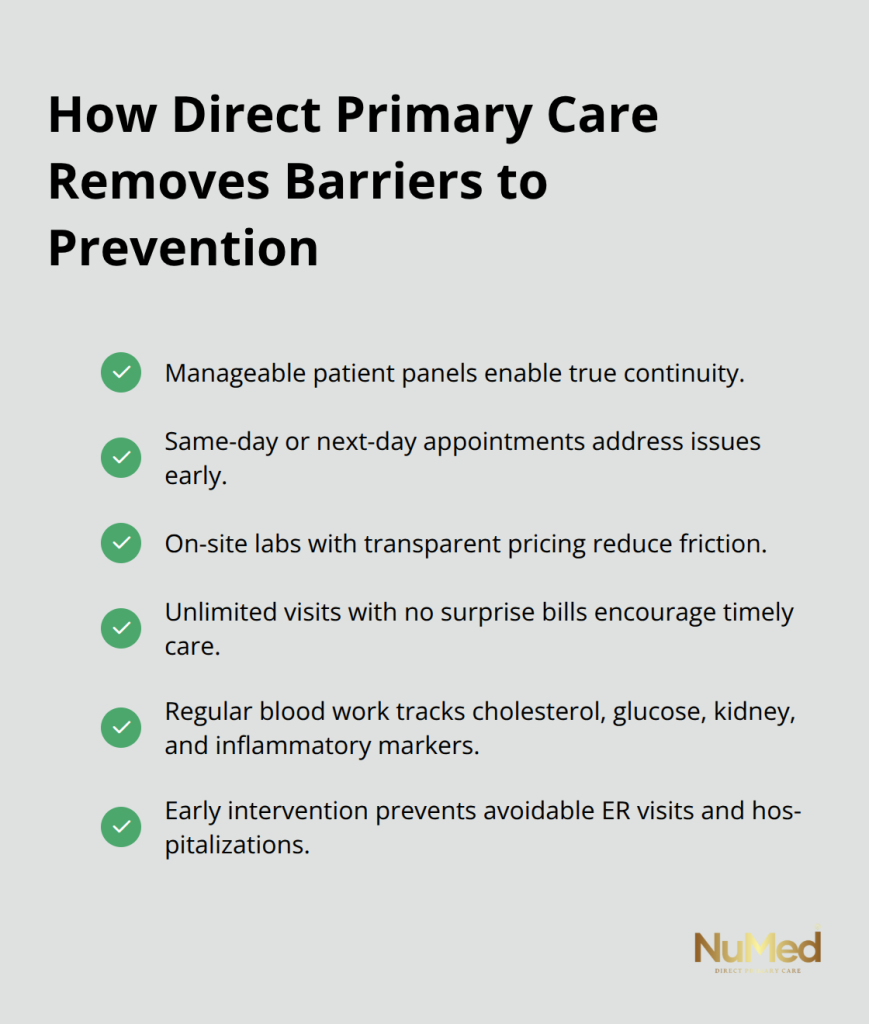
Traditional insurance-based care creates friction around testing: your provider orders labs, you wait for insurance approval, you drive to a separate lab facility, and weeks later, you receive results while facing surprise bills if the test wasn’t fully covered. This friction causes people to skip testing they need. Direct primary care practices offer on-site labs and transparent pricing that eliminate these obstacles: blood work happens during your visit at wholesale cost rather than inflated insurance rates, and you know exactly what you’ll pay upfront.
This accessibility means you actually complete the preventive testing your provider recommends instead of postponing it because of hassle or cost uncertainty. Regular blood work tracking your cholesterol trends, glucose levels, kidney function, and inflammatory markers creates a detailed picture of your health trajectory that catches problems before symptoms appear. Your provider reviews these results with you in the context of your personal health goals and adjusts your approach, medication changes, lifestyle modifications, or additional screening based on what your individual numbers reveal rather than applying population averages.
Transparent Pricing Encourages Timely Care
Transparent pricing removes the financial anxiety that prevents people from seeking care when they notice symptoms. When you know your membership covers unlimited visits with no surprise bills, you contact your provider about that new rash, persistent cough, or blood pressure spike rather than waiting and hoping it resolves. This early intervention prevents preventable conditions from escalating into emergencies that require expensive intervention. You address health concerns at their earliest stages, when treatment is most effective and least costly.
Final Thoughts
Preventive care forms the foundation of lifelong health, catching disease early when treatment works best and costs least. Regular screenings, consistent monitoring, and personalized health coaching prevent expensive complications, reduce emergency room visits, and extend your years of good health. Wellness and preventive care work because they address problems before they become crises.
The direct primary care model removes the barriers that prevent preventive care from actually happening. Traditional insurance creates friction through surprise bills, insurance delays, and providers too overwhelmed to know you well enough to recommend meaningful interventions. Direct primary care eliminates these obstacles by maintaining manageable patient panels, offering same-day or next-day appointments, and providing on-site labs with transparent pricing that encourages you to complete the preventive testing your provider recommends.
This model shifts healthcare from reactive treatment of disease toward proactive prevention of illness. You address high blood pressure before it triggers a stroke, catch early-stage cancer when survival rates exceed 90 percent, and manage diabetes before it damages your kidneys. NuMed Direct Primary Care focuses on preventing illness by addressing root causes and fostering personalized connections between patient and practitioner, offering extensive lab services, functional medicine, and health coaching tailored to your unique needs.