Progesterone is one of your body’s most important hormones, yet many people don’t understand how it works or why levels matter. Low progesterone can affect your menstrual cycle, fertility, mood, and overall quality of life.
At NuMed DPC, we believe patients deserve a clear progesterone supplementation overview that goes beyond generic information. This guide walks you through what progesterone does, when supplementation helps, and how proper testing guides the right treatment for your unique situation.
What Progesterone Actually Does in Your Body
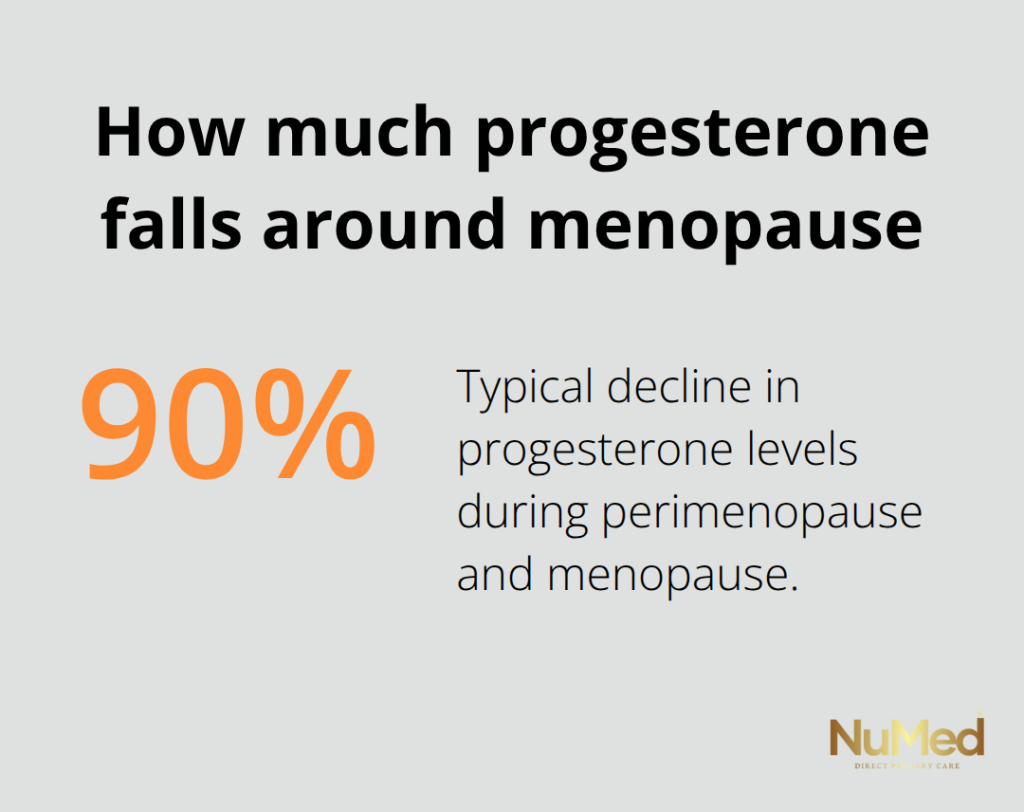
Progesterone functions as a master regulator affecting your nervous system, bone density, skin health, sleep quality, and mood, far beyond its reproductive role. After ovulation, your body produces progesterone to prepare the uterine lining for potential pregnancy, but this hormone also acts as a neurosteroid, interacting with GABA receptors in your brain to promote calm and restful sleep. During perimenopause and menopause, progesterone levels decline sharply, often dropping by 90% or more, which explains why many women experience insomnia, anxiety, and mood instability during these years. Progesterone stimulates osteoblast activity in bones, working alongside estrogen to maintain bone density, a critical concern since bone loss accelerates after menopause. Additionally, progesterone helps regulate histamine, potentially reducing headaches and allergic reactions that often worsen when estrogen dominates without adequate progesterone balance.
Your skin also relies on progesterone for collagen production and hydration, which is why some women notice skin quality changes as levels fall.
Why Progesterone Levels Drop
Low progesterone typically stems from anovulatory cycles, where ovulation fails to occur, and progesterone production never starts. This happens frequently during perimenopause, when menstrual cycles become irregular and unpredictable. Chronic stress elevates cortisol, which can suppress progesterone production through a mechanism called pregnenolone steal. Your body diverts the precursor hormone toward stress hormone production instead. Thyroid dysfunction, particularly hypothyroidism, impairs the hormonal signaling needed for normal ovulation and progesterone secretion. Polycystic ovary syndrome (PCOS) prevents regular ovulation in many women, leaving progesterone levels consistently low throughout the cycle. Certain medications, including some hormonal contraceptives and anti-seizure drugs, interfere with progesterone metabolism or production. Age itself matters-as women approach their 40s and enter perimenopause, ovulatory cycles become less frequent, sometimes skipping months entirely.
How Progesterone Deficiency Presents
Low progesterone manifests as sleep disturbances that resist typical sleep hygiene measures, anxiety that peaks during the luteal phase of your cycle, and mood swings severe enough to disrupt relationships or work. Irregular or absent periods signal anovulatory cycles where progesterone never rises. Infertility or recurrent miscarriage can indicate insufficient progesterone to support pregnancy, particularly during the critical first trimester. Many women report breast tenderness, water retention, and bloating that worsens in the second half of their cycle when progesterone should be rising but isn’t. Migraines, particularly menstrual migraines, often intensify with progesterone deficiency because low progesterone fails to regulate histamine effectively. Bone loss accelerates when progesterone remains chronically low, increasing fracture risk years later-a concern that intensifies after menopause when both estrogen and progesterone plummet. Skin quality deteriorates with persistent low progesterone, showing reduced elasticity and increased sensitivity.
Why Testing Matters More Than Self-Diagnosis
Progesterone deficiency symptoms overlap significantly with other conditions, which is precisely why testing through your healthcare provider matters more than self-diagnosis. A single blood test at the wrong time in your cycle can produce misleading results, since progesterone levels fluctuate dramatically throughout the month. Your provider can order tests at the optimal time, around seven days before your next expected period, to capture your peak progesterone level and determine whether supplementation makes sense for your situation. Without proper testing, you risk treating symptoms that stem from other hormonal imbalances, thyroid issues, or lifestyle factors. The next section explores how supplementation addresses progesterone deficiency and what benefits patients experience when levels are restored to optimal ranges.
How Progesterone Supplementation Restores Balance Across Your Cycle
Restoring progesterone to optimal levels produces measurable changes across multiple body systems within weeks, not months. When progesterone rises adequately during your luteal phase, your sleep architecture improves. Women often report falling asleep faster and waking fewer times during the night, with REM sleep quality improving noticeably.
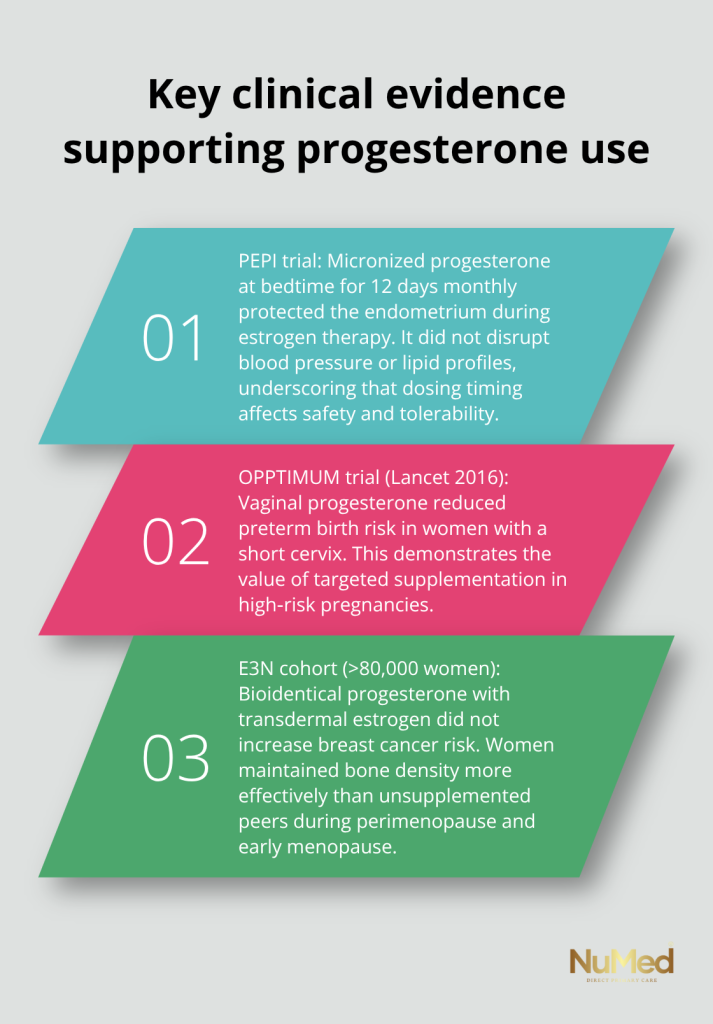
The PEPI trial demonstrated that micronized progesterone administered at bedtime for 12 days monthly provided endometrial protection during estrogen therapy without disrupting blood pressure or lipid profiles, showing that dosing timing matters significantly for both safety and tolerability. Anxiety and mood instability that peaked in your luteal phase typically resolve within one to two cycles as progesterone stabilizes GABA receptor signaling in your brain. Menstrual cycles regulate naturally when progesterone rises adequately. If you’ve experienced irregular periods or skipped cycles during perimenopause, consistent supplementation often restores predictable timing within three months. Breast tenderness, water retention, and bloating diminish substantially as progesterone’s diuretic effects balance estrogen dominance. Bone density stabilizes because progesterone stimulates osteoblast activity; the E3N cohort study of over 80,000 women showed that those using bioidentical progesterone maintained bone density more effectively than unsupplemented women during perimenopause and early menopause.
Pregnancy Support Requires Precision Timing and Dosing
Progesterone supplementation for fertility and early pregnancy demands exact timing to mirror your body’s natural cycle. If you track ovulation, start supplementation three days after a positive ovulation predictor kit or two days after insemination, then continue 400 mg daily (typically as a vaginal insert) for ten to fourteen days until your pregnancy test. The OPPTIMUM trial in the Lancet 2016 found that vaginal progesterone reduced preterm birth risk specifically in women with a short cervix, indicating that targeted supplementation in high-risk pregnancies delivers real clinical benefit. Continue progesterone through the first trimester if your pregnancy test becomes positive, as progesterone sustains the uterine lining during the critical window when your placenta develops. Common side effects during pregnancy, such as support-spotting, mood changes, and mild nausea typically resolve as your body adjusts, but contact your provider immediately if you experience severe headaches, chest pain, or vision changes. The vaginal route delivers progesterone directly to your reproductive system while minimizing systemic effects, making it the preferred method during fertility treatment and early pregnancy.
Perimenopause Demands Flexible Supplementation Strategies
Perimenopause presents a unique challenge because your cycles remain present but erratic, meaning some months your body produces adequate progesterone while others it produces almost none. Supplementation during anovulatory cycles, months when you don’t ovulate, prevents the anxiety, insomnia, and migraine spikes that occur when estrogen dominates without progesterone’s counterbalance. The KEEPS study found that women using progesterone-containing hormone therapy experienced protective cardiovascular and cognitive effects with no increased breast cancer, stroke, or blood clot risk compared to placebo, directly contradicting fears about progesterone safety. Your healthcare provider can assess your individual cycle patterns and recommend supplementation schedules that match your body’s actual ovulation patterns rather than applying a one-size-fits-all approach.
Menopause Requires Consistent Dosing for Endometrial Protection
Once you reach menopause and periods stop entirely, oral micronized progesterone taken at bedtime for twelve days monthly (200 mg dosing) provides endometrial protection if you’re using estrogen therapy while delivering sleep and mood benefits year-round. Bioidentical progesterone carries a substantially safer profile than synthetic progestins-the WHI study documented a 1.23-fold breast cancer risk increase with synthetic progestin-containing therapy, while the E3N study showed no increased breast cancer risk when transdermal estrogen paired with natural progesterone, with a risk ratio of only 1.08. This distinction matters profoundly for your long-term health: synthetic alternatives carry risks that bioidentical progesterone simply doesn’t share. Understanding which type of progesterone your provider recommends and why that choice matters for your specific health situation sets the foundation for safe, effective supplementation throughout your menopausal years and beyond.
Which Progesterone Type and Dose Actually Works for Your Situation
Bioidentical Versus Synthetic: Why the Difference Matters
Bioidentical micronized progesterone matches your body’s natural hormone molecule-for-molecule, producing fundamentally different safety outcomes than synthetic alternatives. The WHI study found synthetic progestin-containing therapy increased breast cancer risk when combined with estrogen, while the E3N cohort of over 80,000 European women showed no increased breast cancer risk with bioidentical progesterone paired with transdermal estrogen. This distinction carries real clinical weight-bioidentical progesterone simply doesn’t carry the cancer risk that synthetic progestins do.
Routes of Administration and Their Effects
Your route of administration directly affects how your body processes progesterone and which side effects you’ll experience. Oral micronized progesterone taken at bedtime (200-400 mg depending on your situation) produces systemic effects throughout your body, making it ideal for menopause support and sleep improvement because the sedative effect occurs when you need it. Vaginal inserts deliver progesterone directly to your reproductive system with minimal systemic absorption, making them the preferred choice during fertility treatment and early pregnancy when you want maximum uterine support without affecting your entire nervous system.
Some women experience progesterone intolerance-mood changes, bloating, or breast tenderness that worsens rather than improves-which signals that your current dose or route isn’t right for your body. Switching from oral to vaginal administration or reducing your dose often resolves these reactions completely. Dosing precision matters enormously: for endometrial protection during menopause hormone therapy, the PEPI trial established that 200 mg taken at bedtime for 12 days monthly provides complete protection without side effects, whereas higher or longer durations increase intolerance risk without additional benefit. For fertility support, 400 mg daily as a vaginal insert for 10-14 days matches your body’s natural luteal phase progesterone production and delivers the most consistent outcomes.
Managing Side Effects and Recognizing Warning Signs
Side effects from progesterone supplementation typically emerge within the first one to two weeks and fall into two categories: those that resolve as your body adjusts, and those that signal your dose or route needs adjustment. Drowsiness and dizziness occur because progesterone acts as a neurosteroid, affecting your GABA receptors. Taking oral progesterone at night converts this into a benefit rather than a problem, but if you experience excessive daytime sedation, your dose is too high. Breast tenderness, nausea, and mild mood changes often settle within two to three cycles as your system stabilizes, but contact your provider if they intensify rather than improve.
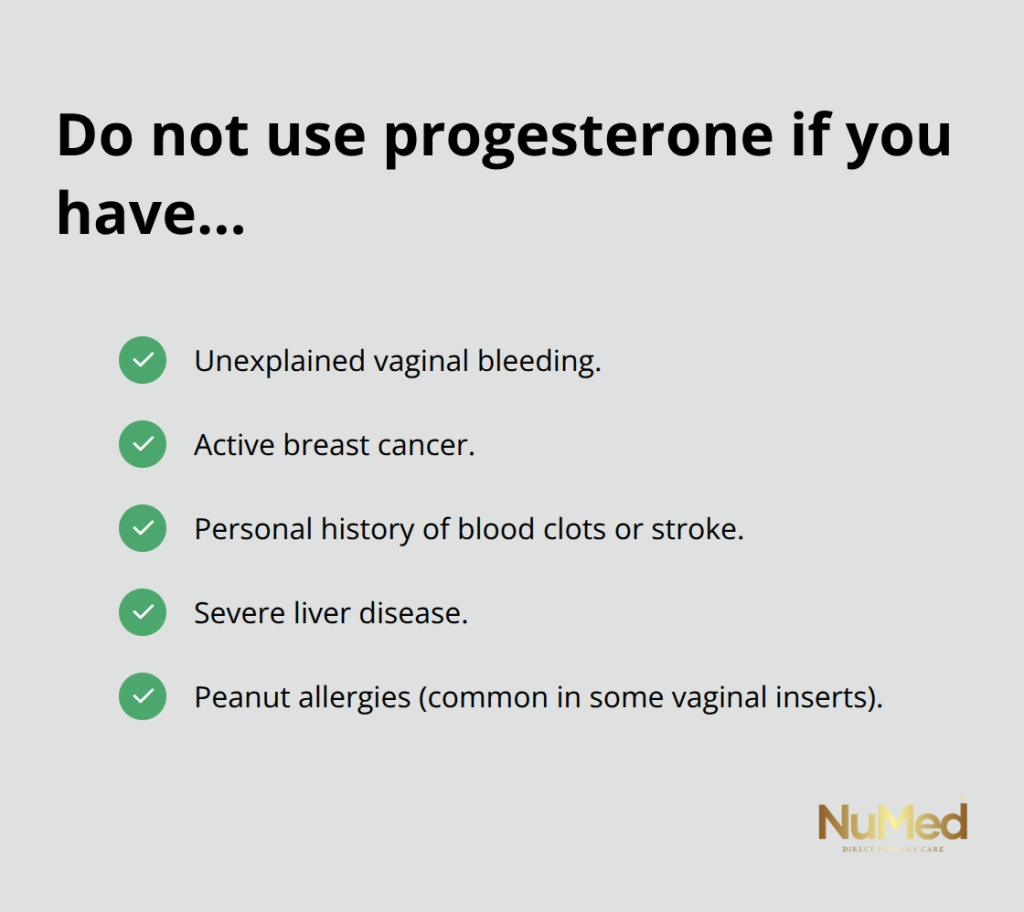
Serious warning signs demand immediate medical attention: sudden severe headaches, vision changes, chest pain, leg pain or swelling, or difficulty breathing could indicate blood clots or cardiovascular events, though these remain rare in women using bioidentical progesterone without other risk factors. Your contraindications matter significantly-avoid progesterone entirely if you have unexplained vaginal bleeding, active breast cancer, a personal history of blood clots or stroke, severe liver disease, or peanut allergies (since most vaginal inserts use peanut oil as a vehicle).
Testing and Monitoring for Optimal Results
Testing before starting supplementation prevents costly mistakes: a simple blood test measuring your progesterone level seven days before your expected period reveals whether you actually have a deficiency or whether your symptoms stem from thyroid dysfunction, vitamin D insufficiency, or other treatable causes. Monitoring continues throughout supplementation-your provider should reassess your symptoms at four to six weeks, adjusting your dose or route based on your response rather than assuming a standard protocol works for everyone. Regular follow-ups catch emerging side effects early and confirm that your supplementation strategy actually addresses your root problem rather than masking symptoms while underlying issues persist.
Final Thoughts
Progesterone supplementation works best when testing guides your treatment decisions rather than assumptions about your hormone levels. At NuMed DPC, we order progesterone testing at the optimal point in your cycle, around seven days before your expected period, to capture your peak level and determine whether supplementation actually addresses your symptoms or whether other factors like thyroid dysfunction or nutritional deficiencies explain what you’re experiencing. This testing-first approach prevents unnecessary supplementation and identifies the root cause of your symptoms from the start.
Your healthcare provider personalizes your dose and route to your specific situation rather than applying a generic protocol to your progesterone supplementation overview. Your provider monitors your response at four to six weeks, adjusting your regimen based on whether your sleep improves, your mood stabilizes, and your cycles regulate, or whether side effects suggest your current approach needs modification. This ongoing partnership catches problems early and confirms that your supplementation strategy actually solves your underlying issue.
Bioidentical progesterone carries a substantially safer profile than synthetic alternatives; timing and dosing precision matter enormously for both safety and effectiveness, and proper testing guides every decision about your hormone management. NuMed Direct Primary Care specializes in personalized hormone management within a direct primary care model that prioritizes prevention and root-cause treatment, combining extensive lab services, functional medicine, and health coaching tailored to your unique needs with transparent pricing and accessible support throughout your supplementation journey.