
Most people who try to change their health habits fail within weeks. At NuMed DPC, we’ve seen firsthand that the problem isn’t willpower-it’s strategy.
Sustainable lifestyle changes don’t happen through motivation alone. They happen when you build systems that work with your brain, not against it.
Why People Abandon Lifestyle Changes
The Statistics Behind Failed Habits
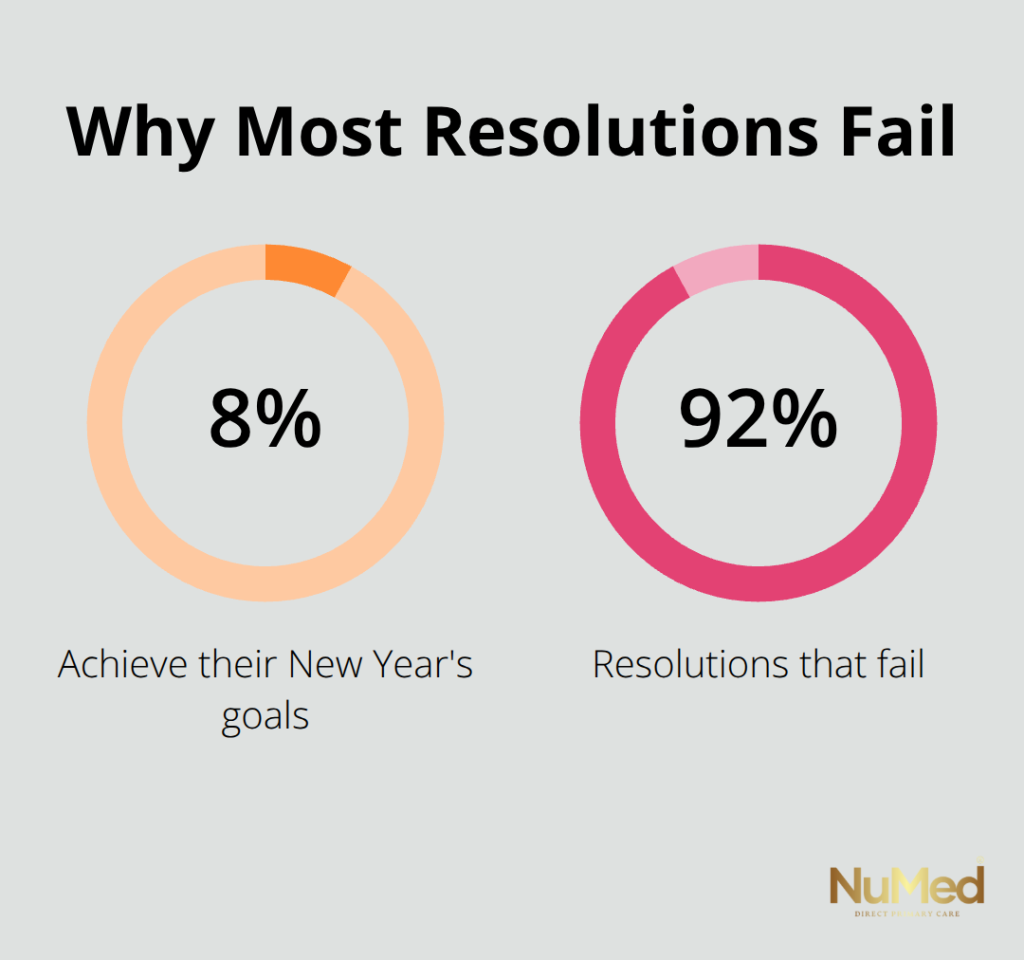
Just 8% of people achieve their New Year’s goals, which means 92% of resolutions fail. The failure rate for lifestyle changes isn’t due to lack of willpower-it’s because most people rely on motivation, which is unreliable.
Motivation is a feeling that comes and goes. On Monday, you’re excited to start exercising. On Wednesday, that excitement fades. What matters instead is whether your environment supports the change.
Environment Trumps Willpower
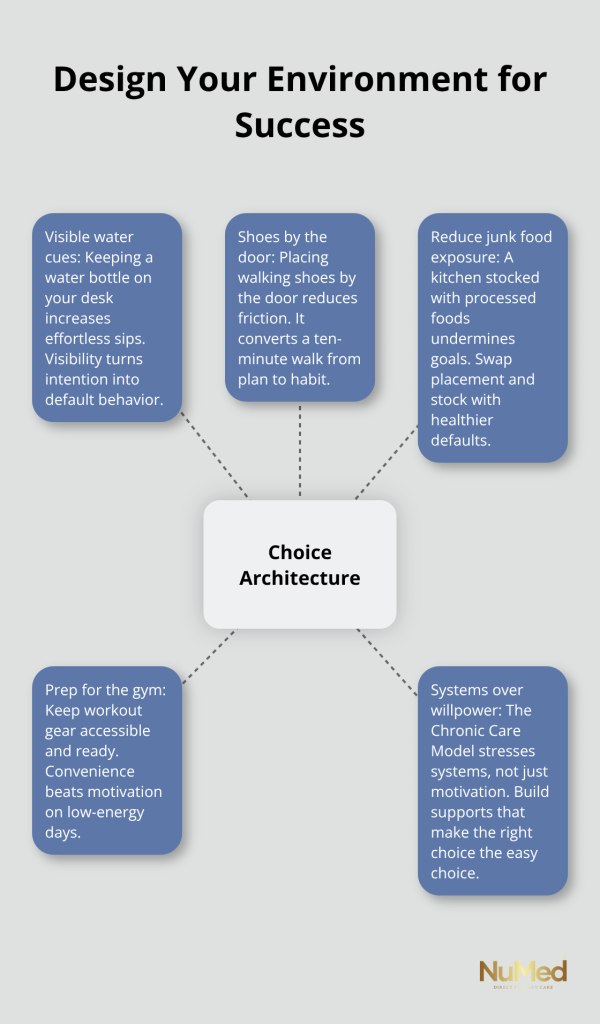
If your kitchen is stocked with processed foods, willpower alone won’t keep you eating well. If your workout shoes are buried in a closet, motivation won’t get you to the gym. Environmental design-what researchers call choice architecture-determines whether you succeed or fail far more than your intentions do. The Chronic Care Model, which guides effective disease management, emphasizes this point: sustainable behavior change requires systems, not just patient motivation.
The Cognitive Load Problem
Most people fail because they try to change too much at once. Research from Stanford University shows that attempting multiple habits simultaneously reduces success rates dramatically. Someone decides to exercise daily, eat healthier, sleep eight hours, and meditate-all at the same time. Within weeks, one habit breaks, then another, and the entire system collapses. The problem is cognitive load. Your brain has limited willpower resources, and trying to manage five new behaviors depletes them quickly.
Start Small and Stack Habits
What actually works is starting with one micro-habit, something so small it feels almost trivial. Instead of exercising for an hour, commit to a ten-minute walk. Instead of overhauling your diet, swap one sugary drink for water daily. These tiny changes create momentum and build confidence. Once that habit is automatic, you add the next one. This sequential approach, sometimes called habit stacking, allows your brain to integrate change gradually.
How the Environment Reinforces Small Changes
Environmental factors then reinforce these stacked habits. If your water bottle sits on your desk, you’ll drink more water without thinking. If your walking shoes are by the door, you’re more likely to take that ten-minute walk.
The interaction between small, achievable goals and supportive environments is what separates people who sustain change from those who don’t. Understanding this foundation prepares you to take the next step: learning exactly how to construct these micro-habits and stack them into a lasting system.
How to Build Habits That Actually Stick
The key to sustainable change is making it so easy that you don’t need willpower. A ten-minute walk requires far less decision-making than planning a full gym routine. Start with one micro-habit that takes less than two minutes to complete. Research from BJ Fogg at Stanford shows that tiny behaviors repeated consistently create neurological pathways faster than occasional intense efforts. If you want to drink more water, place a glass on your nightstand tonight. Tomorrow morning, drink it before anything else. That’s your micro-habit. Once this becomes automatic, usually within three to four weeks of daily repetition, you add the next small behavior.
Why Progression Matters More Than Intensity
This sequential approach prevents the cognitive overload that derails most people. The mistake people make is treating habit formation like a light switch when it’s actually a dimmer. You don’t flip from sedentary to exercising five days a week. You start with one five-minute walk on Monday, repeat it on Wednesday and Friday, then gradually extend the duration after two weeks. This progression works because your brain doesn’t rebel against tiny changes. Motivation isn’t required because the friction is so low that your environment does the work instead.
Connect New Behaviors to Existing Routines
Habit stacking works when you anchor a new behavior to something you already do automatically. If you drink coffee every morning, your new habit becomes: after I pour my coffee, I drink a glass of water. If you brush your teeth every evening, your new habit becomes: after I brush my teeth, I do three minutes of stretching. Research on habit formation shows that attaching a new behavior to an existing routine reduces the mental load of remembering to do it. The existing routine becomes the trigger, eliminating the need for motivation.
Track Progress Without Perfectionism
Track progress with a simple calendar where you mark each day you complete the stacked habit. This isn’t about perfection; missing one day doesn’t reset your progress. What matters is the pattern over weeks. After four weeks of consistent habit stacking, your brain treats the new behavior as part of your daily operating system. At this point, you can add another micro-habit to a different existing routine. Someone might stack a five-minute walk after lunch, water intake after coffee, and stretching after brushing teeth. These three micro-habits, when stacked to existing routines, require virtually no willpower because the environment and routine structure carry the load.
This is how sustainable change actually happens in real life, but what happens when life throws obstacles in your way? The next chapter addresses the real-world challenges that interrupt even well-designed habits and shows you how to navigate them.
Overcoming Obstacles and Maintaining Long-Term Change
Anticipate Obstacles Before They Derail You
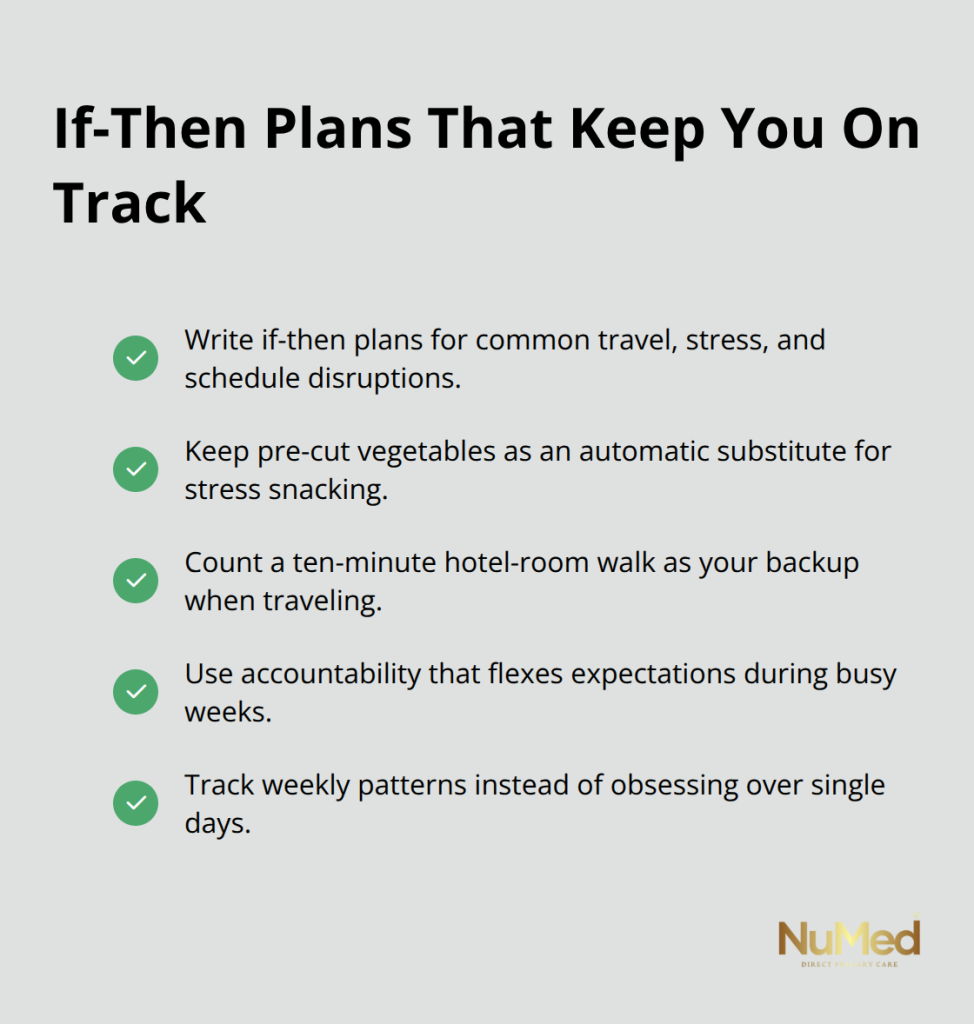
Real obstacles will interrupt your habits. Your child gets sick, work deadlines pile up, or you travel, and your routine shatters. What separates people who recover from these disruptions and those who quit entirely is whether they’ve identified their personal triggers beforehand and built specific responses to them. Most people fail at this step because they treat obstacles as moral failures rather than predictable events that need coping strategies. Research shows that people who anticipate obstacles and write down specific if-then responses succeed at maintaining habits long-term. If your morning walk gets disrupted because you travel for work, then you commit to a ten-minute walk in your hotel room instead. If stress makes you reach for processed food, then you keep pre-cut vegetables in your fridge as an automatic substitute. These aren’t willpower moments-they’re environmental solutions to predictable problems.
Build Accountability That Flexes With Your Life
The second critical factor is accountability, but not the type most people imagine. Public accountability or shame-based tracking often backfires because missing a day triggers avoidance rather than recommitment. What actually works is tracking systems where you report progress to someone who understands your specific obstacles and adjusts expectations accordingly. A health coach or accountability partner who knows you’re traveling this week won’t penalize you for a modified routine. They’ll confirm that your hotel room walk counts and help you plan for the next week. Research shows that accountability paired with flexibility increases long-term adherence compared to rigid accountability systems.
Recognize Plateaus as Progress Signals
When progress plateaus-and it always does-the mistake is assuming you’ve hit a natural ceiling. Plateaus occur because your brain has adapted to the current stimulus, not because you’ve reached your limit. If a ten-minute walk felt challenging six weeks ago but feels automatic now, your nervous system has adjusted. You’re ready for the next increment: perhaps fifteen minutes or a second walk on a different day. The key is recognizing that plateaus signal readiness for progression, not failure. Track your habits weekly, not daily, to see patterns that daily tracking obscures. A week where you completed your habit four out of seven days tells you more than checking off individual days. This perspective prevents the all-or-nothing thinking that derails most people when they miss one session.
Final Thoughts
Sustainable lifestyle changes succeed when you stop chasing perfection and start building consistency. The three principles that matter most are simplicity, progression, and flexibility. Start with one micro-habit so small it requires almost no willpower, stack it to an existing routine so your environment carries the load, and then show up week after week even when motivation fades. Missing one day does not erase your progress-what matters is the pattern over weeks and months.
Your brain does not care about flawless execution; it cares about repetition. A ten-minute walk completed four days a week, sustained for three months, creates more lasting change than a perfect week followed by abandonment. Research shows that people who maintain 70% adherence to their habits achieve the same long-term outcomes as those who achieve 100% adherence, which means you have permission to be imperfect and still succeed. The obstacles you will face are predictable. Write down your specific triggers now and plan your if-then responses before they happen.
At NuMed DPC, we understand that sustainable lifestyle changes require more than willpower. They require a healthcare partner who supports your goals with personalized coaching, regular follow-ups, and time to address the root causes of your health challenges. Explore how NuMed DPC can support your journey and transform your health through sustainable change.