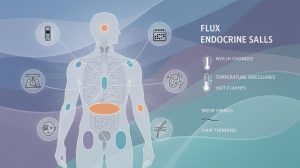

Hormone imbalance symptoms in women often go unrecognized or are dismissed as normal aging. Many women experience irregular periods, unexplained weight gain, mood changes, and sleep problems without understanding the underlying hormonal causes.
At NuMed DPC, we’ve found that most women benefit from identifying the root causes of their symptoms rather than treating each issue separately. This guide walks you through what’s happening in your body and how personalized care can restore balance.
What Symptoms Signal a Hormone Imbalance
Menstrual Cycle Changes as Your First Warning Sign
Your menstrual cycle acts as the most direct window into your hormonal health. A typical cycle runs 28 days, but anything between 21 and 35 days is generally normal. The problem emerges when your baseline shifts dramatically. Cycles shorter than 21 days or longer than 35 days warrant attention, as do unpredictable timing, skipped periods, or sudden changes in flow. Heavy bleeding that soaks through a pad or tampon within an hour, or periods lasting longer than seven days, often indicate estrogen dominance or progesterone deficiency.
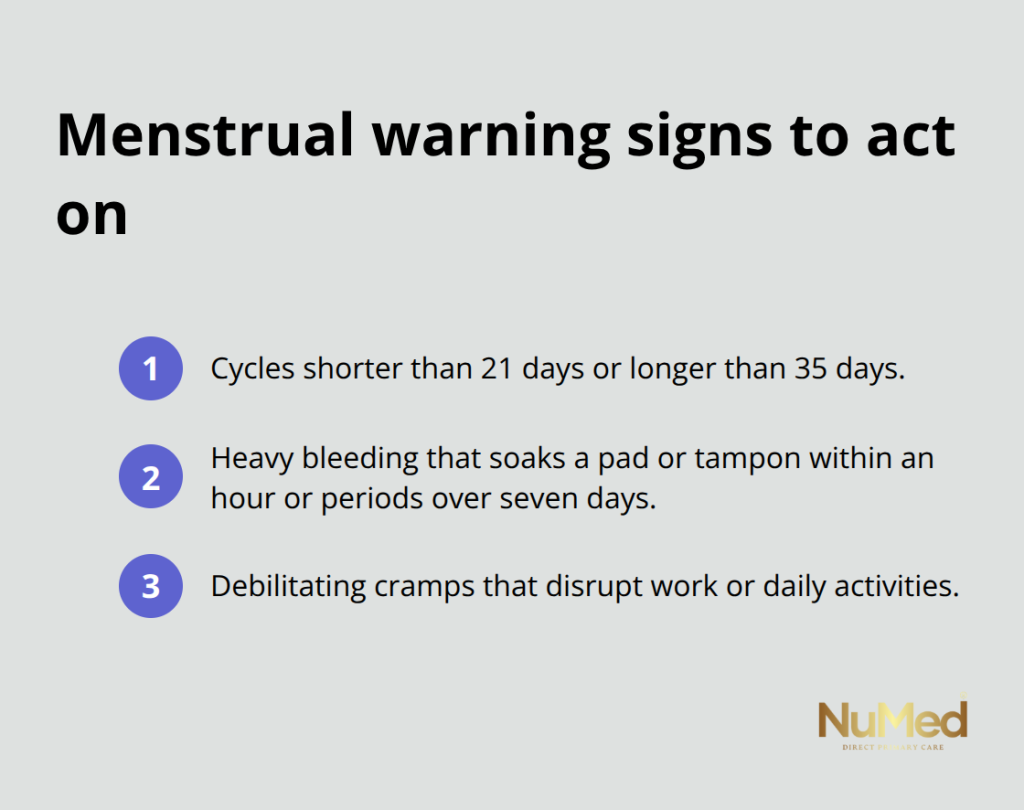
Debilitating cramps severe enough to disrupt work or daily activities signal inflammation tied to hormone levels. Many women assume menstrual cycle changes are just part of aging, but this assumption costs them years of suffering that could be addressed through proper diagnosis.
Unexplained Weight Gain and Metabolic Changes
Weight gain without dietary changes points to something beyond simple calorie imbalance. When your metabolism slows, thyroid dysfunction or insulin resistance typically underlies the problem. You might gain 10 to 15 pounds despite eating the same foods you always have, or find that weight concentrates around your midsection. These metabolic shifts reflect real hormonal disruption rather than personal failure. Addressing the hormonal root cause produces far better results than restrictive dieting alone.
Mood Shifts That Don’t Match Your Circumstances
Mood swings that feel disproportionate to life circumstances-snapping at family members, feeling inexplicably anxious, or experiencing depression that doesn’t match your situation-often correlate with dropping estrogen and progesterone levels. These mood shifts aren’t character flaws; they reflect real biochemical changes. When estrogen levels drop, serotonin (the “feel-good” chemical) also falls, contributing to anxiety or mood swings. Recognizing this connection helps you seek appropriate treatment rather than attributing emotional changes to stress alone.
Sleep Problems and Temperature Regulation Issues
Sleep disturbances manifest as difficulty falling asleep, waking at 3 a.m. without reason, or feeling exhausted despite seven hours in bed. Estrogen fluctuation, causing night sweats and hot flashes are classic sign, particularly common in women aged 35 to 55. These symptoms disrupt your quality of life and compound fatigue throughout the day. Many women dismiss these symptoms as stress or aging, missing the opportunity for targeted treatment that addresses the actual hormonal cause rather than just managing consequences.
Understanding these warning signs positions you to take action before symptoms escalate. The next step involves identifying what’s actually driving these changes in your body.
What’s Actually Driving Your Hormone Imbalance
Recognizing symptoms is only half the battle. The real power comes from identifying what’s causing the imbalance in the first place, because the root cause determines your treatment path.
Thyroid Dysfunction and Autoimmune Conditions
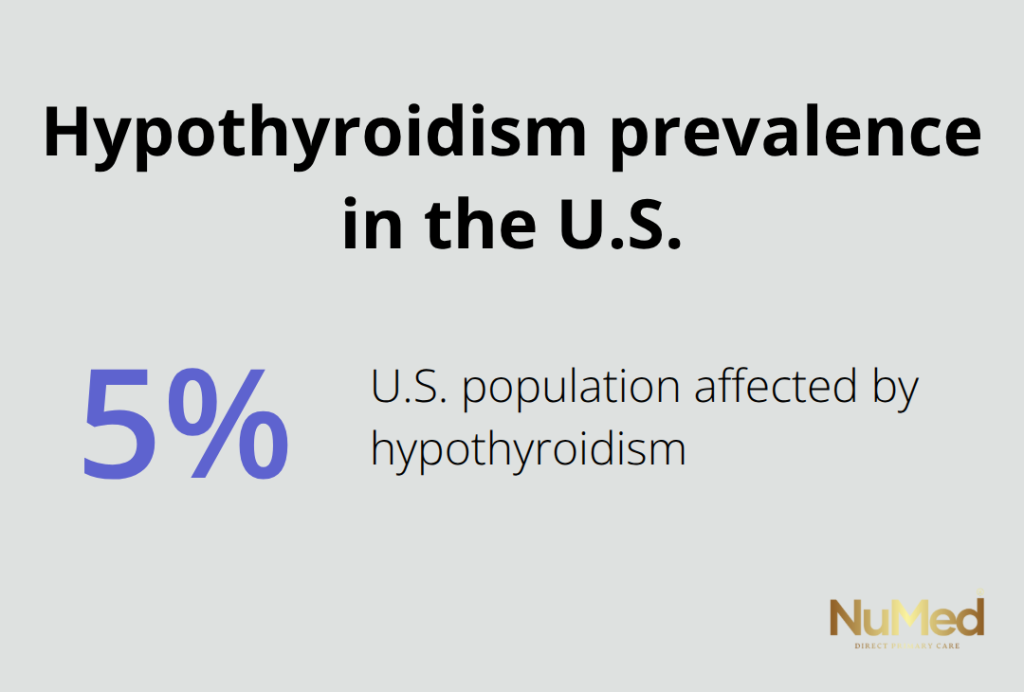
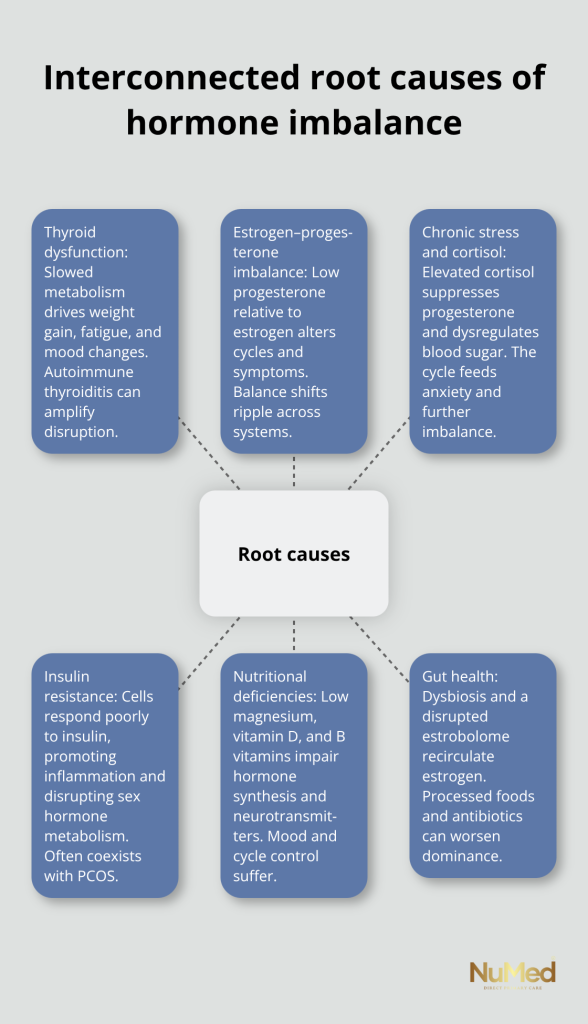
Thyroid dysfunction sits at the top of the list for women, with hypothyroidism affecting roughly 5 percent of the U.S. population and women experiencing it at twice the rate of men. Your thyroid controls metabolism, so when it underperforms, weight gain, fatigue, and mood changes follow predictably. Autoimmune conditions like Hashimoto’s thyroiditis attack thyroid tissue directly, creating a cascade of hormonal disruption that standard testing sometimes misses.
Estrogen and Progesterone Imbalances
Estrogen and progesterone fluctuations happen naturally across your cycle, but when progesterone drops too low relative to estrogen, you experience estrogen changes that can affect your well-being. This imbalance shifts your entire hormonal landscape and produces symptoms that feel disconnected until you understand the underlying mechanism.
Stress, Cortisol, and Blood Sugar Dysregulation
Chronic stress elevates cortisol, your body’s primary stress hormone, which suppresses progesterone production and triggers blood sugar dysregulation. This cortisol elevation creates a vicious cycle where stress worsens hormonal imbalance, which increases anxiety, which raises cortisol further. Insulin resistance develops when your cells stop responding properly to insulin, forcing your pancreas to produce more, which then drives inflammation and disrupts sex hormone metabolism. This is why women with PCOS often struggle with both weight gain and irregular periods simultaneously.
Nutritional Deficiencies and Gut Health
Nutritional deficiencies compound these problems significantly. Low magnesium impairs progesterone synthesis, vitamin D deficiency worsens mood disorders and autoimmune flares, and B vitamin insufficiency compromises neurotransmitter production. Your gut health directly influences hormone metabolism through the estrobolome (the collection of bacteria that helps recycle estrogen). Poor gut health from processed foods, antibiotics, or dysbiosis means estrogen recirculates instead of being eliminated, perpetuating dominance.
These interconnected factors rarely operate in isolation. Understanding how thyroid function, stress hormones, nutritional status, and gut health interact reveals why treating one symptom at a time produces disappointing results. The next section explores how personalized interventions address these root causes simultaneously.
How to Actually Fix Hormone Imbalance
Treating hormone imbalance requires moving beyond surface-level symptom management to address what’s actually broken inside your body. This means comprehensive testing that looks at your complete hormonal picture, not just one or two markers, combined with targeted interventions based on your specific results. The testing phase matters enormously because hormone levels fluctuate throughout your cycle, and a single test can miss critical patterns.
Comprehensive Testing Across Your Cycle
Women aged 35 to 45 entering perimenopause need comprehensive testing across their cycle to establish accurate baselines for estrogen, progesterone, and testosterone. Blood tests should also assess thyroid function, including TSH, free T3, and free T4, plus fasting glucose and insulin levels to identify insulin resistance before it progresses to diabetes or PCOS complications. This multi-marker approach reveals how your hormones interact rather than treating each one in isolation.
Nutrition That Stabilizes Blood Sugar and Mood
A balanced diet containing adequate protein at each meal stabilizes blood sugar and supports neurotransmitter production. Research shows women who eat at least 20 grams of protein at breakfast experience better mood stability and fewer energy crashes throughout the day compared to high-carbohydrate breakfasts. This single dietary shift produces measurable improvements in energy and emotional regulation within weeks.
Strategic Supplementation for Hormone Support
Magnesium supplementation at 300 to 400 milligrams daily improves progesterone synthesis and reduces menstrual cramping severity. Vitamin D levels below 30 ng/mL correlate with worse mood disorders and autoimmune flares, making supplementation to reach 40 to 60 ng/mL a priority for most women. These targeted supplements address specific deficiencies that directly impair hormone metabolism.
Stress Reduction and Sleep Consistency
Stress management through specific practices like 10-minute daily meditation or regular 30-minute walks produces measurable cortisol reductions that allow progesterone to recover. Sleep optimization demands consistency more than duration; going to bed at the same time each night, keeping your bedroom at 65 to 68 degrees Fahrenheit, and eliminating screens 60 minutes before sleep improves sleep quality dramatically. These behavioral changes create the physiological conditions your body needs to restore hormonal balance.
Monthly Monitoring and Treatment Adjustment
Monthly follow-up appointments track whether your symptoms improve with these interventions and allow dose adjustments if hormonal medications become necessary. Women typically see noticeable improvement in mood, energy, and cycle regularity within 6 to 8 weeks of starting a properly personalized treatment plan that addresses root causes rather than just managing symptoms individually. This ongoing assessment ensures your treatment evolves as your body responds.
Final Thoughts
Hormone imbalance symptoms in women stem from interconnected physiological disruptions that demand investigation rather than dismissal. The patterns you’ve learned to recognize-irregular cycles, unexplained weight gain, mood instability, sleep problems, and temperature regulation issues-represent your body’s way of signaling that something needs attention. These symptoms aren’t character flaws or inevitable consequences of aging; they’re measurable indicators of treatable hormonal dysfunction.
Addressing root causes produces lasting results while treating symptoms individually leaves the underlying problem intact. When you identify whether thyroid dysfunction, estrogen-progesterone imbalance, cortisol dysregulation, insulin resistance, or nutritional deficiencies drive your specific symptoms, you can implement interventions that actually work. A woman with PCOS won’t resolve her irregular periods through mood support alone, just as someone with thyroid dysfunction won’t fix her fatigue through sleep hygiene without addressing thyroid function itself. Most women notice meaningful improvement in energy, mood stability, and cycle regularity within 6 to 8 weeks when their treatment plan addresses their specific root causes.
Personalized care transforms this understanding into action through comprehensive testing that reveals your unique hormonal landscape rather than relying on generic assumptions. We at NuMed DPC focus on preventing illness by addressing root causes through extensive lab services, functional medicine, and personalized health coaching. Visit NuMed DPC to explore how personalized, compassionate care can help you feel like yourself again.