Traditional antidepressants can take weeks or months to work, leaving patients in prolonged suffering. Ketamine for anxiety and depression offers a fundamentally different approach, with many patients experiencing relief within hours or days.
At NuMed DPC, we recognize that treatment-resistant cases demand innovative solutions. This article examines the science behind ketamine therapy, current clinical evidence, and the administration methods reshaping mental health care.
Why Ketamine Works Faster Than Traditional Antidepressants
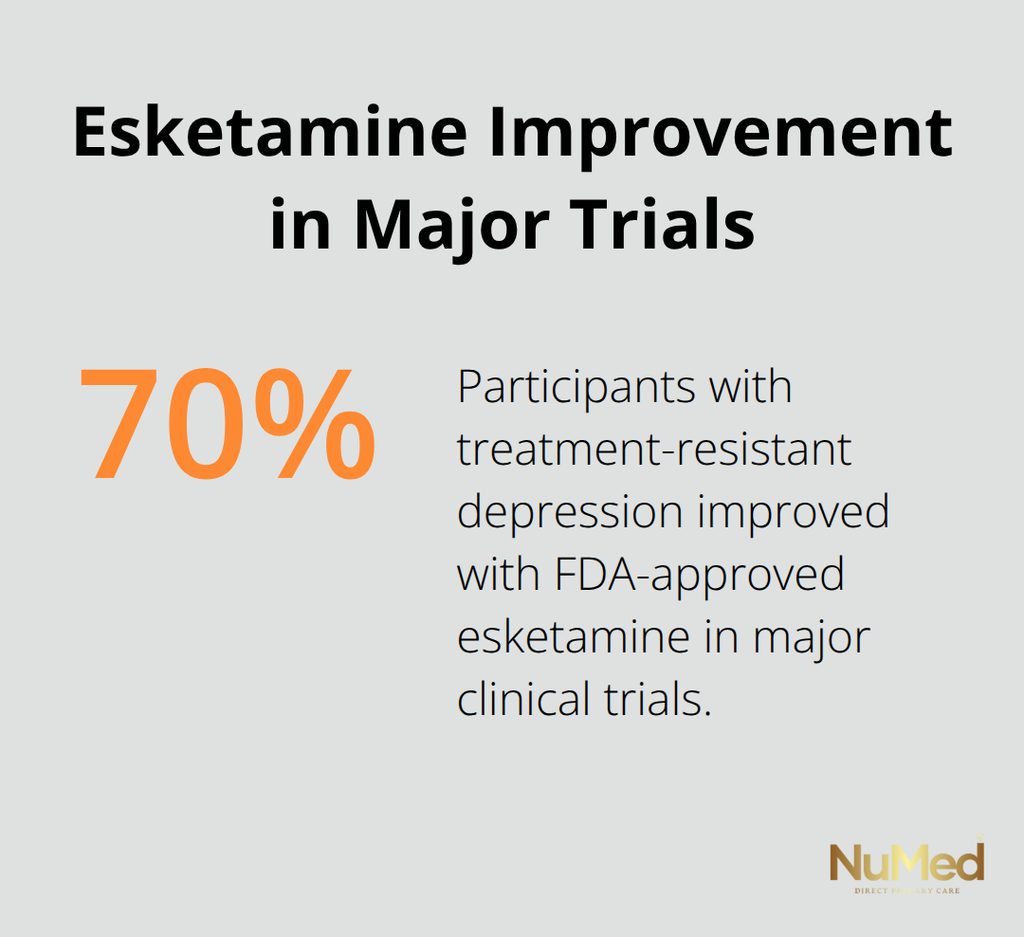
Ketamine operates through a completely different mechanism than the antidepressants most people take. While SSRIs and similar medications target the serotonin system-a process that can take 4 to 6 weeks to produce noticeable effects-ketamine works on the brain’s glutamate system. When you receive ketamine, it blocks glutamate receptors and simultaneously triggers the release of glutamate, which stimulates the growth of new synapses. This neuroplastic remodeling happens rapidly. In major clinical trials, about 70% of participants showed improvement with esketamine, the FDA-approved nasal spray formulation, and more than half experienced significant depressive symptom reduction within 24 hours. This speed matters enormously for patients with treatment-resistant depression or those experiencing acute suicidal thoughts, where waiting weeks for relief is not an option.
The Glutamate Shift Changed Everything
The discovery that ketamine could rapidly alleviate depressive symptoms came from Yale psychiatrist John Krystal in 2000, fundamentally shifting psychiatric research away from monoamine-focused treatments. Ketamine’s action on glutamate promotes the formation of new neural connections, essentially rewiring mood-related brain circuits long after the drug leaves your system. This explains why patients often experience antidepressant effects within hours rather than weeks. For anxiety specifically, ketamine’s rapid anxiolytic properties make it particularly valuable when traditional medications fail. The reported success rate for ketamine infusions ranges from 50% to 70%, with many patients maintaining improvements across multiple sessions. Esketamine, approved by the FDA in 2019 for treatment-resistant depression and later for suicidal ideation in adults with major depression, offers a more practical delivery method than intravenous infusions while maintaining this rapid-acting advantage.
How Ketamine Differs From Your Current Antidepressant
Your current antidepressant works through an indirect process-it increases available serotonin or norepinephrine in your brain. Ketamine takes a direct approach to neuroplasticity itself. The dissociative effects you may experience during treatment (the out-of-body or dream-like sensations) are not side effects to avoid but rather indicators that the brain is undergoing the neurochemical changes responsible for symptom relief. This is why ketamine requires administration in controlled clinical settings where medical staff monitor vital signs and adjust dosing as needed. The treatment typically lasts 2 to 3 hours, including preparation and post-treatment monitoring. Patients often report grogginess or fatigue afterward, but these effects usually resolve by the next day, allowing most people to resume normal activities within 24 hours.
What Happens Next in Your Treatment Journey
This practical timeline, combined with the neuroplasticity mechanism, explains why ketamine represents such a significant advancement for people whose depression or anxiety has resisted conventional treatment. Understanding how ketamine works sets the stage for exploring the specific ways clinicians deliver this medication-each method offers distinct advantages depending on your clinical situation and treatment goals.
Current Clinical Evidence and Research Findings
The FDA approval of esketamine in 2019 marked a watershed moment for psychiatric treatment, but the clinical data behind it matters far more than the regulatory milestone itself. In major clinical trials, 70% of participants with treatment-resistant depression showed improvement with esketamine, and more than half experienced significant symptom reduction within 24 hours. This is not theoretical success-these are real patients whose conventional antidepressants had failed. For treatment-resistant depression specifically, ketamine infusions report success rates between 50% and 70%, meaning roughly half to two-thirds of patients who try this approach see meaningful relief.
Speed of Response Sets Ketamine Apart
The speed of response distinguishes ketamine from every other psychiatric intervention available today. Traditional antidepressants require 4 to 6 weeks of consistent use before patients notice any change; ketamine produces measurable improvements in hours to days. This distinction becomes critical when patients experience acute suicidal ideation, where waiting weeks is simply not an option. The FDA later expanded esketamine’s approval to address suicidal ideation and behavior in adults with major depression, recognizing ketamine’s unique capacity to interrupt crisis-level symptoms rapidly.
Treatment Sessions and Sustained Benefits
Patients typically require multiple treatment sessions to sustain benefits, with the exact number depending on individual response and the severity of their condition. Common side effects remain mild and temporary-anxiety, restlessness, blurred vision, and mild dissociation-resolving within hours of treatment completion. Serious adverse effects are rare when ketamine is administered in supervised clinical settings with proper patient screening and monitoring protocols.
Why Response Times Transform Treatment Decisions
A 24-hour improvement window transforms how patients and clinicians approach severe depression. Someone who cannot function at work, maintain relationships, or care for themselves gains immediate relief rather than white-knuckling through weeks of suffering while hoping medication will eventually work. This practical reality drives many clinicians to recommend ketamine for patients whose depression has already failed one or more standard antidepressant trials. Research demonstrates that evidence-based health coaching and ketamine’s neuroplastic effects persist long after the medication leaves your system, meaning improvements often continue even between treatment sessions.
Insurance Coverage and Financial Realities
Insurance coverage varies significantly-esketamine is often covered by many plans because of its FDA approval status, while IV ketamine infusions are frequently paid out-of-pocket, ranging from hundreds to thousands of dollars depending on the clinic and number of sessions required. Understanding these real-world factors helps you evaluate whether ketamine fits your specific situation and financial circumstances. With this evidence in hand, the next critical step involves understanding how clinicians actually deliver ketamine and which administration method might work best for your particular needs.
Ketamine Treatment Delivery Methods
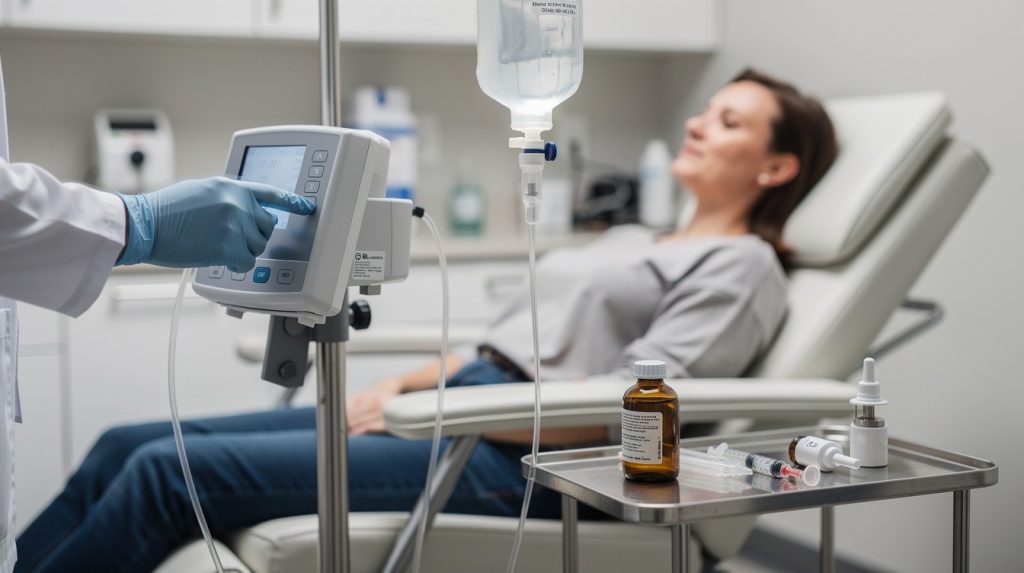
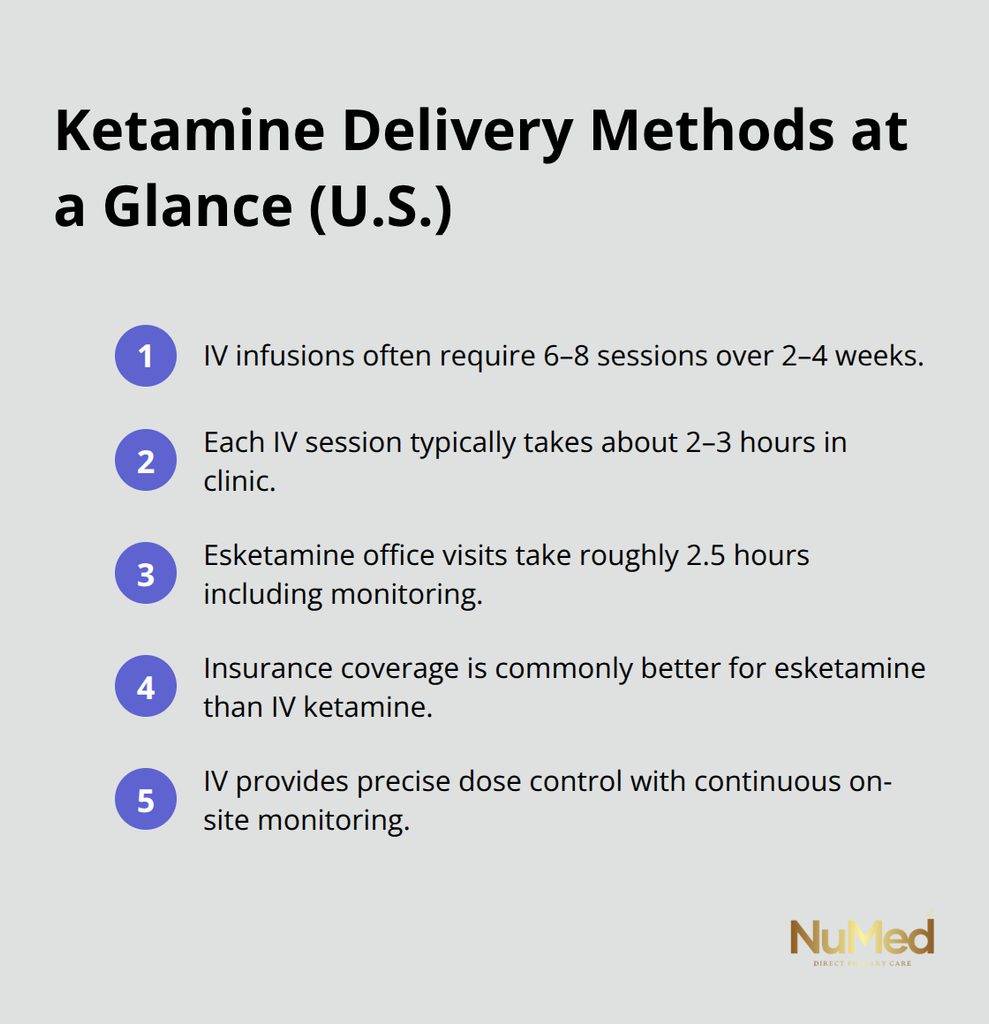
Clinicians deliver ketamine through three primary methods, each with distinct practical advantages and limitations that directly affect your treatment experience, cost, and convenience. Intravenous infusion remains the traditional delivery method, where ketamine enters your bloodstream as a slow drip in a medical facility while trained staff monitor your vital signs continuously. IV infusions typically cost several hundred dollars per session, with treatment-resistant depression patients requiring 6 to 8 sessions over 2 to 4 weeks for optimal results, then maintenance sessions every few weeks or months depending on individual response. The major drawback is time commitment-each session consumes 2 to 3 hours of your day, making it difficult for people with demanding work schedules or limited transportation access. However, IV infusions offer precise dose control and immediate medical intervention if side effects emerge, which matters for patients with complex medical histories or those taking multiple medications that could interact with ketamine.
Intravenous Infusion: The Established Standard
IV ketamine infusions provide the most direct route into your bloodstream and allow clinicians to adjust dosing in real time based on your response. Medical staff monitor your vital signs throughout the entire procedure, catching any adverse reactions immediately. This method works particularly well for patients whose medical complexity demands careful oversight or those who cannot tolerate nasal irritation. The time investment remains substantial-you spend roughly 3 hours per session in the clinic, which accumulates significantly across the 6 to 8 sessions most patients require during their initial treatment phase. Transportation logistics and work schedule conflicts often make IV infusions impractical for employed patients or those without reliable access to a treatment facility.
Esketamine Nasal Spray: FDA-Approved Convenience
Esketamine nasal spray, approved by the FDA in 2019, solves the time problem while maintaining rapid-acting benefits. You administer the spray yourself during office visits while medical staff monitor you for 2 hours afterward, then you leave-total time commitment roughly 2.5 hours compared to the 3-hour IV sessions. Insurance coverage for esketamine is significantly better than IV ketamine because of its FDA approval status, meaning many patients pay standard copays rather than thousands out-of-pocket. Esketamine produces the same neuroplastic effects as IV ketamine, with major clinical trials showing significant symptom reduction in depressive and anxiety symptoms. The nasal spray formulation does carry one practical limitation: some patients experience nausea or nasal irritation, though these effects typically resolve quickly.
Oral Ketamine: Limited Evidence and Off-Label Use
Oral ketamine exists but remains off-label and less studied than IV or nasal routes, making it a less reliable option for most patients. Bioavailability concerns and inconsistent absorption rates mean oral formulations produce unpredictable results compared to IV or nasal administration. Most clinicians avoid oral ketamine for treatment-resistant depression because the evidence supporting its efficacy simply does not match that of established delivery methods. If a provider recommends oral ketamine, ask specifically about the clinical data supporting that recommendation for your particular condition.
Choosing Your Delivery Method
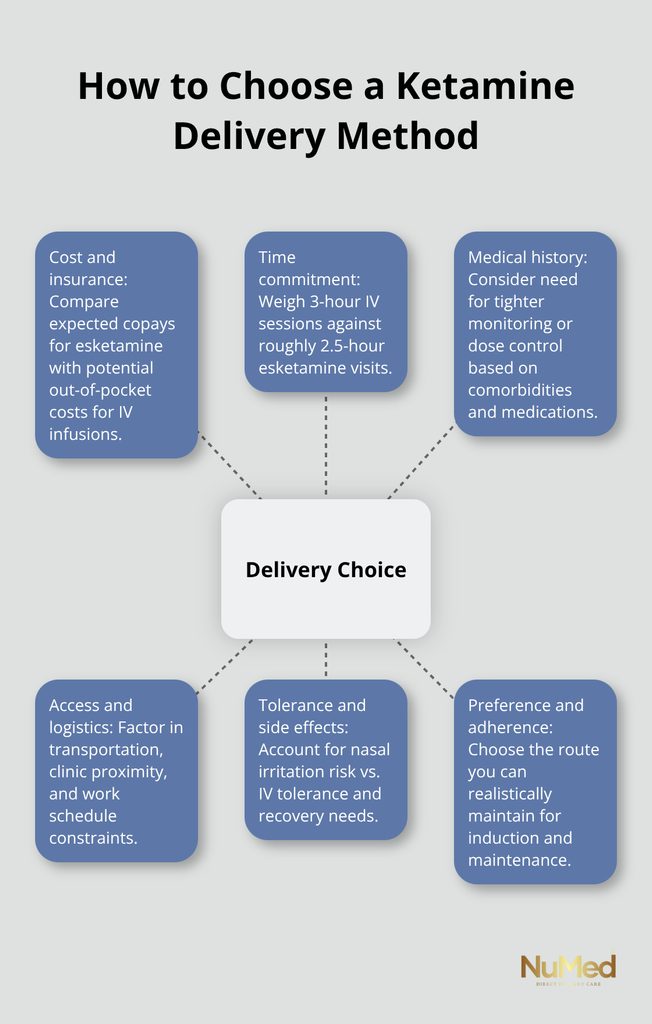
The choice between IV infusion and esketamine spray ultimately depends on whether you prioritize treatment cost and insurance coverage or prefer the flexibility of slightly shorter clinic visits with a proven FDA-approved medication. Your medical history, work schedule, transportation access, and insurance plan all factor into which method makes practical sense for your situation. A qualified clinician can help you evaluate these real-world factors to maximize both efficacy and adherence to your treatment plan.
Final Thoughts
Ketamine for anxiety and depression represents a genuine shift in how we treat mental health conditions that resist conventional medication. About 70% of patients show improvement with esketamine, and more than half experience meaningful relief within 24 hours-a timeline that transforms treatment for people in crisis or those exhausted by years of failed medication trials. This rapid response occurs because ketamine promotes actual brain rewiring through neuroplasticity rather than simply adjusting neurotransmitter levels.
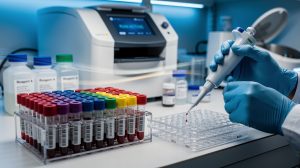
The practical realities matter as much as the science when you consider ketamine therapy. You need to understand your delivery options, insurance coverage, time commitment, and whether your medical history makes you a suitable candidate (contraindications include unmanaged high blood pressure, liver disease, or active substance use risk). Work with a clinician who screens carefully and conducts lab tests and psychiatric evaluation to protect your safety.
At NuMed DPC, we believe comprehensive mental health care requires addressing root causes and personalizing treatment to your unique situation. Whether you’re exploring ketamine therapy or seeking integrated care that combines functional medicine with mental health support, our team focuses on fostering genuine healing rather than simply managing symptoms.