

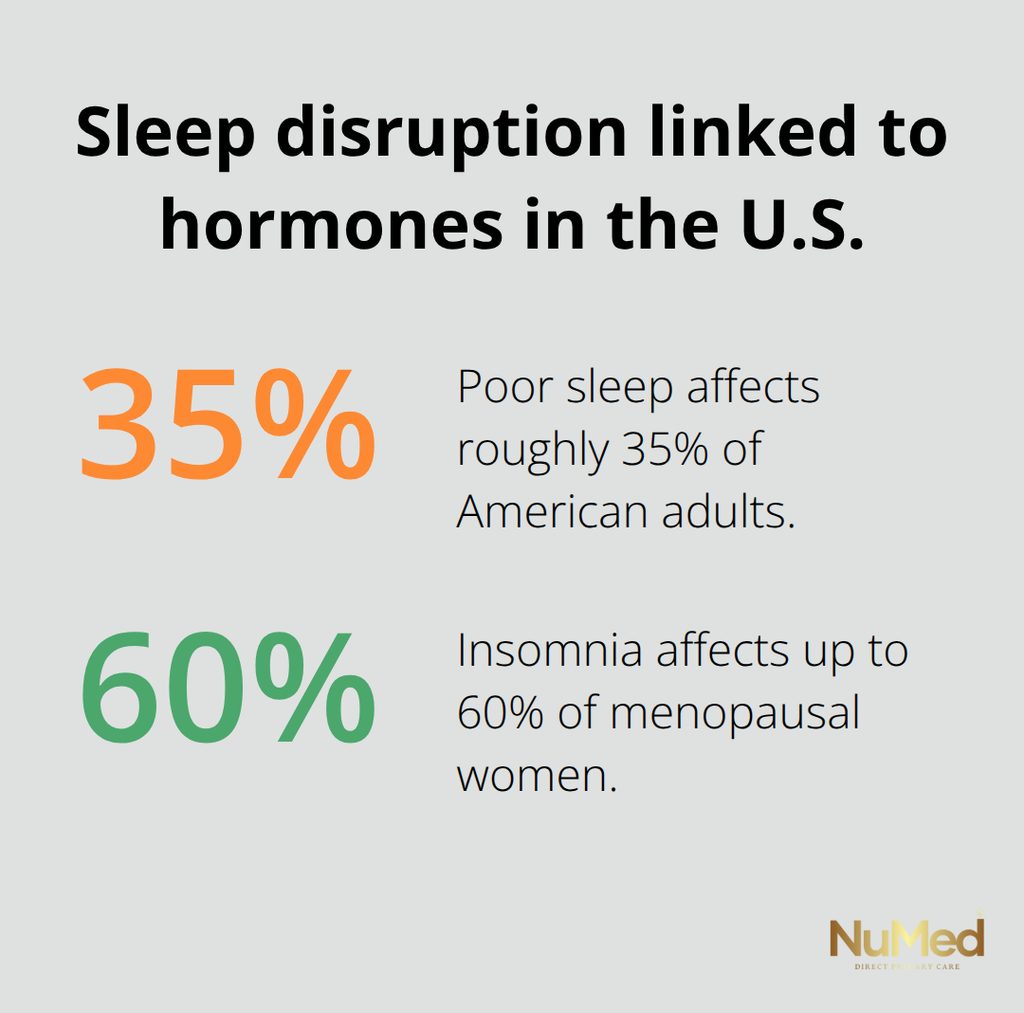
Poor sleep affects roughly 35% of American adults, and hormonal imbalances are often the hidden culprit. Progesterone, a hormone that naturally declines with age and stress, plays a significant role in regulating your sleep-wake cycle.
At NuMed DPC, we’ve found that many patients discover better sleep quality once they understand how progesterone influences their rest. This guide explains the science behind progesterone as a sleep aid and practical steps to optimize your sleep naturally.
How Progesterone Shapes Your Sleep
Progesterone’s Role as Your Body’s Natural Sedative
Progesterone acts as your body’s natural sedative, and its levels fluctuate dramatically throughout your menstrual cycle. During the luteal phase, which occurs after ovulation, progesterone rises significantly and peaks about seven days before menstruation. This surge activates receptors in your brain that promote sleepiness and increase slow-wave sleep, the deepest and most restorative stage. The hormone works by enhancing GABA, a neurotransmitter that calms your central nervous system and reduces racing thoughts that keep you awake.
How Low Progesterone Disrupts Sleep Architecture
Without adequate progesterone, your body remains in a hyperaroused state, making it difficult to fall asleep and stay asleep through the night. Progesterone levels begin declining in your thirties and drop dramatically after menopause, contributing to the insomnia that affects up to 60% of menopausal women according to the North American Menopause Society. When progesterone dips too low, your sleep architecture deteriorates-you spend less time in restorative deep sleep stages and more time in light, fragmented sleep. This explains why many women experience a sudden shift in sleep quality during perimenopause, even if they slept well for decades.
The Stress-Progesterone-Sleep Connection
Stress accelerates progesterone decline by elevating cortisol, creating a vicious cycle where poor sleep worsens stress and further suppresses progesterone production. This relationship matters because addressing low progesterone directly targets the root cause of sleep disruption rather than merely masking symptoms with sedating medications. Understanding how stress impacts your hormonal balance sets the stage for exploring progesterone as a natural solution-one that works with your body’s chemistry rather than against it.
Why Progesterone Works Better Than Sleep Medications
How Progesterone Addresses Sleep Problems at Their Source
Progesterone addresses sleep problems at their source rather than forcing sedation through pharmaceutical mechanisms. When you take standard sleep aids like benzodiazepines or Z-drugs, they suppress your central nervous system indiscriminately, which often leaves you groggy the next morning and carries a 25% to 30% risk of dependency. Progesterone operates differently-it mimics your body’s natural chemistry by enhancing GABA receptor activity in ways your brain already recognizes, producing sleep that feels restorative rather than chemically induced.
The Sleep Quality Difference
Women using progesterone therapy fall asleep 20 to 30 minutes faster on average and spend significantly more time in deep sleep stages compared to baseline, without the cognitive impairment that follows pharmaceutical sedatives. The mechanism matters because your body doesn’t develop tolerance to progesterone the way it does to prescription sleep drugs, meaning the hormone maintains its effectiveness over months and years rather than losing potency within weeks. This sustained effectiveness makes progesterone fundamentally different from conventional sleep medications that lose their power with repeated use.
Safety Profile and Side Effects
Progesterone’s safety profile stands apart from conventional sleep medications, though side effects occur in roughly 10 to 15% of users and typically include mild breast tenderness, mood changes, or headaches that resolve within the first two to three weeks of therapy. Unlike sleeping pills, progesterone carries no black box warning, no abuse potential, and no association with increased mortality risk-factors that have prompted the American Academy of Sleep Medicine to recommend non-pharmacological approaches and bioidentical hormone therapy as first-line treatments for sleep disruption in perimenopausal and menopausal women.
Personalized Dosing Matters
Dosing varies significantly based on your individual hormone levels, menstrual cycle phase, and sleep architecture, which is why working with a healthcare provider who orders baseline progesterone testing becomes essential rather than optional. Micronized progesterone taken 30 to 60 minutes before bed typically ranges from 100 to 300 milligrams, though some patients respond better to lower doses while others require higher amounts-a personalization that generic sleep medications simply cannot offer. Your specific response to progesterone therapy determines the right dose for your body, not a standardized protocol that ignores individual variation.
The next step involves understanding how to optimize your progesterone levels through lifestyle modifications and knowing when professional guidance becomes necessary for your sleep health.
How to Boost Progesterone and Optimize Sleep Therapy
Lifestyle Changes That Support Progesterone Production
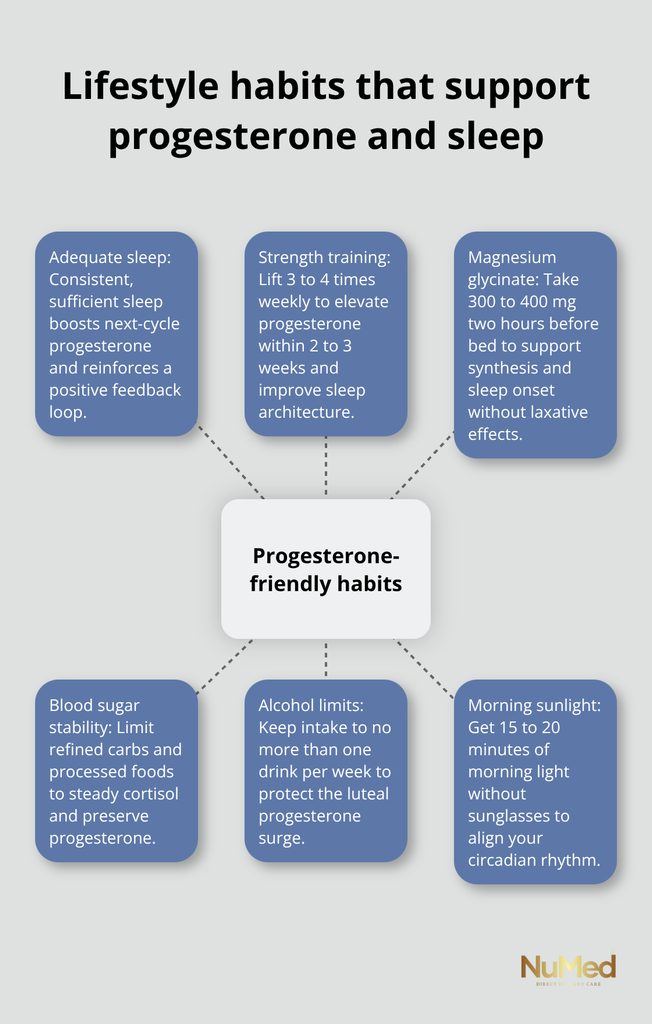
Sleep quality improves dramatically when you stabilize progesterone through targeted lifestyle changes, and the science backs this up across multiple mechanisms your body controls. Adequate sleep itself increases progesterone production, creating a positive feedback loop where better rest supports hormone synthesis the following cycle. Strength training performed three to four times weekly elevates progesterone levels measurably within two to three weeks, while simultaneously improving sleep architecture through increased muscle mass and metabolic stability.
Zinc and magnesium deficiencies suppress progesterone production, so testing these micronutrient levels before supplementing prevents wasting money on unnecessary pills. Magnesium glycinate at 300 to 400 milligrams taken two hours before bed supports both progesterone synthesis and sleep onset without the laxative effects common with other magnesium forms. Refined carbohydrates and processed foods destabilize blood sugar, which directly impacts cortisol regulation and progesterone preservation, since elevated cortisol actively suppresses progesterone synthesis in your ovaries and adrenal glands. Alcohol impairs the luteal phase progesterone surge by interfering with ovulation quality and liver metabolism of the hormone-limit consumption to no more than one drink per week.
Sunlight exposure within the first two hours of waking synchronizes your circadian rhythm and supports progesterone production during the luteal phase. Spend fifteen to twenty minutes outdoors without sunglasses each morning to produce measurable hormonal benefits.
Timing and Dosing for Maximum Effectiveness
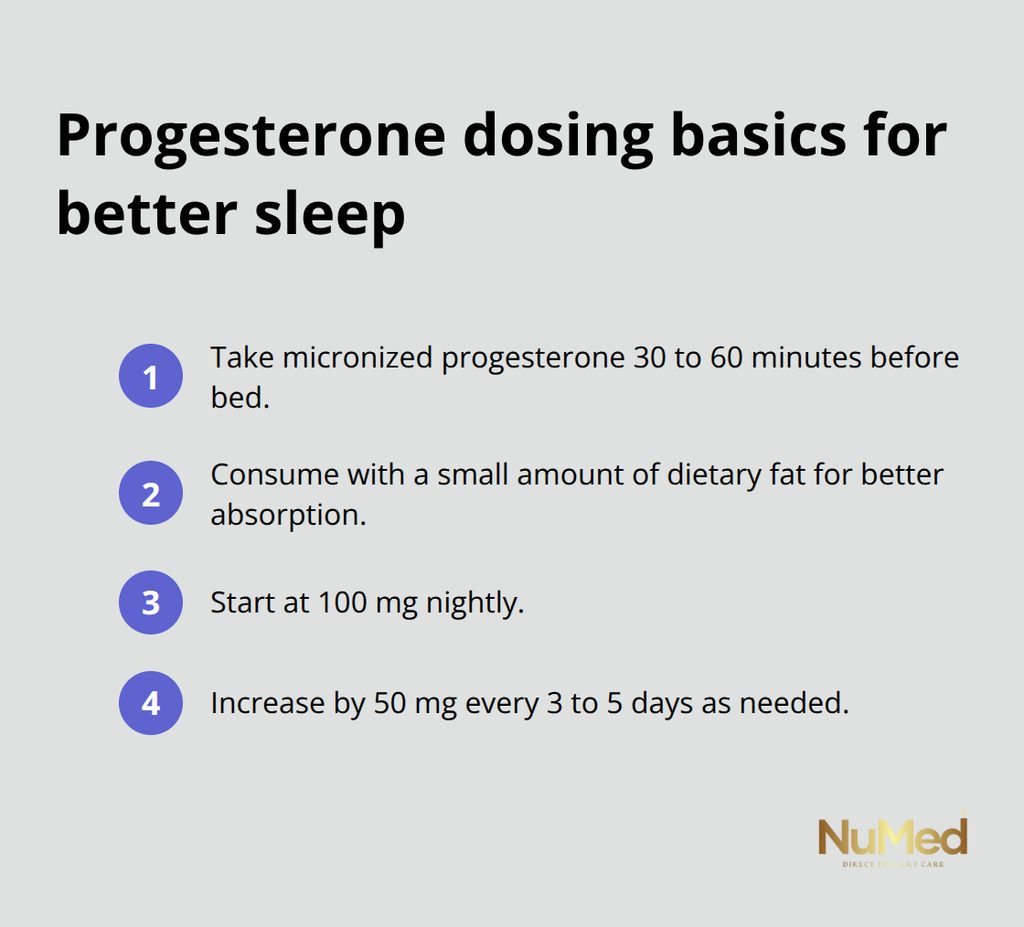
Timing and dose precision determine whether you experience transformative sleep improvement or disappointing results that lead patients to abandon treatment prematurely. Take micronized progesterone thirty to sixty minutes before bed to allow adequate absorption time, and consume it with a small amount of dietary fat since progesterone is fat-soluble and requires adequate lipids for proper absorption. Start at 100 milligrams and increase gradually by 50 milligram increments every three to five days to prevent overshooting your therapeutic dose and experiencing unnecessary side effects.
Most patients find their optimal dose between 150 and 250 milligrams nightly, though some require as little as 75 milligrams while others benefit from higher amounts. Your individual response matters far more than population averages, making baseline progesterone testing and follow-up assessment non-negotiable. Test progesterone levels during the luteal phase, seven days after ovulation, since testing during other cycle phases produces misleading results that fail to reflect your actual hormone production.
What to Expect During the Adjustment Period
If you’ve used conventional sleep medications previously, expect a two to three week adjustment period as your brain recalibrates to natural sleep architecture rather than chemically suppressed consciousness. Many patients report vivid dreams during this transition as REM sleep normalizes. This adjustment phase reflects your nervous system returning to its baseline state rather than indicating a problem with progesterone therapy.
Working With a Healthcare Provider for Personalized Treatment
A healthcare provider who orders baseline testing, tracks your response through symptom logs and repeat testing, and adjusts dosing based on your actual hormone levels becomes essential for success. This personalized approach (rather than applying a standard protocol to everyone) maximizes your chances of finding the right dose and experiencing sustained improvement in sleep quality and overall hormonal health.
Final Thoughts
Progesterone’s role in sleep quality extends far beyond a single hormone-it represents your body’s natural mechanism for achieving restorative rest without the dependency risks of pharmaceutical sleep aids. When progesterone levels remain adequate, your sleep architecture improves, your recovery deepens, and your daytime function strengthens. Low progesterone disrupts this system, but a progesterone sleep aid addresses the root cause rather than masking symptoms with sedating medications that lose effectiveness over time.
The practical path forward involves three concrete steps: assess your baseline progesterone levels through testing during your luteal phase, implement lifestyle modifications that naturally support progesterone production (strength training, magnesium supplementation, stable blood sugar, and consistent morning sunlight exposure), and work with a healthcare provider who personalizes your dosing rather than applying a generic protocol. Your optimal dose depends on your individual hormone levels, metabolism, and sleep architecture-not population averages. Starting low and adjusting gradually prevents unnecessary side effects while allowing your body to recalibrate to natural sleep patterns.
At NuMed DPC, we recognize that sleep disruption often signals deeper hormonal imbalances requiring investigation rather than quick fixes. Our direct primary care model focuses on identifying root causes through comprehensive testing and personalized treatment plans tailored to your unique physiology. Visit NuMed DPC to explore how personalized primary care can transform your rest and overall health.