

Most people chase symptom relief instead of addressing what’s actually causing their health problems. At NuMed DPC, we believe your holistic health journey planning should start with understanding your body’s root causes, not just treating what hurts.
A truly personalized wellness path requires looking at nutrition, movement, stress, and mental health together. This guide walks you through building a plan that actually sticks.
Understanding Root Causes and Your Whole Self
Why Symptom Treatment Falls Short
Most conventional healthcare operates backward. A patient arrives with high blood pressure, receives a medication prescription, and the case closes. That medication addresses the symptom, not why the blood pressure elevated in the first place. Was it chronic stress? Poor sleep quality? Excessive sodium intake? Untreated sleep apnea? Without identifying the actual cause, you mask the problem while it continues damaging your body. Research from the American Journal of Preventive Medicine shows that 90% of healthcare spending addresses chronic disease management rather than prevention, which means most people never get asked the fundamental question: what started this?
The Physical-Mental Health Connection
Your body doesn’t compartmentalize health the way medical systems do. Chronic stress raises cortisol levels, which increases inflammation throughout your system and contributes to weight gain, weakened immunity, and cardiovascular problems. Meanwhile, poor physical fitness worsens anxiety and depression. The Cleveland Clinic reports that people with untreated mental health conditions have significantly higher rates of chronic physical disease. This means your whole person care plan must address both simultaneously. If you treat only your physical symptoms while ignoring stress management, you fight half the battle. Your mental state and physical condition work together, not separately.
Establishing Your Accurate Baseline
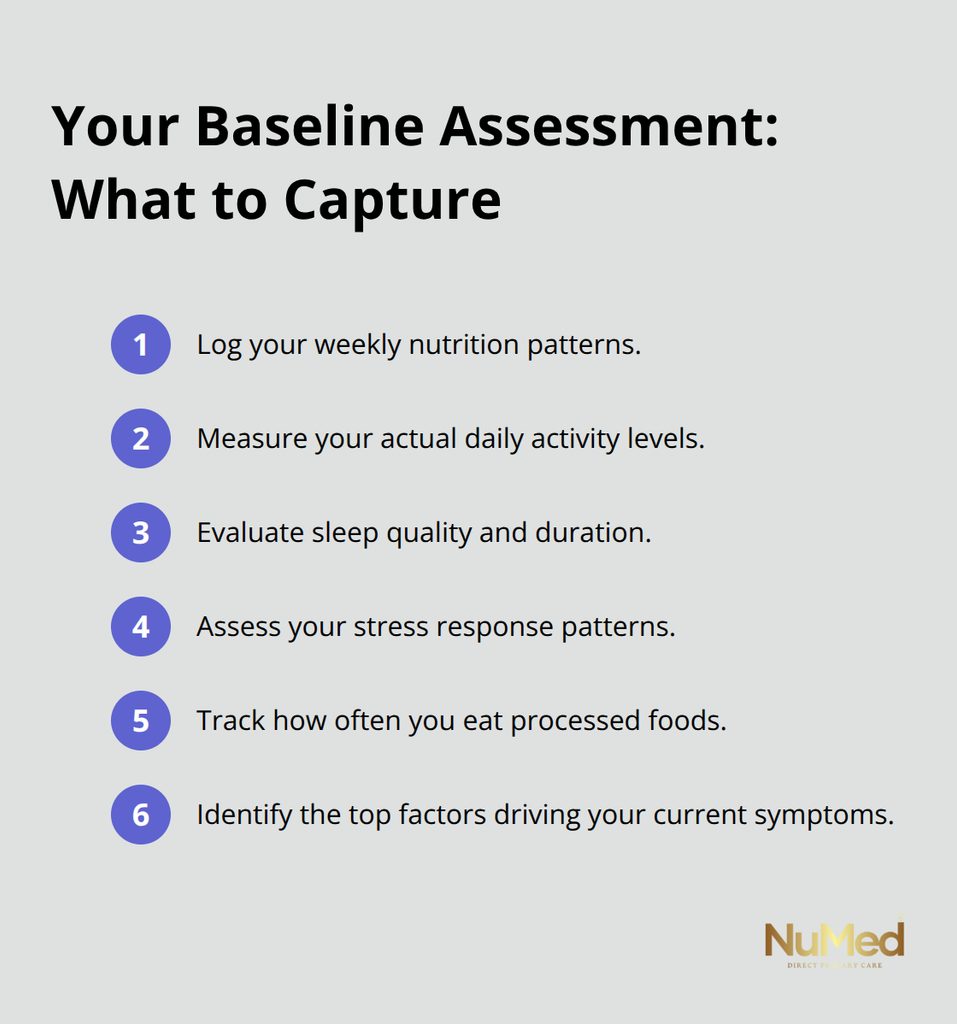
Before any meaningful change happens, you need an honest baseline. This requires comprehensive functional assessment, not just standard lab work. Understand your current nutrition patterns over a typical week, measure your actual activity levels rather than assuming them, evaluate your sleep quality and duration, and assess your stress response patterns. Many people discover they eat far more processed foods than they realized or move significantly less than they think. Once you have this accurate picture, you identify which factors most directly influence your health problems.
This assessment becomes your roadmap, showing exactly where intervention creates the biggest impact rather than trying to overhaul everything at once. With this foundation established, you’re ready to build a customized wellness plan that targets your specific needs.
How to Build a Wellness Plan That Fits Your Life
Start With Your Highest-Impact Area
Your baseline assessment revealed where your health breaks down. Now you translate that data into concrete daily actions. This is where most wellness plans fail because people try to overhaul everything simultaneously. Instead, start with your highest-impact area and build from there. If your assessment showed poor sleep quality destroying your cortisol regulation, fix sleep before overhauling your entire diet. If chronic stress emerged as your primary driver, stress management becomes your foundation. The order matters because success in one area builds momentum for the next. Research from Stanford University shows that people who change one behavior successfully are 65% more likely to adopt a second behavior within three months. Start with what will create the fastest visible improvement, then layer additional changes.
Nutrition That Matches Your Reality
Your nutrition changes must reflect your actual life, not an idealized version of it. If you work sixty hours weekly and have two children, a meal prep system requiring five hours on Sunday fails. Instead, identify three breakfast options you genuinely enjoy that take under five minutes, three lunch solutions you can prepare in bulk twice weekly, and three dinner approaches that don’t demand restaurant delivery. A study from the Journal of the Academy of Nutrition and Dietetics found that people who maintained flexible meal systems rather than rigid plans showed better adherence. Track your eating patterns for one week using a simple app like MyFitnessPal to see your actual macronutrient distribution and identify where processed foods dominate your intake.
Movement You Actually Enjoy
Physical activity works identically to nutrition. If you hate running, cycling, or gym classes, your plan built around those activities collapses within weeks. Instead, choose movement that doesn’t feel like punishment. This might mean thirty-minute walks with podcasts, swimming twice weekly, gardening, or dancing. The American Heart Association recommends 150 minutes of moderate activity weekly, but consistency matters far more than the specific activity type. Your body responds better to sustainable movement than to intense exercise you abandon after a month.
Stress Management That Sticks
Your stress management strategy requires the same practicality as nutrition and movement. Meditation sounds appealing until you sit in silence with your racing thoughts and quit after three days. Your approach might involve journaling for ten minutes after work, scheduling one non-negotiable hobby time weekly, setting phone boundaries after 8 PM, or taking a weekly yoga class. Whatever you choose must feel sustainable within your actual schedule, not your aspirational schedule. This personalized approach to stress management-one that acknowledges your real constraints and preferences-sets the stage for the accountability structures that transform plans into lasting results.
Sustaining Long-Term Health Improvements
Track Progress With Intention
Most wellness plans collapse within six weeks because people abandon them after seeing no immediate results. Your body doesn’t transform overnight, but you need evidence that your changes actually work before motivation evaporates. This requires a monitoring system that captures real progress without becoming another source of stress.
Start with measurements that matter to your specific goals rather than tracking everything. If sleep quality was your baseline problem, measure sleep duration and how you feel upon waking for two weeks using a simple sleep tracking app or journal. If stress management was your focus, track your resting heart rate twice weekly since chronic stress elevates it consistently. The American Heart Association reports that resting heart rate between 60 and 100 beats per minute is normal, but sustained rates above 80 often indicate inadequate stress recovery.
If nutrition drove your baseline assessment, weigh yourself weekly at the same time and day rather than daily, since daily fluctuations create false discouragement. Data from the Journal of Obesity shows people who weigh weekly lose more weight than those checking daily because weekly measurement reduces obsessive behavior. After four weeks, compare your current measurements against your baseline. Did your sleep duration increase by thirty minutes? Did your resting heart rate drop five beats per minute? These concrete changes prove your plan works, which fuels motivation for the next phase.
Build Accountability Through External Support
Your accountability structure determines whether improvements stick or fade. Health coaching improved physical activity, nutrition, and chronic disease management according to a meta-analysis of 284 studies. A health coach provides three critical functions your good intentions cannot.
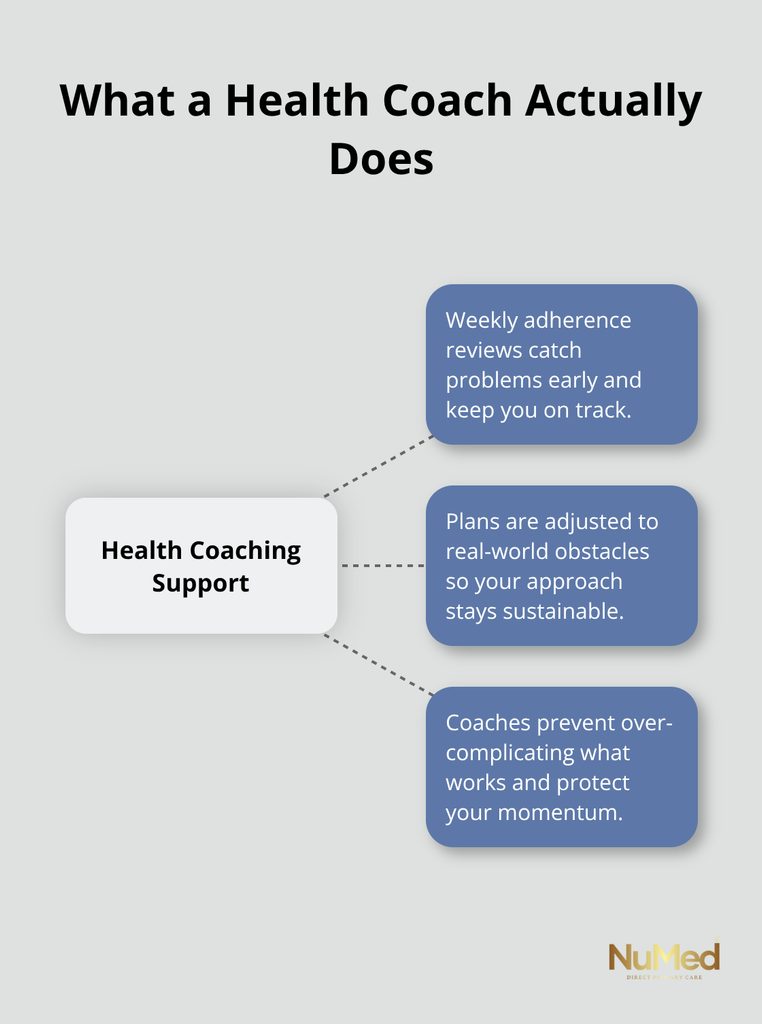
First, they review your actual adherence against your plan weekly, catching problems immediately rather than months later when you’ve already abandoned everything. Second, they adjust your plan based on real obstacles rather than letting you white-knuckle through an unsustainable approach. Third, they prevent you from overcomplicating what works.
Many people sabotage their own success by constantly modifying their plan, adding new goals before solidifying existing ones. A coach stops this pattern.
Create Accountability Without a Coach
If you cannot access a health coach immediately, recruit one accountability partner who shares your health goals and schedule weekly check-ins. This person reviews what you actually accomplished that week without judgment and helps you problem-solve barriers. Make this meeting non-negotiable, scheduling it the same day and time weekly. Your accountability partner becomes more valuable than any motivation app because human connection drives behavior change far more effectively than notifications.
Final Thoughts
Your holistic health journey planning succeeds when you move from understanding root causes to actually living differently. The foundation you built through baseline assessment, the customized wellness plan you created, and the accountability structures you established form a complete system that works only when you maintain it beyond the initial enthusiasm. The real transformation happens in month four, month eight, and month twelve when motivation fades and life gets messy, which is exactly when ongoing support prevents you from reverting to old patterns.
Your accountability partner or health coach reminds you that temporary setbacks don’t erase progress and helps you adjust your plan when circumstances change rather than abandoning it entirely. They review your actual adherence weekly, catch problems immediately, and prevent you from overcomplicating what works. This ongoing partnership means you never navigate your health journey alone, and the difference between people who transform their health and those who don’t isn’t willpower or genetics-it’s having someone invested in your success who checks in regularly and helps you problem-solve when real life interferes with perfect plans.
Your next step is straightforward: review the baseline assessment you completed and identify your highest-impact area. Schedule your first week of changes around that single focus, then find your accountability partner or explore health coaching options to support your transformation.