

Hormonal imbalances affect millions of people, yet many don’t realize their fatigue, weight gain, or mood changes stem from hormone dysfunction. At NuMed DPC, we’ve found that conventional medicine often treats symptoms rather than identifying what’s actually causing the problem.
Natural hormone therapy options exist beyond what most people encounter in standard care. This guide walks you through evidence-based approaches to hormonal health, from bioidentical hormones to lifestyle changes that create real results.
Understanding Hormonal Imbalances and Their Symptoms
What Hormonal Imbalance Actually Looks Like
Hormonal dysfunction doesn’t announce itself with a single obvious symptom. Women often experience irregular periods, hot flashes, night sweats, and unexplained weight gain around the midsection, while men frequently report low energy, decreased muscle mass, and mood swings that they attribute to stress or aging. The frustrating reality is that these symptoms overlap with dozens of other conditions, which is why many people spend years searching for answers.
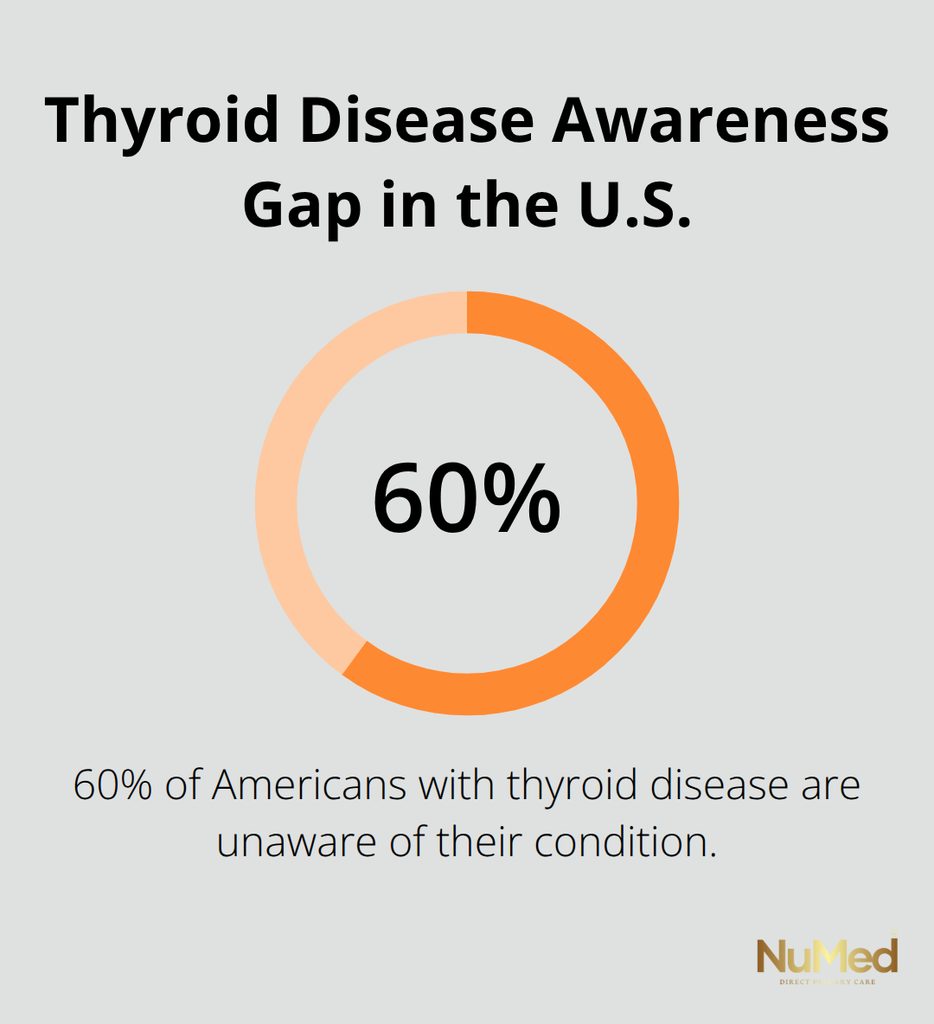
Thyroid dysfunction affects approximately 20 million Americans, yet up to 60% of those with thyroid disease are unaware of their condition.
Beyond the obvious signs, hormonal imbalances trigger cascading effects throughout your body. Sleep deterioration becomes a serious problem because cortisol dysregulation disrupts your circadian rhythm, making you tired but wired at night. Your metabolism slows when thyroid hormones drop, making weight loss feel impossible despite diet and exercise. Brain fog and difficulty concentrating emerge when estrogen or testosterone falls below optimal ranges. Blood sugar control worsens, increasing cravings and energy crashes. Joint and muscle pain intensify. Skin quality deteriorates. These aren’t separate problems-they’re symptoms of a single underlying hormonal disruption that conventional medicine typically addresses one symptom at a time.
Why Standard Medicine Misses the Problem
Traditional healthcare fragments your care across specialists. Your primary care doctor treats fatigue with a sleep study. Your gynecologist prescribes birth control for irregular periods. Your dermatologist manages acne. Your cardiologist addresses elevated blood pressure. None of these practitioners communicate with each other, and none investigates whether a single hormonal imbalance caused all these issues.
Hormone testing in standard medicine remains limited and reactive. Doctors typically test only TSH for thyroid function, missing subclinical hypothyroidism that shows up only when you measure free T3 and free T4. They rarely test progesterone, DHEA, or cortisol patterns throughout the day. Insurance constraints push physicians toward quick visits and pharmaceutical interventions rather than exploring lifestyle factors or nutritional deficiencies that drive hormonal dysfunction. This approach explains why you might feel progressively worse despite treatment. The root cause-whether it’s chronic stress elevating cortisol, nutrient deficiencies from poor absorption, or insulin resistance from refined carbohydrate consumption-never gets addressed.
Moving Toward Root-Cause Solutions
Understanding how your hormones actually work requires practitioners who test comprehensively and listen to your complete health story. The next section explores natural hormone therapy methods that address these underlying causes rather than masking symptoms.
What Actually Works for Restoring Hormone Balance
Bioidentical Hormones vs. Synthetic Alternatives
Bioidentical hormone replacement therapy has fundamentally changed how we approach hormonal restoration, yet it remains widely misunderstood and often confused with synthetic alternatives that carry different risk profiles. Bioidentical hormones match your body’s natural molecular structure exactly, meaning estradiol, progesterone, and testosterone are chemically identical to what your ovaries or testes produce. Synthetic hormones like conjugated equine estrogens or medroxyprogesterone alter that structure, which changes how your body metabolizes and responds to them.
Research from the Women’s Health Initiative showed increased cardiovascular and breast cancer risk with synthetic hormone therapy, but bioidentical hormones studied in the French E3N cohort showed no comparable increased risk when properly dosed and monitored. The critical difference matters because your cells recognize bioidentical hormones immediately, requiring lower doses and producing faster symptom relief. Practitioners who prioritize bioidentical options combine them with comprehensive lab work to determine exact dosing rather than standardized protocols that ignore individual variation.
Sleep, Strength Training, and Stress Management
Lifestyle modifications create the foundation that makes any hormone therapy actually work, and this is where most people fail because they expect hormones alone to solve problems rooted in daily habits. Sleep quality directly controls cortisol and growth hormone production, yet most people with hormonal imbalances average 5-6 hours nightly instead of the 7-9 hours required for hormonal restoration. Strength training twice weekly increases insulin sensitivity and testosterone production in both women and men, addressing metabolic dysfunction that perpetuates weight gain and fatigue.
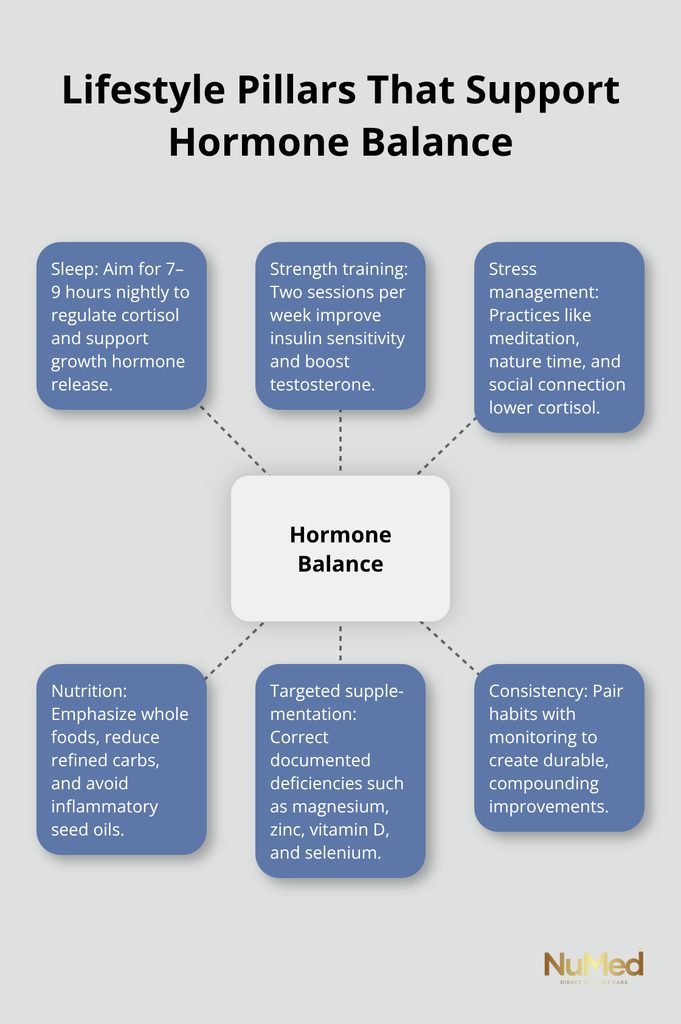
Chronic stress elevates cortisol continuously, suppressing progesterone and reproductive hormones, so stress management becomes as critical as any medication. Meditation, time in nature, and social connection all reduce cortisol when practiced consistently. These interventions work because they address the actual source of hormonal disruption rather than treating the symptoms that stress creates.
Nutrition and Targeted Supplementation
Refined carbohydrates and seed oils disrupt insulin signaling, triggering inflammation that accelerates hormone receptor dysfunction. Specific nutritional support addresses deficiencies that block hormone synthesis: magnesium deficiency impairs thyroid conversion and progesterone production, zinc deficiency reduces testosterone in men and fertility in women, and vitamin D insufficiency affects estrogen metabolism and immune function.
Supplementation works only when targeting measurable deficiencies identified through functional testing, not through general supplementation protocols. Adaptogenic herbs like rhodiola reduce cortisol when stress is genuine and ongoing, but they cannot replace actual stress reduction. The practitioners who see the best hormonal outcomes combine modest bioidentical dosing with aggressive lifestyle intervention, recognizing that hormones amplify what your daily habits create rather than override them.
Creating Your Personalized Approach
The most effective hormone restoration strategy integrates these elements based on your specific test results and health history. Your practitioner should order comprehensive hormone panels including estrogen, progesterone, cortisol, and thyroid markers rather than relying on limited screening. This detailed information reveals whether your imbalance stems from thyroid dysfunction, adrenal fatigue, estrogen dominance, or insulin resistance-each requiring different interventions.
Once you understand your hormonal picture, the real work begins with lifestyle changes that address root causes. Hormone therapy becomes a tool that supports these changes rather than a substitute for them. The next section explores how to work with practitioners to build a personalized treatment plan that combines testing, natural therapy options, and functional medicine approaches.
Integrating Natural Hormone Therapy into Your Healthcare Plan
Finding a Practitioner Who Tests Comprehensively
Finding a practitioner who tests comprehensively separates successful hormone restoration from years of frustration. Most primary care doctors spend 15 minutes reviewing symptoms and ordering standard TSH testing, then prescribe medication based on outdated reference ranges.
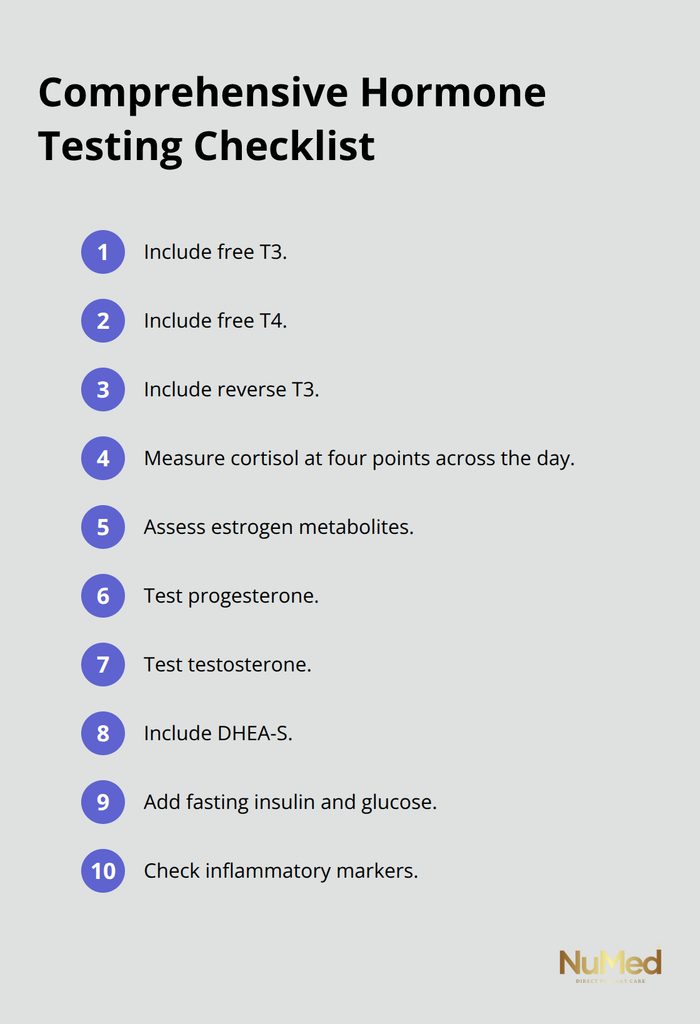
You need someone who orders complete hormone panels including free T3, free T4, reverse T3, cortisol measured at four points throughout the day, estrogen metabolites, progesterone, testosterone, and DHEA-S. This level of testing reveals whether your fatigue stems from thyroid dysfunction, adrenal insufficiency, or estrogen dominance.
The practitioner should also test fasting insulin, glucose, and inflammatory markers because insulin resistance drives hormonal dysfunction in the general population. Once you have this data, your practitioner creates a treatment plan based on your specific imbalances rather than applying standardized protocols that ignore individual variation.
Establishing Clear Timelines and Measurable Endpoints
The conversation with your practitioner must establish clear timelines and measurable endpoints before treatment starts. Hormone restoration takes 8 to 12 weeks minimum before significant symptom improvement appears, and many people abandon treatment after 3 weeks because they expect faster results. Request specific targets for each hormone before starting, then schedule follow-up testing at 8 weeks to measure progress.
If your TSH remains above 2.5 despite symptoms, your practitioner should adjust dosing upward rather than accepting values within the standard reference range. Track concrete metrics like sleep quality, energy at 3 PM, menstrual regularity, and body composition changes rather than relying on how you feel day-to-day. Functional medicine practitioners excel at this approach because they view hormone optimization as an ongoing process requiring continuous adjustment, not a one-time prescription.
Addressing Nutrient Absorption and Deficiencies
Your practitioner should address nutrient absorption because magnesium, zinc, vitamin D, and selenium deficiencies block hormone synthesis regardless of supplementation. Functional medicine testing identifies whether you have malabsorption issues from poor gut health or nutrient depletion from medication use. These deficiencies (especially magnesium and zinc) prevent your body from utilizing hormones effectively, making treatment ineffective until absorption improves.
This integrated approach transforms hormone therapy from a passive medication experience into an active partnership where your test results drive specific changes in dosing, supplementation, and lifestyle priorities. The practitioners who produce the best outcomes combine modest bioidentical hormone dosing with aggressive lifestyle intervention, recognizing that hormones amplify what your daily habits create.
Final Thoughts on Natural Hormone Therapy
Hormonal balance requires addressing root causes rather than masking symptoms with medication alone. Bioidentical hormones, lifestyle modifications, nutritional support, and comprehensive testing work together to help your body restore itself. The practitioners who produce the best results combine modest hormone dosing with aggressive lifestyle changes, recognizing that hormones amplify what your daily habits create.
Your next step involves finding a practitioner who tests comprehensively and listens to your complete health story. Request hormone panels that measure free T3, free T4, cortisol patterns, estrogen metabolites, progesterone, and testosterone rather than accepting limited screening. Establish clear timelines before starting treatment, knowing that meaningful improvement takes 8 to 12 weeks minimum, and track concrete metrics like sleep quality, energy levels, and menstrual regularity instead of relying on daily fluctuations in how you feel.
We at NuMed DPC recognize that long-term hormone health requires a different approach than standard medicine provides. Our direct primary care model focuses on preventing illness by addressing root causes through comprehensive testing, personalized treatment plans, and ongoing adjustment based on your results. If you’re ready to move beyond symptom management and explore natural hormone therapy options that address what’s actually causing your hormonal dysfunction, we’re here to support your hormonal restoration.