Treatment-resistant depression affects millions of people who haven’t found relief through standard medications and therapy. Ketamine-assisted therapy offers a different path forward, with clinical evidence showing rapid symptom improvement in cases where traditional approaches have fallen short.
At NuMed DPC, we recognize that mental health treatment isn’t one-size-fits-all. This guide walks you through how ketamine-assisted therapy works, what the research shows, and whether it might be right for you.
How Ketamine Reshapes Brain Chemistry and Mood
Ketamine works through a mechanism fundamentally different from traditional antidepressants. While selective serotonin reuptake inhibitors take weeks to show effects, ketamine blocks NMDA receptors in the brain, triggering a surge of glutamate that activates a cascade of changes at the cellular level. This process promotes synaptogenesis-the formation of new neural connections-which appears to rewire how your brain processes emotional information. Research from the Cleveland Clinic demonstrates that this neurological shift can produce measurable mood improvement within hours rather than weeks, a significant advantage for people whose depression has resisted standard medications.
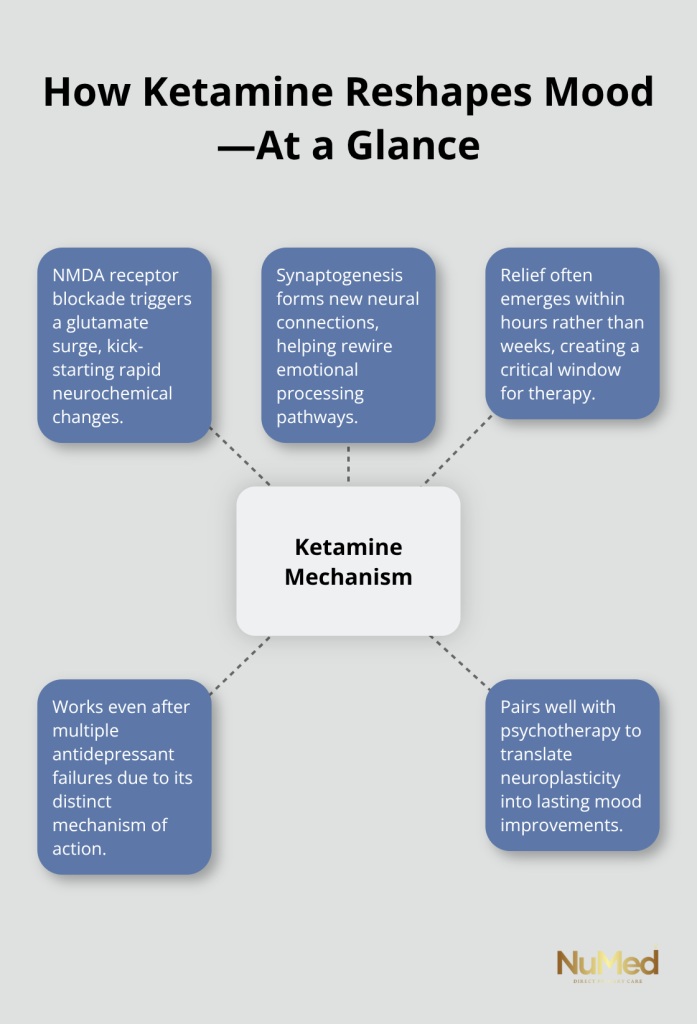
The mechanism is so distinct that ketamine offers relief even when multiple antidepressants have failed, making it particularly valuable for treatment-resistant depression, where roughly 30 percent of patients with depression experience inadequate response to conventional drugs.
The Guided Experience Shapes Your Outcomes
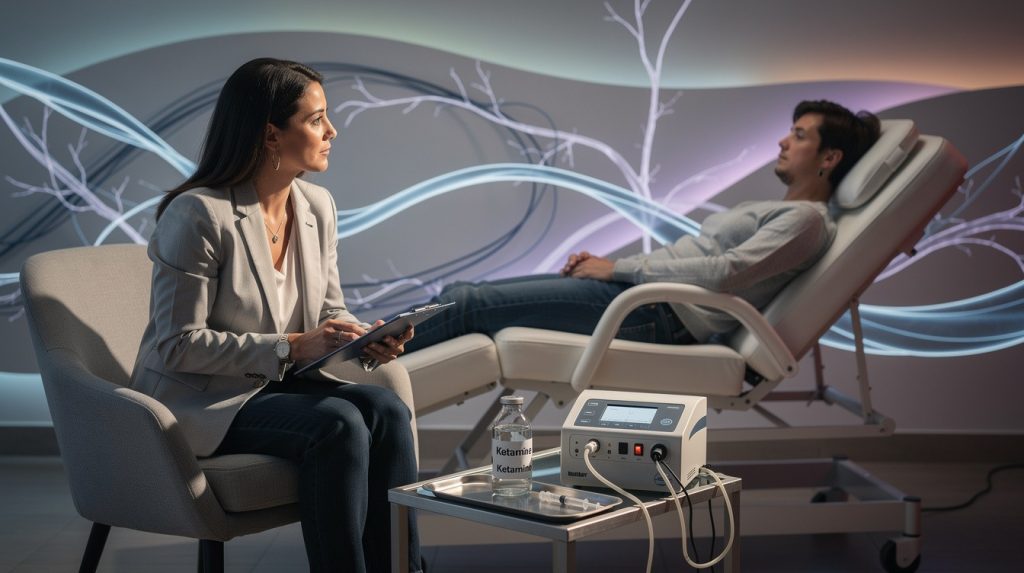
The therapeutic setting during ketamine administration directly influences your results. Ketamine-assisted therapy pairs the medication with structured psychotherapy, and this combination produces stronger, more durable benefits than ketamine alone. During your session (which typically lasts one to three hours), a trained clinician monitors your vital signs continuously while you experience a dreamlike state with altered sensory perception. The environment remains calm and quiet, often with headphones playing soft music to orient your experience. This guided approach allows your brain’s heightened plasticity during the ketamine state to align with therapeutic work, enabling you to reframe negative thought patterns under professional supervision. Integration therapy, following each session, usually another hour dedicated to processing what you experienced, helps translate insights into lasting behavioral change. Studies show that without this therapeutic pairing, benefits fade within 10 to 14 days; with it, patients maintain response at significantly higher rates, with approximately 50 percent responding to ketamine treatment.
Speed and Mechanism Distinguish KAT From Standard Care
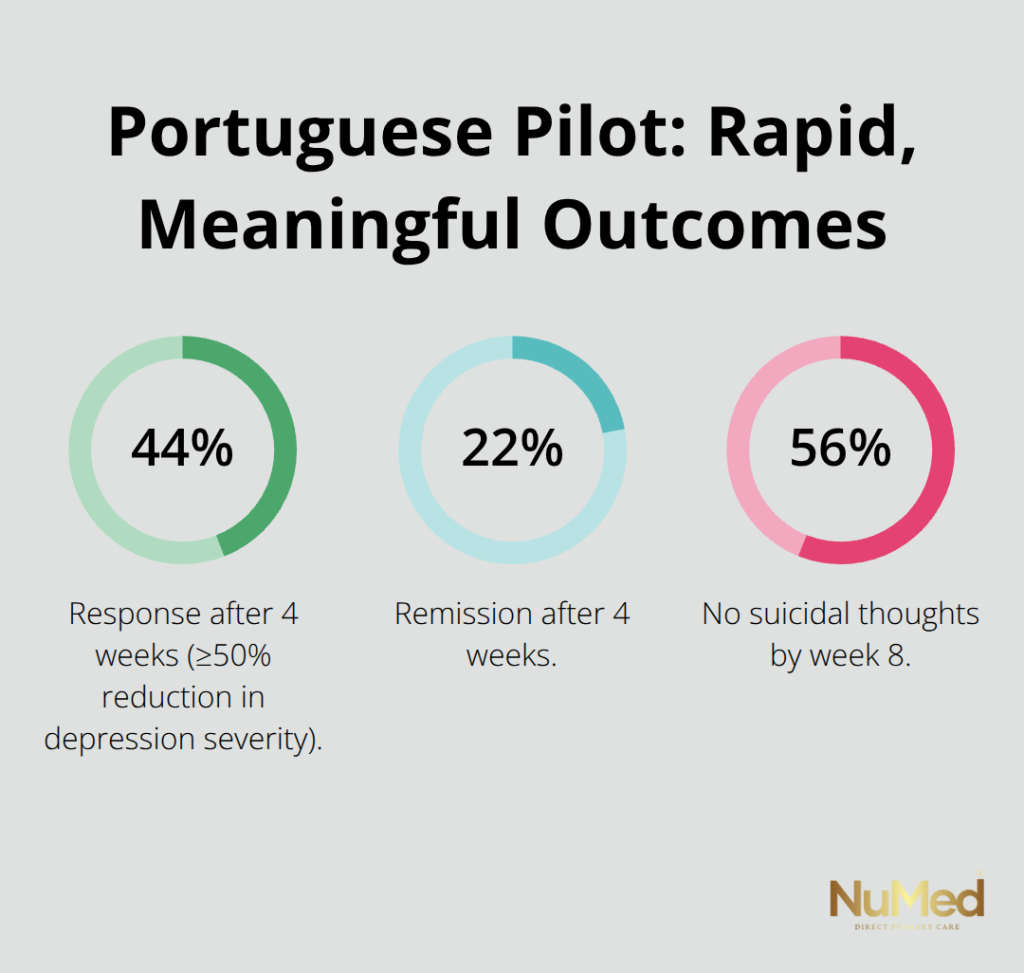
Ketamine-assisted therapy operates on a timeline that standard antidepressants cannot match. Traditional SSRIs require four to six weeks of consistent use before neurochemical changes accumulate enough to lift mood; ketamine produces measurable relief within hours. The dosing regimen typically involves 0.5 milligrams per kilogram administered intravenously over 40 minutes, with treatment protocols often spanning 2 to 3 infusions per week, followed by maintenance sessions for responders. Response rates in clinical settings hover around 50 percent, with remission rates approximately 28 percent, meaningful figures when you consider that these patients had already exhausted other options. The Portuguese NHS pilot program treating treatment-resistant depression reported that 44.4 percent of participants achieved a response after four weeks, with 22.2 percent reaching remission. Suicidal ideation, one of depression’s most dangerous aspects, showed rapid improvement in that same study, with 55.6 percent of participants reporting no suicidal thoughts by week eight. This speed matters because it interrupts the downward spiral of severe depression and creates a window where psychotherapy becomes more effective.
What Happens During Your Treatment Session
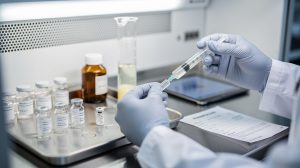
Your ketamine-assisted therapy session follows a structured protocol designed to maximize safety and therapeutic benefit. A clinician administers ketamine while monitoring your heart rate, blood pressure, and oxygen levels throughout the infusion. Most people describe the experience as dreamlike, with heightened sensory perception and a slowed sense of time. The calm environment, soft music, minimal conversation, and a trained professional present help you navigate this altered state without distress. After the infusion ends (typically 40 minutes to two hours, depending on your dose), you remain under observation as the medication’s acute effects wear off. Most people feel back to their baseline by the next day, though some fatigue can persist. The real work happens in integration therapy, where you and your therapist process the experience and connect insights to your treatment goals. This structured approach, preparation, dosing, and integration distinguishes ketamine-assisted therapy from other rapid-acting treatments and contributes to its effectiveness.
Understanding how ketamine reshapes your brain chemistry and how therapeutic guidance amplifies those changes sets the stage for examining the clinical evidence behind these outcomes. The research demonstrates not just that KAT works, but for whom it works best and what realistic expectations look like.
Clinical Evidence and Treatment Outcomes
The clinical evidence for ketamine-assisted therapy rests on concrete data from real-world studies rather than theoretical promise. A Portuguese NHS pilot program treated nine patients with treatment-resistant depression using combined ketamine infusions and psychotherapy. After four weeks, 44.4 percent achieved a meaningful response (at least 50 percent reduction in depression severity), while 22.2 percent reached full remission. These figures matter because they represent patients who had already failed multiple antidepressant trials. The same study tracked suicidal ideation specifically, since this represents the most urgent clinical concern: 55.6 percent of participants reported complete absence of suicidal thoughts by week eight, a dramatic shift from baseline, where most carried active ideation.
Depression severity as measured by the PHQ-9 scale dropped from an average of 20 (severe) at baseline to 11 (moderate) by week eight, a statistically significant improvement that translated to functional gains participants could experience in daily life.
Meta-analyses examining broader ketamine efficacy across multiple trials report response rates around 50 percent and remission rates near 28 percent, with durability extending beyond initial estimates: roughly 80 percent of patients maintained their response at four weeks post-treatment and 60 percent at eight weeks. The key distinction between these outcomes and traditional antidepressants is speed. Ketamine works in 24-72 hours while SSRIs take 4-6 weeks. For someone in acute suicidal crisis or severe functional decline, this timeline difference is not academic-it determines whether someone can access relief before their condition worsens.
Treatment-Resistant Depression Shows Strongest Evidence
Treatment-resistant depression affects roughly 30 percent of people with depression, according to the World Health Organization. Ketamine-assisted therapy was developed specifically for this population. A single ketamine infusion produces a rapid antidepressant response in approximately 50 percent of patients, though without ongoing treatment, the benefit typically fades within 10 to 14 days. This is where the therapeutic pairing becomes essential: ketamine-assisted therapy protocols combine infusions (typically 0.5 mg/kg over 40 minutes) with structured psychotherapy designed to strengthen and extend benefits.
Real-world clinic data show that patients receiving this combined approach maintain response rates significantly higher than ketamine alone. The Portuguese study demonstrates this concretely: integration therapy following each infusion helped patients consolidate insights and behavioral shifts that lasted beyond the acute medication window. Your treatment plan would typically involve 6 to 12 initial sessions spaced over weeks, followed by maintenance infusions every 2 to 4 weeks based on your individual response pattern. This differs fundamentally from the traditional antidepressant approach, where you take the same dose daily indefinitely. Instead, ketamine-assisted therapy treats the acute crisis phase intensively, then transitions to maintenance dosing only as needed.
Anxiety and PTSD Remain Understudied but Promising
Anxiety disorders and post-traumatic stress disorder represent off-label uses of ketamine where clinical evidence exists but remains more limited than for depression. Ketamine’s mechanism, promoting new neural connections and reducing overactive threat-detection signaling, theoretically addresses the core dysfunction in both conditions. Clinicians report using ketamine-assisted therapy for anxiety and PTSD, and preliminary evidence suggests potential benefit, yet high-quality randomized controlled trials specifically examining these conditions remain sparse compared to depression research.
This matters for your decision-making: if you have anxiety or PTSD and are considering ketamine-assisted therapy, you should expect your clinician to discuss that you’re pursuing a treatment with promising biological rationale but less robust clinical outcome data than exists for depression. The integration of psychotherapy becomes even more critical in these conditions because your therapist can directly target trauma processing or anxiety patterns during your heightened neuroplasticity window. Some research suggests that ketamine-assisted therapy may be particularly useful for PTSD when combined with trauma-focused psychotherapy approaches, though definitive evidence awaits larger trials.
If you have anxiety or PTSD rather than depression, ask your provider specifically about their experience treating your condition and what outcome measures they will track to assess whether the treatment is working for you. Understanding your provider’s track record with your specific condition helps you make an informed choice about whether ketamine-assisted therapy fits your needs, which leads directly to the practical considerations of medical screening and what happens during your actual treatment sessions.
Safety, Screening, and What to Expect
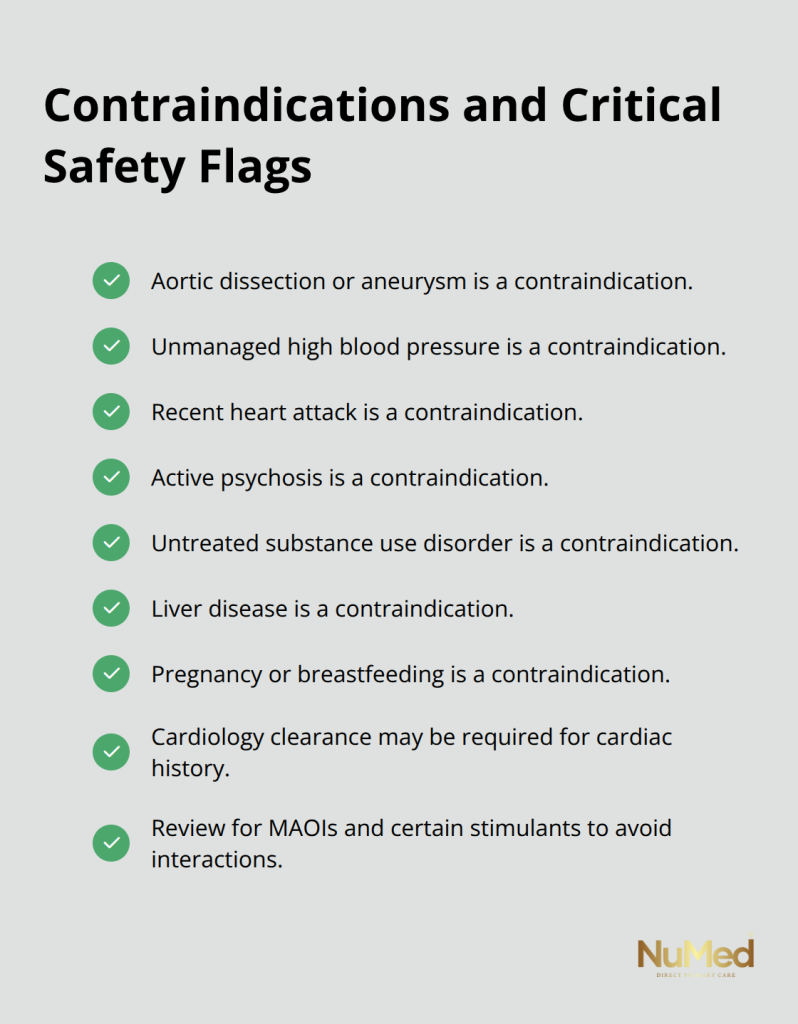
Medical screening determines whether ketamine-assisted therapy is safe and appropriate for you, and this process is not perfunctory-it directly affects your safety and treatment outcomes. Your clinician will conduct a comprehensive medical history review, order baseline laboratory tests to assess liver and kidney function, and evaluate your cardiovascular health because ketamine raises heart rate and blood pressure during administration. Certain conditions contraindicate ketamine entirely: aortic dissection or aneurysm, unmanaged high blood pressure, recent heart attack, active psychosis, untreated substance use disorder, liver disease, and pregnancy or breastfeeding. If you have a history of cardiac problems, your provider may require clearance from a cardiologist before proceeding. Drug interactions matter significantly-monoamine oxidase inhibitors and certain stimulants can interact problematically with ketamine, so your clinician needs a complete list of every medication and supplement you take.
Medical Screening and Patient Eligibility
The screening process typically includes a psychiatric evaluation to rule out active psychosis, since ketamine can worsen psychotic symptoms in vulnerable individuals. This isn’t excessive caution; it’s the difference between a treatment that works safely and one that creates complications. If you have bipolar disorder, your clinician should discuss whether ketamine is appropriate for your specific presentation, as research in bipolar depression remains more limited than in unipolar depression. Some clinics conduct a trial dose before committing to full treatment, allowing them to observe your individual response and tolerance. Your responsibility is complete honesty during screening-if you’ve minimized substance use history, hidden cardiac symptoms, or omitted medications you’re taking, you’ve compromised your own safety.
The Treatment Day Timeline
A typical treatment day lasts two to three hours total, with the actual ketamine infusion taking 40 minutes to two hours, depending on your dose and route of administration. Arrive having fasted, arrange for a trusted person to drive you home (you cannot drive or operate machinery for the rest of the day), and plan to have someone stay with you through the evening. During the infusion, your clinician monitors vital signs continuously-heart rate, blood pressure, oxygen saturation, and mental status. Common short-term effects include elevated blood pressure, increased heart rate, nausea, headaches, blurred vision, dizziness, and dissociation, with most resolving within hours. If nausea occurs, your clinician can administer medication to manage it.
Managing the Dissociative Experience
The dissociative experience-feeling detached from your body or perceiving time differently-is expected and temporary; your therapist’s presence throughout helps you feel grounded. After the infusion ends, you’ll spend 30 to 60 minutes in a calm recovery area before integration therapy begins. Integration therapy is where the clinical work happens: you and your therapist discuss what you experienced, identify insights about your depression or anxiety patterns, and translate those insights into concrete coping strategies or behavioral changes. This session typically lasts one hour.
Recovery and Ongoing Monitoring
Most people feel back to baseline the next day, though some report lingering fatigue or mild cognitive fuzziness for 24 hours. Serious adverse events are uncommon in supervised clinical settings, but rare complications can occur. Your clinician will track your response across sessions and adjust your treatment plan based on what you experience, ensuring that ketamine-assisted therapy continues to serve your mental health goals.
Final Thoughts
Ketamine-assisted therapy represents a distinct option for people whose depression, anxiety, or PTSD has not responded to conventional treatment. The clinical evidence shows that roughly 50 percent of treatment-resistant depression patients respond to ketamine, with 28 percent achieving remission, outcomes that matter profoundly for those who have exhausted standard medications. The speed of response, often within hours rather than weeks, addresses the urgent timeline of severe depression and suicidal ideation in ways traditional antidepressants cannot match.
Ketamine-assisted therapy works best for people who have already tried multiple antidepressants without adequate relief, who have medical clearance for the treatment, and who are willing to engage in the psychotherapy component that strengthens and extends benefits. Your clinician should have specialized training in ketamine-assisted therapy, maintain proper medical supervision during infusions, integrate structured psychotherapy into your treatment plan, and monitor your response across sessions with clear outcome measures. A qualified practitioner explains realistic expectations, discusses potential side effects, and adjusts your treatment plan based on your individual response rather than following a rigid protocol.
If you are considering ketamine-assisted therapy or exploring mental health options, we encourage you to connect with our team to discuss how we can support your comprehensive health journey. We recognize that mental health treatment requires the same personalized, root-cause approach as physical health. Our direct primary care model emphasizes the connection between practitioner and patient, addressing the whole person rather than isolated symptoms.