

Most people who attempt lifestyle changes for health abandon them within weeks. The problem isn’t willpower-it’s that conventional advice ignores how real change actually happens.
At NuMed DPC, we’ve seen firsthand that lasting transformation requires a completely different approach than what mainstream health culture promotes. This post breaks down why most attempts fail and shows you what actually works.
Why Most Lifestyle Changes Fail in Practice
The reason most people abandon lifestyle changes has little to do with motivation and everything to do with how change is framed. Research from the UK Biobank study involving nearly 60,000 people showed that tiny daily tweaks to sleep, exercise, and diet can add about one year to life expectancy for those with poorer lifestyle habits. Yet most people don’t start with tiny tweaks-they overhaul everything at once. Someone with poor sleep decides to exercise 60 minutes daily, eliminate processed foods, and meditate for 20 minutes, all simultaneously. Within three weeks, life gets busy, one habit slips, and the entire structure collapses.
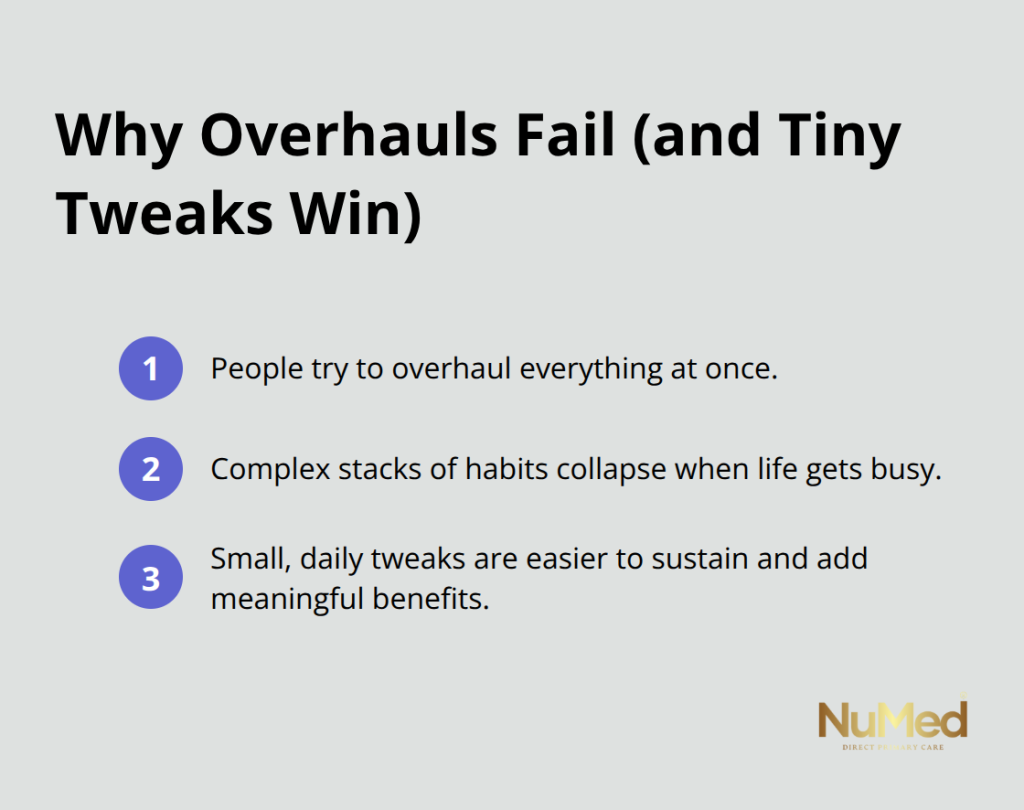
The problem isn’t the person; it’s that conventional health advice treats lifestyle change as an all-or-nothing proposition rather than a series of small, manageable shifts.
The Myth of the Perfect Plan
People often believe that the right plan, app, or program will finally make change stick. They purchase a meal-prep service, sign up for a gym membership, and download a meditation app-all at once. What they don’t realize is that environmental friction, not willpower, determines whether habits persist. A person working 50-hour workweeks with unpredictable schedules cannot sustain a meal-prep routine designed for someone with a flexible calendar. A person living in a neighborhood with poor air quality cannot simply walk outside for daily movement without protective measures. Generic programs ignore these realities, and when people fail to follow them, they internalize the failure as personal inadequacy rather than recognizing the mismatch between the plan and their actual life.
The Cost of Isolation
Most lifestyle changes happen in isolation. Someone decides to lose weight, changes their diet, and tells no one. When they struggle or slip, there’s no one to normalize the experience or adjust the approach.
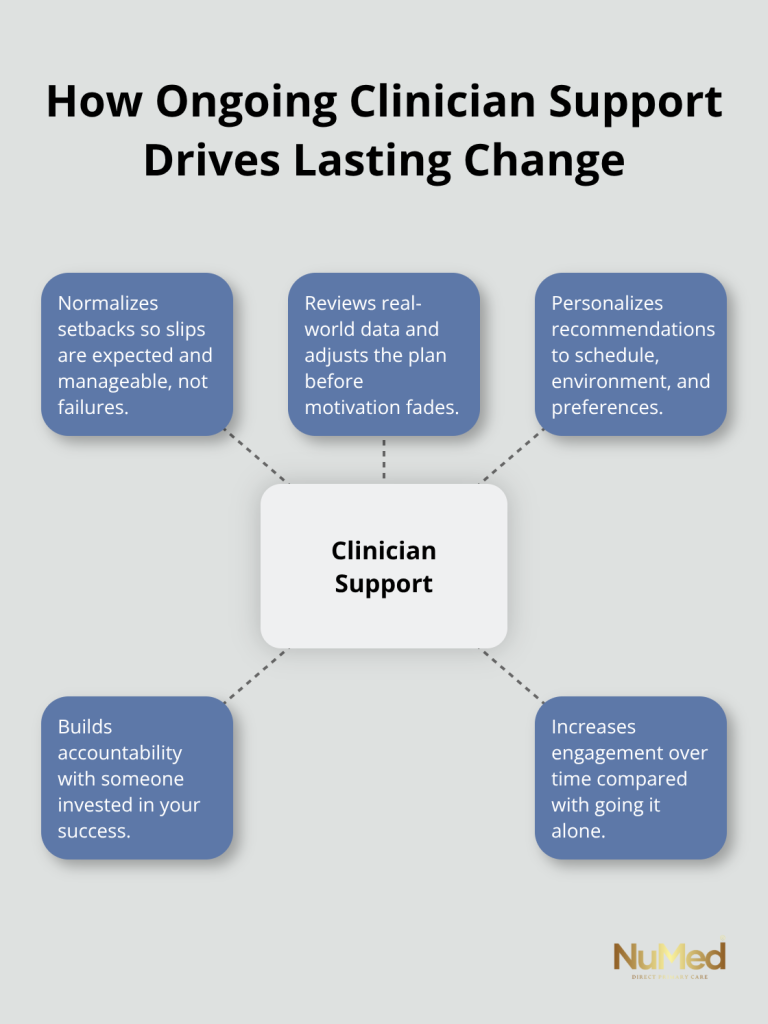
Research on healthcare provider engagement showed that patients with longer subscription durations demonstrated significantly higher engagement. This pattern reveals something important: ongoing access to a healthcare provider who understands your specific situation drives sustained behavior change far more than any app or generic program. When someone has a direct relationship with a clinician who reviews their progress, acknowledges obstacles, and adjusts recommendations based on their actual circumstances, adherence improves dramatically.
Why Accountability Matters
Without a healthcare provider who tracks your progress and adapts your plan, you default to old patterns when motivation wanes, which it always does. The difference between someone who sustains change and someone who reverts to old habits often comes down to whether they have someone invested in their success. A clinician who knows your work schedule, your food preferences, your stress triggers, and your past attempts can recommend changes that actually fit your life. They can also catch the moment when you’re about to abandon your efforts and intervene with a realistic adjustment rather than a pep talk. This personalized accountability transforms how people approach their health, moving them from isolated struggle to supported progress.
Building Sustainable Habits Through Small Steps
The UK Biobank study tracked nearly 60,000 people over eight years and revealed something that contradicts everything mainstream health culture teaches: the smallest changes produce the most durable results. According to research published in eClinicalMedicine, small changes to your daily habits, including diet, exercise, and sleep, could help you live longer. The critical insight isn’t the magnitude of these changes-it’s that people actually sustain them. When you commit to adding five minutes of sleep instead of overhauling your entire sleep routine, you remove the friction that causes failure.
Start with One Change at a Time
We at NuMed DPC consistently recommend starting with one single change rather than multiple simultaneous shifts. Pick the area causing you the most immediate problems: perhaps your blood pressure readings are creeping up, your energy crashes by mid-afternoon, or your stress responses have become unmanageable. Choose one. Make that change small enough that it requires minimal willpower. If you’re exhausted, don’t add an hour of exercise; add a ten-minute walk after dinner. If you’re eating processed foods constantly, don’t eliminate them entirely; replace one meal daily with whole foods. This approach works because it doesn’t trigger the resistance that comes from deprivation or dramatic life restructuring.
Focus on Identity-Based Habits Rather Than Goals
The most effective long-term changes happen when you stop focusing on external goals and start rebuilding your identity. A person trying to lose weight through willpower alone fights constant internal resistance. A person who shifts their identity to someone who moves their body regularly and chooses whole foods almost automatically makes different decisions. This distinction matters profoundly. Research on habit formation shows that the stronger your connection between your actions and your self-image, the more automatically those actions occur. When you see yourself as someone who prioritizes sleep or someone who takes care of their cardiovascular health, the specific behaviors that support those identities become natural rather than forced. A healthcare provider helps you build these identity shifts by connecting your daily actions to your deeper values and long-term health vision. They ask not just what you want to achieve, but who you want to become. That reframing transforms a temporary diet into a permanent shift in how you relate to food. It transforms sporadic exercise into consistent movement because it aligns with your identity, not because you’re chasing a number on a scale.
Track Progress Without Obsessing Over Perfection
Tracking progress without obsessing over perfection separates people who sustain change from those who abandon it after a setback. The moment someone misses three days of their new habit or eats processed food despite their intention, they often interpret it as failure and quit entirely. Instead, tracking should reveal patterns and trends rather than demand daily perfection. If you monitor blood sugar readings, sleep duration, or blood pressure, you’re looking for the overall direction of change, not whether every single day hits your target. Missing one day of your ten-minute walk doesn’t erase the benefits you’ve built. Eating one meal of processed food doesn’t undo your progress. A healthcare provider who reviews your data with this realistic lens helps you distinguish between meaningful setbacks and normal variation. They can identify what actually triggered a slip (stress, schedule disruption, illness) and adjust their approach accordingly, rather than telling you to try harder. This nuanced tracking, combined with a clinician who understands your actual life circumstances, creates the conditions where small changes compound into lasting transformation and sets the foundation for the practical strategies that accelerate your progress.
Practical Strategies for Long-Term Success
Address Root Causes Rather Than Symptoms
Most people fail because they treat symptoms rather than address why the behavior exists in the first place. Someone with poor sleep doesn’t need a sleep app; they need to identify whether stress, caffeine timing, irregular schedules, or a medical condition drives the insomnia. A person eating processed foods constantly isn’t lacking willpower; they’re likely responding to time scarcity, food accessibility in their neighborhood, or using food to manage stress. When you address the actual root cause, the behavior shifts almost automatically.
A clinician who spends time understanding your circumstances can identify what’s really happening. If your blood pressure remains elevated despite medication, the issue might not be the medication dose but rather unmanaged work stress, poor sleep from an irregular schedule, or sodium intake tied to convenience eating. Once you address the stress management or restructure your schedule, the blood pressure often improves without medication changes. This diagnostic clarity transforms outcomes because you’re no longer fighting symptoms in isolation.
Design Your Environment to Support New Behaviors
Environmental design matters more than motivation. If your goal is to move more but your home sits three miles from parks and your work involves sitting for eight hours, willpower becomes irrelevant. Instead, you need environmental changes: park farther away, take stairs instead of elevators, stand during phone calls, or walk after meals. Environmental modifications that are simple and integrated into your daily routine prove most effective for sustained behavior change.
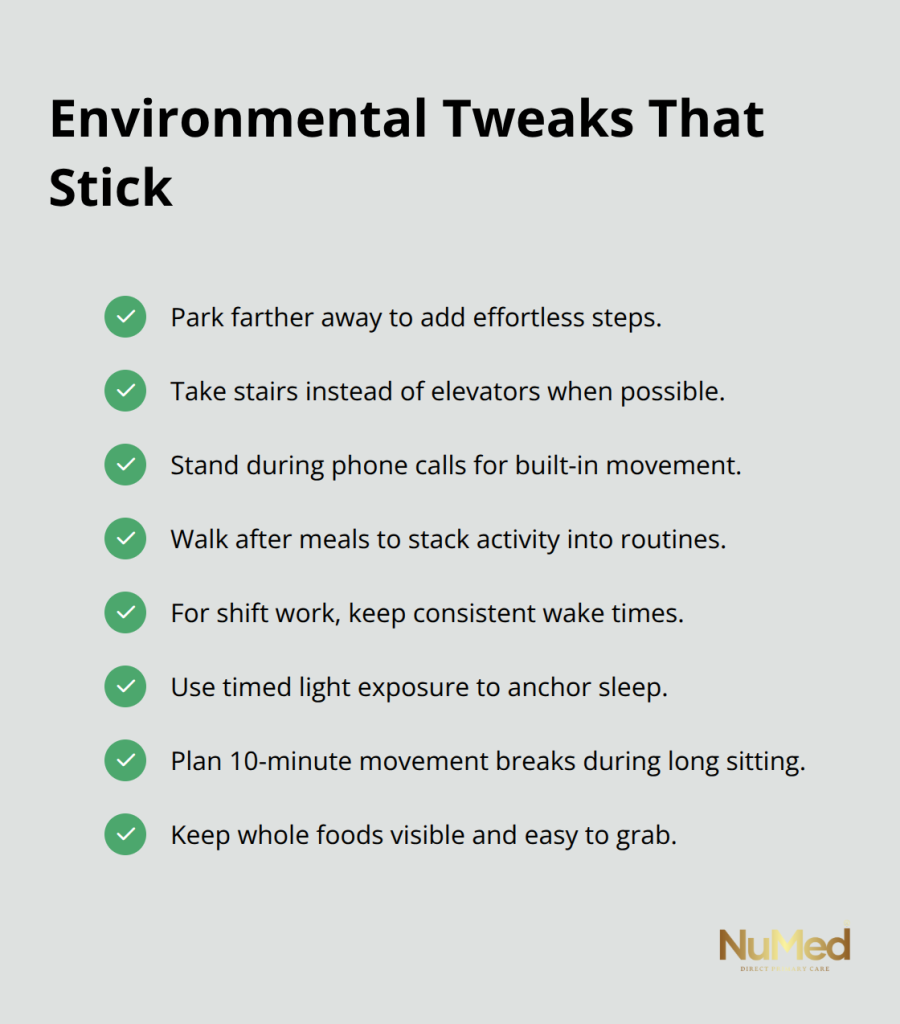
A healthcare provider who understands your actual environment can recommend changes that stick because they fit your life rather than requiring you to reshape your life around them. If you work irregular shifts, a standard sleep hygiene protocol fails; instead, you need strategies specific to shift work, like consistent wake times, light exposure timing, and nap protocols. If you have limited cooking skills or kitchen access, meal plans requiring elaborate preparation become obstacles rather than solutions.
Customize Recommendations to Your Actual Life
When a clinician customizes recommendations based on your constraints rather than generic best practices, adherence jumps dramatically. The difference between sustainable change and abandoned attempts often comes down to whether your healthcare provider understands your actual circumstances well enough to design interventions around them rather than asking you to change your life to fit the intervention. This personalized approach recognizes that your schedule, environment, resources, and preferences are not obstacles to overcome but rather the foundation upon which effective change must be built.
Final Thoughts
Lasting lifestyle changes for health don’t happen overnight, and that’s not a failure on your part-it’s how sustainable transformation actually works. The research is detailed: people who expect immediate results abandon their efforts within weeks, while those who commit to small, incremental shifts build momentum that compounds over months and years. A UK Biobank study of nearly 60,000 people demonstrated that adding just five minutes of sleep, two minutes of daily movement, and two tablespoons of vegetables produced measurable health gains.
The real power emerges when you stop viewing each small win as insignificant and start recognizing how they interconnect. Better sleep improves your stress response, which reduces emotional eating, which stabilizes your blood sugar, which gives you more energy for movement. One change doesn’t exist in isolation-it creates conditions for the next change to take root, which is why we at NuMed DPC emphasize addressing root causes rather than chasing symptoms.
Work with a healthcare provider who understands your actual life-your schedule, your environment, your constraints-rather than expecting you to reshape your entire existence around generic health advice. NuMed Direct Primary Care partners with you to transform how you approach lifestyle changes for health because you no longer navigate them alone. You have someone invested in your success, someone who adjusts recommendations when life gets complicated, and someone who celebrates the small wins that eventually become permanent results.