

Most people take medication for chronic diseases without addressing what caused them in the first place. At NuMed DPC, we believe a lifestyle medicine approach works differently-it targets the root causes through daily habits like nutrition, movement, and stress management.
The evidence is clear: behavior change prevents and reverses conditions that pills alone cannot fix. This guide shows you how to implement these changes in real life.
Why Lifestyle Changes Reverse Diseases That Medication Cannot
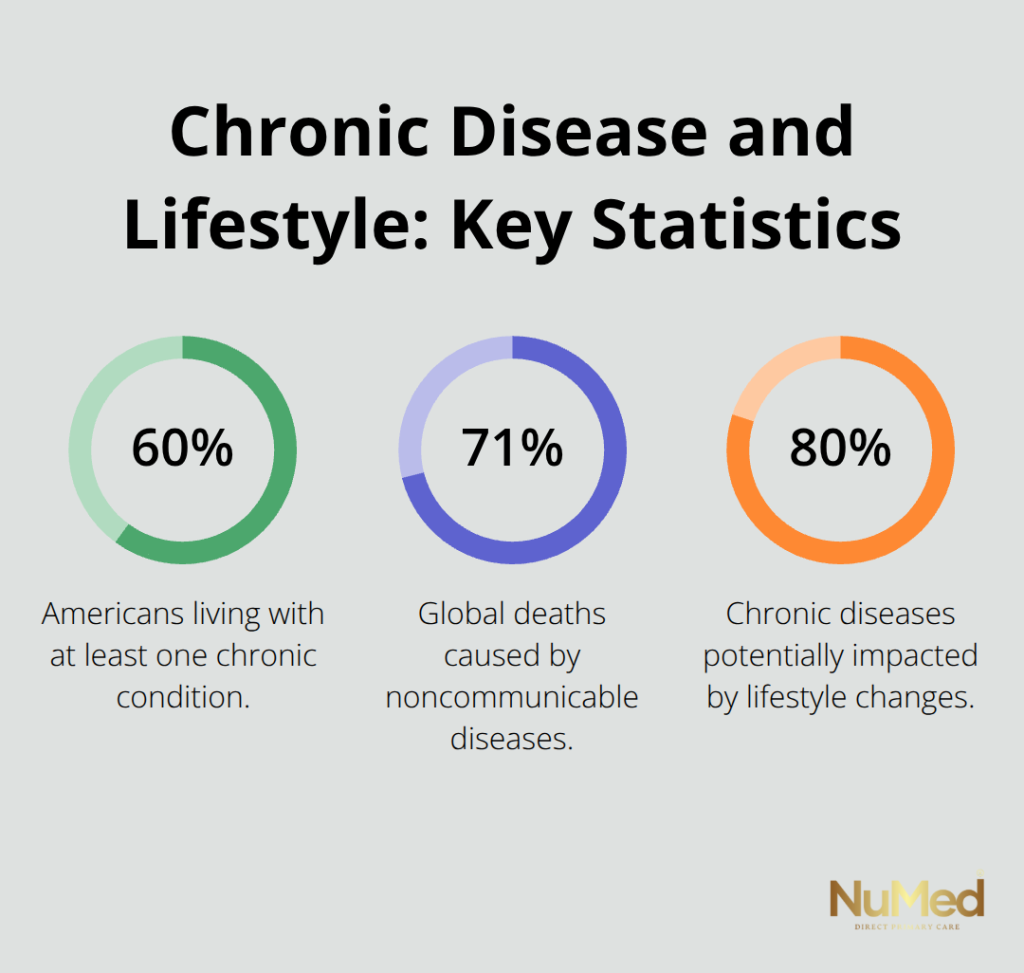
Chronic disease in America is not random. About 60 percent of Americans live with at least one chronic condition, according to the American College of Lifestyle Medicine, and roughly 71 percent of all deaths globally stem from noncommunicable diseases driven by lifestyle factors, including inactivity, poor diet, tobacco use, and alcohol consumption. The critical insight is this: most medications manage symptoms without addressing what caused the disease. Type 2 diabetes, hypertension, and cardiovascular disease develop over years of accumulated poor habits, yet conventional care hands out prescriptions and leaves the underlying behaviors untouched. Lifestyle medicine works backward-it identifies and reverses the daily choices that created the problem in the first place. Research shows that up to 80 percent of chronic diseases could be impacted through lifestyle intervention. This is not theoretical. A person eating ultra-processed foods, sitting for eight hours daily, sleeping five hours nightly, and managing stress through alcohol will develop metabolic dysfunction. Fix those four behaviors, and you fix the disease.
How Daily Habits Reshape Biology
Your body responds to what you do every single day. Modest weight loss of just 5 to 10 percent, combined with improved nutrition and movement, markedly improves blood glucose, blood pressure, and cholesterol according to research supporting lifestyle medicine. A person who walks for 30 minutes after meals reduces blood sugar spikes more effectively than most medications for prediabetes. Someone who shifts from processed foods to whole grains, legumes, vegetables, and healthy fats lowers LDL cholesterol and blood pressure without adding prescriptions. Sleep quality matters equally; seven to nine hours nightly supports weight management, insulin sensitivity, and blood pressure regulation, according to the National Sleep Foundation and NIH. Stress management through mindfulness or breathing exercises reduces blood pressure and improves glycemic control as documented by the American Psychological Association and JAMA. These changes do not happen overnight, but they accumulate. After three to six months of consistent habit change, most people see measurable improvements in lab work. After one to two years, many reverse their diagnoses entirely.
Breaking Free From Medication Dependency
The cycle of medication-only treatment creates a false sense of progress. A patient takes a blood pressure pill, feels fine, and assumes the problem is solved. The underlying causes-excessive sodium intake, sedentary behavior, and unmanaged stress-continue unopposed. When one medication stops working, another is added. This approach treats the disease code, not the person. A different stance means working with patients to identify which specific daily habits drive their condition, then coaching them through sustainable change. Health coaches and practitioners trained in lifestyle medicine guide patients through nutrition changes, movement routines, and stress reduction strategies tailored to their real lives.
Tracking Progress Drives Results
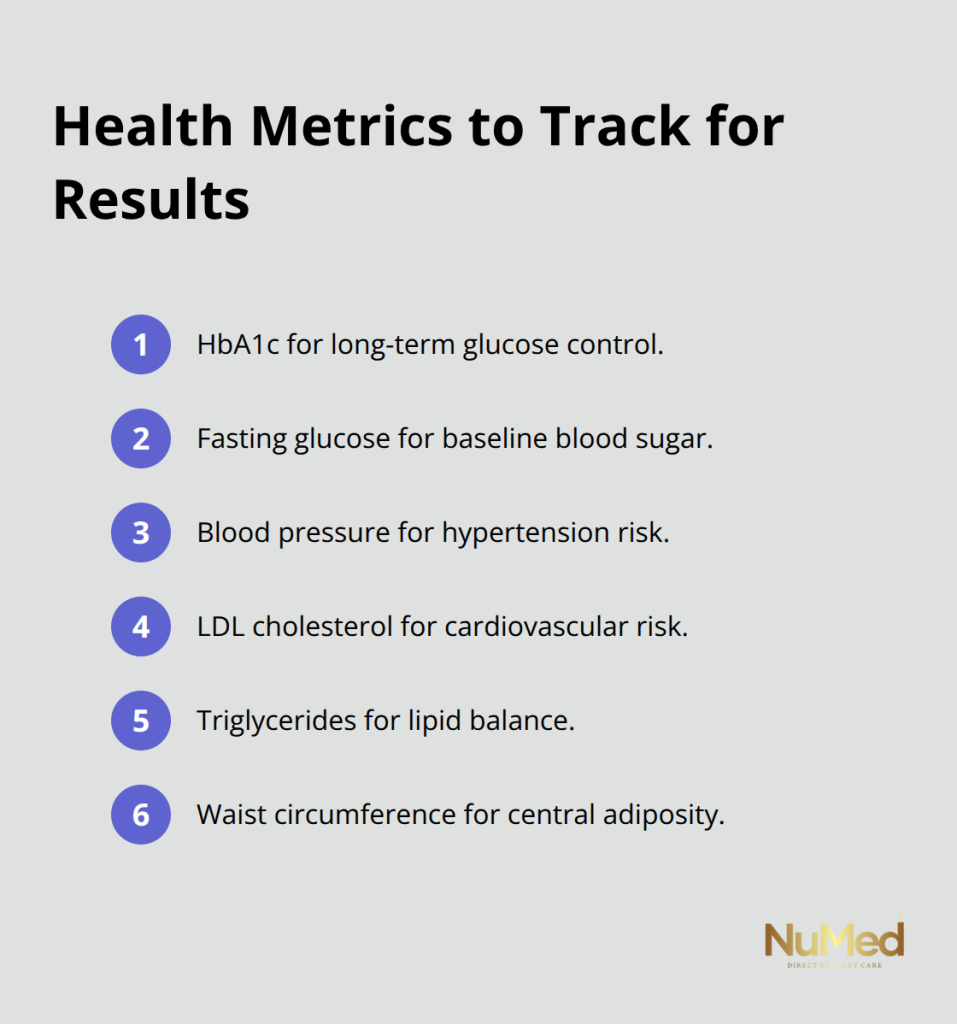
Monitoring HbA1c, fasting glucose, blood pressure, LDL cholesterol, and waist circumference reveals whether your changes are working. Data-driven feedback keeps people accountable and motivated far better than generic advice. The evidence is overwhelming: lifestyle medicine integrated into primary care improves outcomes and reduces long-term costs, according to research in The Lancet and from the American College of Lifestyle Medicine. Once you establish which metrics matter most for your condition, regular measurement transforms abstract goals into concrete progress.
This measurable approach shifts the focus from what you cannot control (your diagnosis) to what you can (your daily choices). With clear data in hand, you and your health team can adjust strategies that work and abandon those that do not, setting the stage for the specific lifestyle factors that produce the greatest transformation.
The Three Pillars That Actually Move the Needle
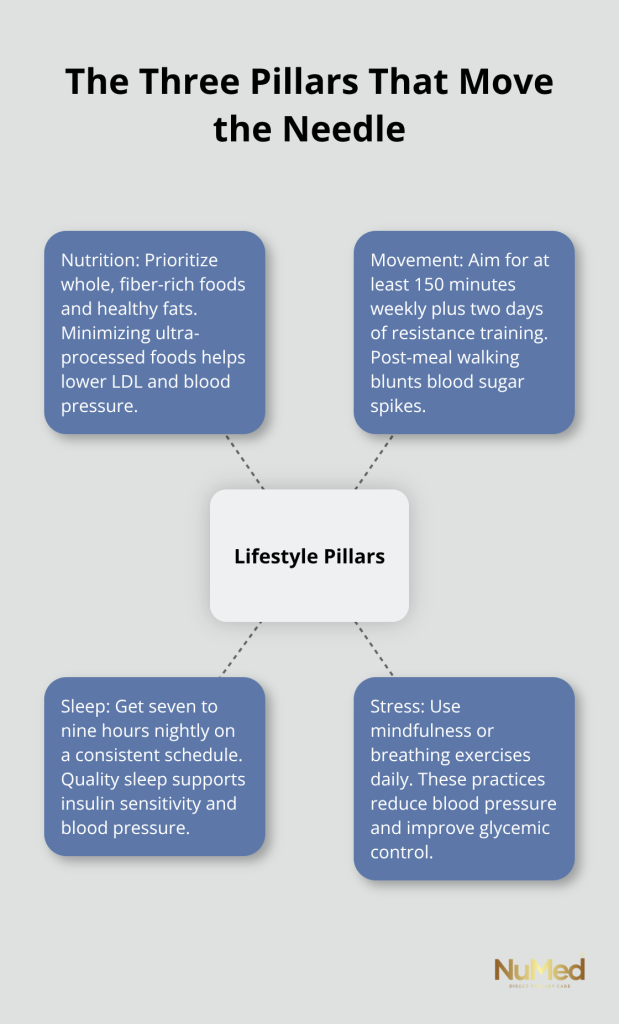
Nutrition shapes your metabolic destiny far more than most people realize. A plant-forward diet centered on vegetables, legumes, whole grains, nuts, seeds, and healthy fats directly lowers LDL cholesterol and blood pressure. The specifics matter more than the philosophy: prioritize fiber-rich foods because dietary fiber supports gut health, weight management, and metabolic function. Ultra-processed foods and added sugars accelerate insulin resistance and weight gain, so the practical shift is replacing packaged items with whole foods you recognize.
One actionable step is to batch cook on weekends-prepare grilled chicken, roasted vegetables, and cooked grains, then assemble meals throughout the week. This removes the friction that causes people to default to takeout when hungry and tired. Another concrete tactic is to shop with a written list of whole foods only, preventing impulse purchases of processed items. Hydration matters equally: limiting sugar-sweetened beverages reduces caloric intake and obesity risk, so swapping soda or juice for water eliminates hundreds of calories weekly without dietary restriction.
Movement That Produces Measurable Changes
Physical activity targets cardiovascular health and metabolic markers simultaneously. The evidence-based target is at least 150 minutes of moderate-intensity aerobic activity weekly plus two days of resistance training. Walking for 30 minutes after meals reduces blood sugar spikes more effectively than most medications for prediabetes, making post-meal movement a high-impact habit that costs nothing. Moving every 30 to 60 minutes throughout your day improves blood sugar and lipid profiles without requiring a gym membership. Resistance training preserves muscle mass during weight loss and improves metabolic rate, so even two sessions weekly of bodyweight exercises or light weights produce measurable results. The practical approach is to choose the movement you tolerate rather than despise. A person who walks daily sustains the habit far longer than someone forcing themselves through workouts they hate.
Sleep and Stress as Non-Negotiable Foundations
Sleep deprivation sabotages every other health habit you build. Adults need seven to nine hours nightly to support weight management, insulin sensitivity, and blood pressure regulation, according to the National Sleep Foundation and NIH research. Poor sleep quality alone drives obesity, insulin resistance, and hypertension independent of diet or exercise. Practical sleep improvement starts with a consistent bedtime and wake time, even on weekends, because your body’s circadian rhythm responds to regularity. Minimizing blue light from screens one hour before bed and keeping your bedroom cool and dark removes common sleep disruptors.
Stress management through mindfulness, meditation, or breathing exercises reduces blood pressure and improves glycemic control, as documented by the American Psychological Association and JAMA research. These techniques work because chronic stress directly worsens cardiovascular risk, depression, and insulin resistance. A five-minute daily breathing practice-inhale for four counts, hold for four, exhale for six-is simple enough to sustain and produces measurable blood pressure reduction within weeks. Once you establish these three pillars (nutrition, movement, and restorative sleep), your body responds with measurable improvements in metabolic markers and energy levels, setting the stage for how to sustain these changes long-term.
Making Lifestyle Changes Stick in Real Life
The gap between knowing what to do and actually doing it every single day is where most people fail. You understand that whole foods matter more than supplements, that movement beats medication for blood sugar control, and that sleep shapes your metabolism. Yet life happens: work deadlines pile up, stress spikes, and the convenience of takeout wins. The difference between people who sustain lifestyle changes and those who quit within weeks comes down to two factors: removing friction from the right choices and having someone to answer to when motivation fades.
Sustainable change requires a structured approach, not willpower alone. Start by identifying which single habit creates the most friction in your current routine, then build your system around removing that friction. If meal preparation feels overwhelming, batch cooking on Sunday for the entire week eliminates daily decision-making and the excuse to order food when tired. If sleep feels impossible with a chaotic schedule, prioritize a consistent bedtime over perfect nutrition for the first month. Better sleep improves decision-making for everything else. If stress management feels abstract, choose one specific technique: a five-minute breathing practice at your desk, a ten-minute walk after lunch, or five minutes of meditation using a free app like Insight Timer.
Making lifestyle changes stick requires understanding the science of behavior change and creating sustainable nutrition and lifestyle habits. Pick one change, sustain it for three weeks until it becomes automatic, then add the next. This sequential approach prevents the overwhelm that derails most people.
Work With Someone Who Holds You Accountable
The second critical factor is accountability. Accountability from a health coach or primary care physician trained in lifestyle medicine serves as your behavioral guide, not just someone who prescribes medication. They help you identify which specific habits drive your condition, set realistic targets based on your actual life (not an idealized version), and adjust strategies when obstacles emerge. Research shows that people working with health coaches achieve greater weight loss, better blood pressure control, and improved diabetes management compared to those attempting changes alone.
The coach asks clarifying questions: Are you eating too many calories or the wrong type of calories? Is your exercise routine sustainable, or are you forcing something you hate? Is poor sleep driving your stress, or is stress driving your poor sleep? These distinctions matter because they determine which intervention produces results. A person sleeping five hours nightly will fail at exercise consistency until sleep improves first. Someone eating 500 calories of processed snacks daily cannot out-exercise that deficit.
A coach helps you sequence changes in the right order and monitors whether your lab work improves to confirm the strategy is working. Without this feedback loop, you waste months on changes that do not move your specific metrics. Regular check-ins every two to four weeks keep momentum alive and allow rapid adjustment when life circumstances change.
Measure What Matters and Adjust Ruthlessly
Track the metrics that actually predict health for your condition, not generic fitness numbers. If you have type 2 diabetes or prediabetes, HbA1c and fasting glucose matter infinitely more than your weight. If you have hypertension, blood pressure readings taken at home daily reveal trends that office visits miss. If you have high cholesterol, LDL, and triglycerides tell you whether your diet shift is working.
Measure these specific markers every four to twelve weeks, depending on your condition, and adjust your approach if they are not improving. If three months of 150 minutes weekly of walking produces zero improvement in blood glucose, you likely need more intensity or resistance training. If your blood pressure remains elevated despite weight loss, sodium intake, or stress management may be the limiting factor. This data-driven approach removes guesswork and emotional attachment to strategies that feel right but do not produce results.
Many people default to strategies they enjoy rather than strategies that work for their specific physiology. You may love running, but if your knees hurt and you quit, it fails. You may prefer a vegan diet, but if your triglycerides remain elevated, the specific macronutrient balance matters for you. The uncomfortable truth is that what works for your friend or what feels intuitive often differs from what your body actually needs. Measurement forces this honest conversation.
Track consistently for at least three months before deciding whether a change is working, because metabolic adaptation takes time. After three months of solid data, you have enough information to make an informed decision about what to keep, what to modify, and what to abandon entirely.
Final Thoughts
Conventional care treats disease as something that happens to you, managed through medication, while the behaviors that caused it remain unchanged. A lifestyle medicine approach works backward-it positions you as the active agent in your recovery, not a passive recipient of prescriptions. Medication addresses symptoms while lifestyle changes address the root cause, and your body responds to what you actually do every single day.
People who shift to whole foods, move consistently, sleep adequately, and manage stress see measurable improvements in blood glucose, blood pressure, and cholesterol within three to six months, with many reversing their diagnoses entirely within one to two years. A person who walks after meals reduces blood sugar spikes more effectively than most medications for prediabetes, and someone who sleeps seven to nine hours nightly regains insulin sensitivity that no pill alone can restore. These outcomes are predictable results when the right habits replace the wrong ones.
Start your transformation by identifying which single habit creates the most friction in your current routine, then build your system around removing that friction. You need a clear target, consistent measurement of whether you hit it, and someone to answer to when obstacles emerge-a health coach or primary care physician trained in lifestyle medicine serves this role by helping you sequence changes in the right order and adjust strategies when life circumstances change. Learn how NuMed DPC combines direct primary care with lifestyle medicine to create the conditions for real transformation.