

Most people think big changes require dramatic overhauls. At NuMed DPC, we’ve seen the opposite play out repeatedly: small, consistent habits reshape health outcomes far more effectively than sporadic intensity.
Mindful lifestyle management isn’t about perfection or complexity. It’s about understanding which daily practices actually move the needle and how to build them into your routine sustainably.
How Small Habits Create Real Health Shifts
Your brain doesn’t distinguish between a major life change and a minor daily adjustment-it responds to consistency. When you practice the same behavior repeatedly, your brain strengthens neural pathways, making it progressively easier to repeat. Research shows that maintaining consistent sleep timing reduces depression risk and anxiety risk, regardless of total sleep hours. This reveals something critical: the structure itself matters as much as the content. You don’t need to overhaul your entire life. A 10-minute daily walk lowers depression risk by approximately 18% according to the American Psychological Association, while a large study of 1.2 million US adults showed that regular physical activity correlated with about 1.5 fewer days of poor mental health per month. These aren’t dramatic changes, yet they compound into measurable outcomes. Movement releases serotonin and dopamine, stress hormones normalize, and sleep quality improves. People with structured daily routines experience significantly lower anxiety and depression than those without predictability. That predictability removes decision fatigue and reduces the guilt that derails most people attempting change.
Where Most People Fail at Building Habits
The standard approach of setting ambitious goals backfires consistently. You decide to exercise an hour daily, eat perfectly, meditate for 30 minutes, and sleep eight hours-then life interrupts, you miss one day, and the entire structure collapses. Instead, specificity and modest starting points determine success. When you form new habits, assess your current schedule first, then establish one stable element like consistent sleep timing before adding anything else. Be explicit about how, where, and when you’ll practice each habit, and create a backup plan for inevitable disruptions. Research on behavioral activation, a core component of cognitive behavioral therapy, shows that scheduling even small positive activities measurably boosts mood. If stress, sleep, or mood issues persist despite habit changes, reach out to a primary care physician; these concerns often have underlying medical components that self-management cannot address alone.
Building Momentum Through Realistic Progression
Five foundational habits support health: mindfulness, sufficient sleep, real, whole foods, daily movement, and minimizing toxin exposure. Rather than implementing all five simultaneously, choose one and master it for two weeks before adding another. Box breathing (inhale for four counts, hold for four, exhale for four, and hold for four again) regulates the nervous system, lowers heart rate and blood pressure, and enhances focus-it requires no equipment and takes two minutes. Real, whole foods rich in vegetables, fruits, and legumes support longevity more effectively than processed alternatives, which lose nutritional value through additives and excessive salt, sugar, and artificial sweeteners that fuel cravings. Most adults need at least seven hours of sleep nightly per CDC guidance, though sleep quality matters as much as duration. Consistency matters more than intensity; small daily habits accumulated over months create the health shifts that sporadic intense efforts never achieve.
Moving From Self-Management to Professional Support
You can implement these foundational habits independently, yet professional guidance accelerates progress and addresses what self-directed efforts cannot. A primary care physician identifies underlying conditions that sabotage your efforts-undiagnosed sleep apnea, thyroid dysfunction, or hormonal imbalances often masquerade as motivation problems. Your doctor also monitors how these habits interact with any medications you take and adjusts your approach based on your individual physiology rather than generic advice. The transition from habit-building to professional oversight happens naturally when you notice persistent obstacles despite consistent effort. This is where personalized assessment becomes essential, moving you from general wellness principles to a health plan tailored specifically to you.
Mindfulness Techniques That Actually Work
Box Breathing: Your Fastest Entry Point
Box breathing stands out as the most practical entry point because it requires nothing but two minutes and your attention. Inhale for four counts, hold for four, exhale for four, hold for four. This cycle regulates your nervous system, lowers heart rate and blood pressure, and sharpens focus immediately. The National Center for Complementary and Integrative Health confirms that brief daily mindfulness practice produces measurable benefits, with roughly ten minutes daily making a meaningful difference. You don’t need silence, perfect conditions, or special equipment. Practice while waiting for coffee to brew, during your commute, or before a difficult meeting.
Body Scans and Walking Meditation
Mindful body scans work differently-you move attention slowly from your head to your toes, noticing physical sensations and emotions without judgment. This practice typically takes ten to twenty minutes and helps you recognize where stress accumulates in your body before it becomes pain or dysfunction. Walking meditation combines movement with presence: walk slowly, focus on each step and balance, and notice subtle cues from your environment. These three techniques form a practical toolkit because they integrate into existing routines rather than demanding separate time blocks.
Mindful Eating and Movement Awareness
Mindful eating directly addresses how you fuel your body and removes the guilt cycle that derails most nutrition changes. Eat slowly enough to actually taste your food, notice hunger and fullness cues, and pay attention to how different foods affect your energy and mood afterward. A large study of 1.2 million US adults showed that higher levels of physical activity correlated with lower levels of stress, depression, and anxiety, and mindfulness amplifies this benefit by increasing awareness of how movement affects your wellbeing. Adults who walked 75 minutes a week had an 18% lower risk of depression.
The key difference between mindful movement and routine exercise lies in attention-when you notice your breathing, the feeling of your feet contacting the ground, and subtle changes in your mood during activity, you reinforce the neural pathways that make movement sustainable. Most people abandon exercise because they never connect the activity to improved mood and energy. Mindfulness closes that gap.
Choosing Your Starting Technique
Start with whichever technique feels least awkward: box breathing for stress moments, body scans before bed, eating awareness during meals, or mindful walking during existing daily routes. Consistency matters far more than which technique you choose. Once you establish one practice, you’ll notice how mindfulness shifts your awareness of your body’s signals-hunger, fatigue, tension, and mood changes become clearer. This heightened awareness naturally leads to better decisions about sleep, nutrition, and movement, which sets the stage for building your complete personalized wellness plan.
Your Health Blueprint: From Assessment to Action
Assess Your Actual Habits, Not Your Ideal Self
Start with an honest assessment, not wishful thinking. Most people skip this step and jump directly to ambitious goals, which explains why 80% of New Year’s resolutions fail by mid-February. Open a document or notebook and write down what your current schedule actually looks like, not what you wish it looked like. Note when you wake and sleep, how many minutes you move daily, what you typically eat, and how much time you spend on screens. Include your stress triggers and how you currently respond to them.
This baseline matters because it reveals where your habits already support your goals and where they actively sabotage them. If you wake at 6 AM but consistently feel exhausted, irregular bedtimes are likely the culprit, not insufficient motivation. If you skip meals and then overeat at dinner, blood sugar crashes are driving your choices, not willpower failure. Once you see your actual patterns, you can address the real obstacles instead of blaming yourself for fictional character flaws.
Select Your Single Starting Point
Next, identify which single habit would create the most immediate ripple effect. Sleep consistency typically wins because irregular sleep timing elevates depression and anxiety risk regardless of total hours.
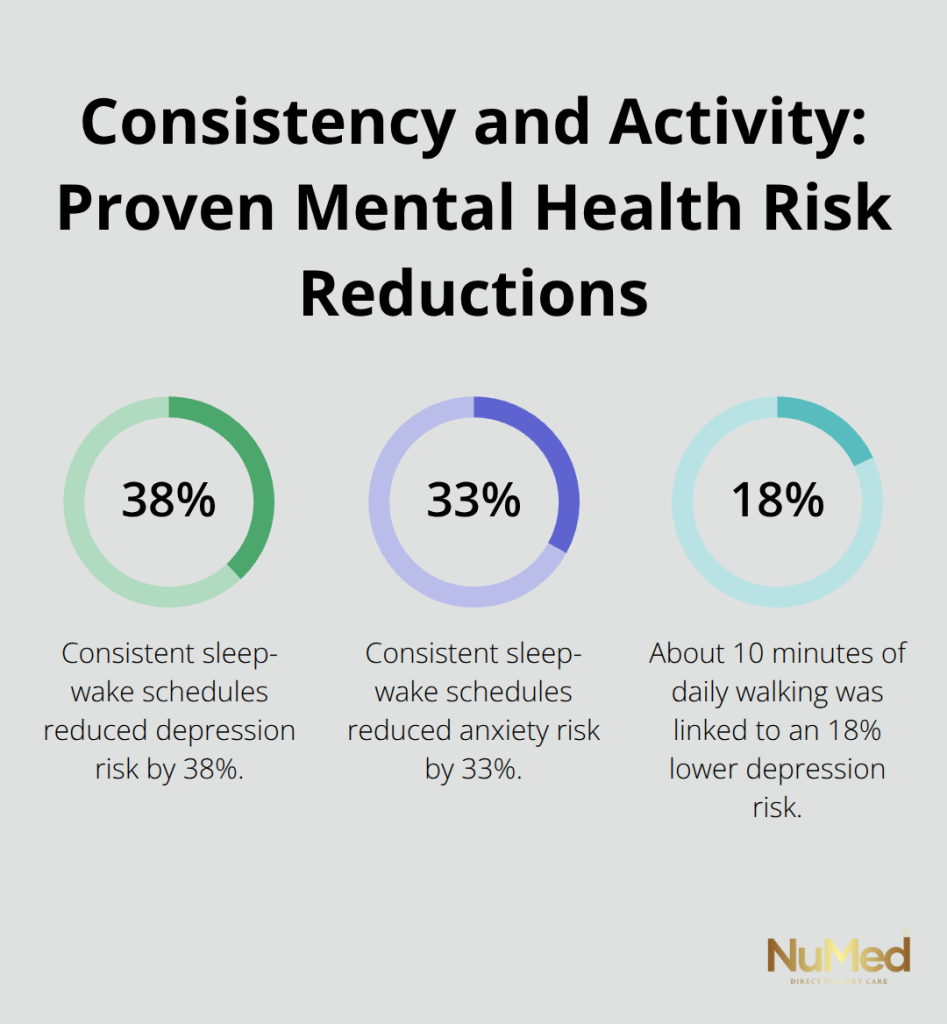
Consistent sleep-wake schedules reduced depression risk by 38% and anxiety risk by 33%. Alternatively, if stress dominates your day, box breathing takes two minutes and immediately lowers your nervous system activation.
Choose one starting point based on what’s currently breaking your health, not what sounds most impressive. Set a specific implementation: where you’ll practice, when you’ll practice, and what you’ll do if life disrupts your plan. Vague intentions like “I’ll sleep better” fail instantly. Concrete plans like “I’ll set my alarm for 6:30 AM on weekdays and try to bed by 10:15 PM on Sunday through Thursday, with flexibility on weekends” work because they remove decision-making.
Track Progress Weekly and Adjust Accordingly
Track progress weekly, not daily, because daily fluctuations create false conclusions. After one week of consistent box breathing, you might still feel stressed because stress hormones don’t normalize overnight. After four weeks, the pattern becomes obvious. Use a simple method: a calendar where you mark yes or no for whether you completed your chosen habit, or a notes app where you record how you felt during that week. The CDC recommends tracking sleep patterns specifically because they reveal whether your consistency is improving, even if your mood hasn’t shifted yet.
Most people abandon habits after two to three weeks because they expect immediate transformation, then interpret normal variation as failure. Real change compounds over six to eight weeks of consistency. Once your first habit feels automatic-you’re not thinking about it anymore, you’re just doing it-add your second habit. This sequential approach prevents the overwhelm that destroys most wellness plans.
Recognize When Professional Support Becomes Essential
If after four weeks of consistent effort your sleep remains fragmented, your energy still crashes, or your mood hasn’t improved, this signals that something medical underlies your symptoms. Sleep apnea, thyroid dysfunction, hormonal imbalances, or nutritional deficiencies masquerade as motivation problems and sabotage even perfect habits. A primary care physician identifies these conditions through proper assessment and testing, adjusting their approach based on the individual’s physiology. This transition from self-directed habit-building to professional guidance isn’t failure-it’s the intelligent recognition that some obstacles require clinical expertise.
Final Thoughts
Small habits compound into measurable health shifts because consistency rewires how your body and brain function. A 10-minute daily walk reduces depression risk by 18%, consistent sleep timing lowers anxiety by 33%, and regular physical activity correlates with 1.5 fewer days of poor mental health monthly. These interventions reshape your physiology over weeks and months without demanding a dramatic overhaul.
Mindful lifestyle management succeeds when you stop chasing perfection and start building one sustainable habit at a time. Vague intentions fail while concrete plans work, and weekly tracking reveals actual progress far better than daily fluctuations that discourage you. Four weeks feels like nothing, but eight weeks show undeniable change.
If persistent sleep problems, unexplained fatigue, or mood changes resist your consistent efforts, underlying medical conditions may sabotage your progress (sleep apnea, thyroid dysfunction, hormonal imbalances, and nutritional deficiencies often masquerade as motivation failures). This is where professional assessment becomes essential-not because you’ve failed, but because some obstacles require clinical expertise. Explore how NuMed DPC can support your wellness journey with personalized medical guidance that addresses root causes while supporting the lifestyle changes that compound into lasting health.