

Weight gain during menopause isn’t a personal failure-it’s a biological reality. Hormonal shifts fundamentally change how your body stores fat and burns calories, making traditional weight loss approaches ineffective for many women.
At NuMed DPC, we’ve found that successful menopause weight management requires understanding these changes and addressing them with personalized strategies. This guide covers the science behind menopausal weight gain and practical approaches that actually work.
The Biology Behind Menopausal Weight Gain
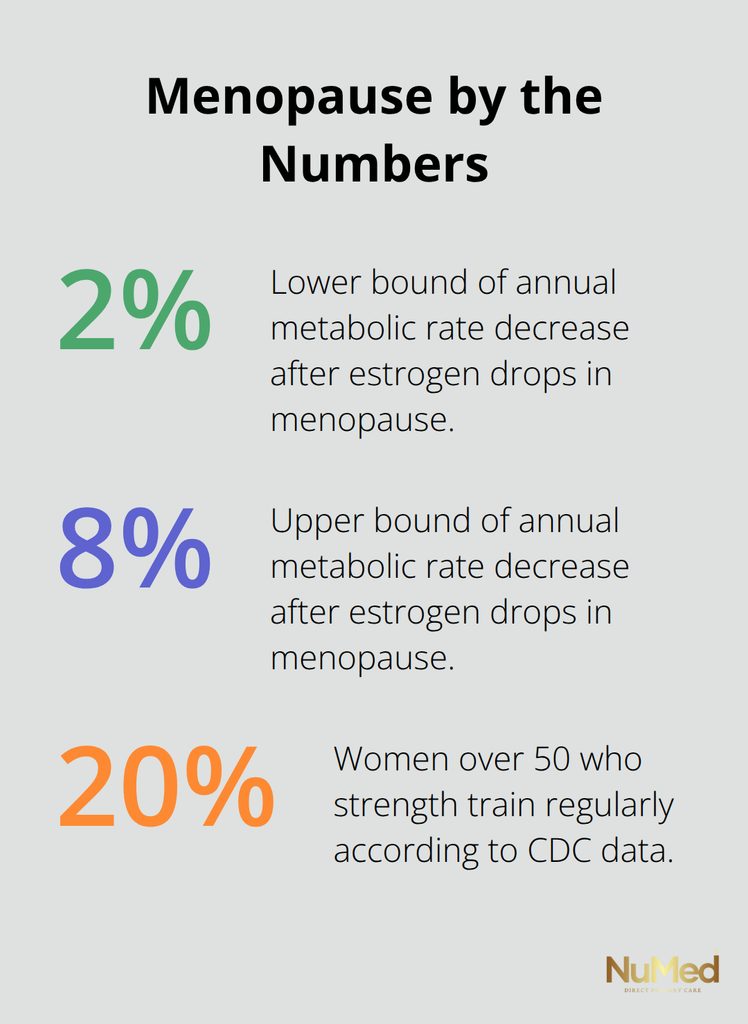
Estrogen does far more than regulate reproduction. This hormone directly influences how your body distributes fat, maintains muscle mass, and regulates appetite. When estrogen levels drop during menopause, your metabolic rate decreases by 2-8% annually. This might sound modest, but it translates to burning roughly 100-150 fewer calories per day without any changes to your diet or activity level.
The shift happens because estrogen helps regulate thermogenesis, the process that generates heat and burns calories. Lower estrogen means your body simply doesn’t burn fuel as efficiently. Additionally, estrogen affects leptin and ghrelin, the hormones that signal fullness and hunger. Many women report increased appetite or persistent cravings during menopause, not from lack of willpower but from actual hormonal changes that make satiety harder to achieve.
How Your Body Redistributes Fat
Your body also becomes more efficient at storing fat, particularly around the abdomen, because estrogen loss shifts fat distribution patterns. Studies show that women gain an average of 1.5 pounds per year during the menopausal transition, with some research suggesting women in their 50s can expect a 5-8 pound increase over the decade. This isn’t inevitable weight gain that requires acceptance-it’s a metabolic shift that responds to targeted interventions.
Muscle Loss Accelerates the Problem
Menopause coincides with sarcopenia, the age-related loss of muscle mass that occurs at roughly 3-5% per decade after age 30, accelerating during midlife. Muscle tissue is metabolically active, meaning it burns calories at rest. When you lose muscle, your basal metabolic rate drops further, creating a compounding effect. Declining estrogen directly impairs protein synthesis, making it harder for your body to build and maintain muscle even with adequate protein intake.
This explains why the weight loss strategies that worked in your 30s or 40s often fail now-you’re not just fighting lower calorie burn, you’re also fighting accelerated muscle loss. The solution requires prioritizing resistance exercise and adequate protein consumption, not simply reducing calories. Women who maintain strength training during menopause preserve significantly more muscle mass and experience better metabolic outcomes than those relying on diet alone.
Moving Forward With Targeted Strategies
Understanding these biological changes sets the foundation for effective intervention. Your body isn’t working against you-it’s responding to hormonal shifts that demand different nutritional and exercise approaches than you used before. The strategies that work during menopause address both the metabolic slowdown and muscle preservation simultaneously, which is why generic weight loss advice fails so many women at this stage of life.
What Should You Actually Eat During Menopause
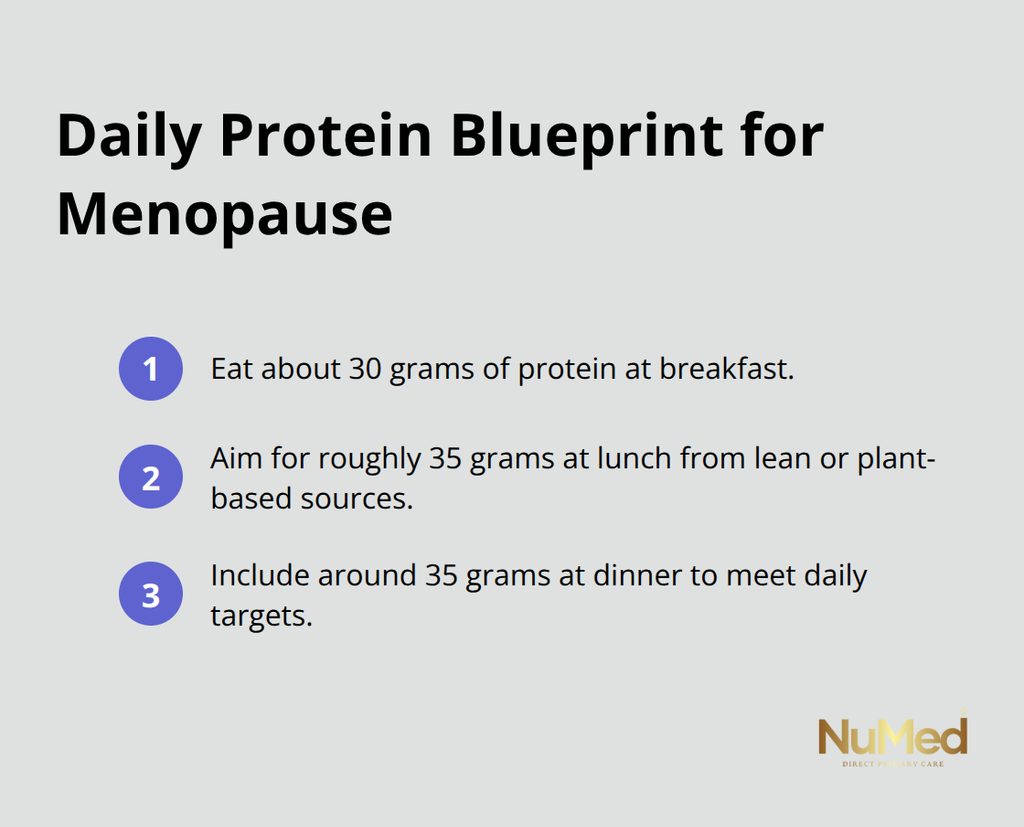
Protein becomes non-negotiable during menopause, and the standard recommendation of 0.8 grams per kilogram of body weight simply isn’t enough. Research published in the Journal of the International Society of Sports Nutrition shows that women in midlife need 1.2 to 1.6 grams of protein per kilogram daily to preserve muscle mass, particularly when combined with resistance training. For a 150-pound woman, this means consuming roughly 80 to 110 grams of protein daily, distributed across meals rather than concentrated in one sitting. Your body can only synthesize about 25 to 40 grams of protein per meal, so spacing intake matters. A breakfast with 30 grams of protein from eggs or Greek yogurt, lunch with 35 grams from chicken or legumes, and dinner with 35 grams creates the stimulus your muscles need to resist the sarcopenia that menopause accelerates. Skipping protein at breakfast, a common pattern, wastes an opportunity to activate muscle protein synthesis when your body is primed to respond.
Stabilizing Blood Sugar Prevents Metabolic Chaos
Meal timing directly impacts both weight management and energy levels during menopause. Consistent meal intervals keep blood sugar stable, which prevents the energy crashes that often trigger cravings for refined carbohydrates. A study in Nutrients journal found that women who ate meals at regular times had better appetite regulation and lower overall calorie intake compared to those with irregular eating patterns. Eating within an hour of waking jumpstarts your metabolism and prevents the hunger that builds throughout the morning. Including fiber and protein at every meal slows glucose absorption, preventing the blood sugar spikes that lead to fat storage around the abdomen. Skipping lunch or eating only a salad guarantees an afternoon energy crash and evening overeating. Late-night eating, common when metabolism is already sluggish, compounds weight gain because your body stores calories more readily when circadian rhythms are disrupted. The practical approach means eating a balanced meal every 4 to 5 hours, stopping food intake 2 to 3 hours before bed.
Building Strength Stops the Metabolic Decline
Resistance training directly counteracts the metabolic slowdown by stimulating muscle protein synthesis and preserving lean mass, yet only 20 percent of women over 50 engage in strength training regularly according to CDC data. This matters because resistance exercise triggers muscle protein synthesis in ways cardiovascular activity cannot. Women who lift weights gain strength and preserve muscle mass despite lower estrogen, directly counteracting the metabolic slowdown. Start with compound movements like squats, deadlifts, or chest presses that engage multiple muscle groups simultaneously. Progressive overload-gradually increasing weight or repetitions-maintains the stimulus your muscles need to stay metabolically active. Cardiovascular exercise alone burns calories during activity but doesn’t create lasting metabolic changes. Walking for 30 minutes burns roughly 150 calories; losing that muscle mass costs you 150 calories daily at rest. The investment in strength training produces returns that compound over years, making the difference between gaining 8 pounds per decade and maintaining your weight through menopause.
Why Personalized Nutrition Plans Matter
Standard dietary advice fails during menopause because it ignores the hormonal reality you face. What worked at 35 won’t work at 55, and generic calorie restriction often backfires by accelerating muscle loss. Your individual response to different macronutrient ratios, meal timing, and exercise intensity depends on factors like your current hormone levels, metabolic rate, and muscle mass baseline. This is where personalized medical support becomes valuable-practitioners who understand menopause can assess your specific needs and adjust your nutrition plan accordingly. Testing hormone levels and metabolic markers provides concrete data rather than guesswork, allowing your healthcare provider to recommend protein intake, meal timing, and exercise intensity tailored to your body’s actual requirements.
Personalized Medical Support for Menopause Weight Management
Standard primary care allocates roughly 15 minutes per visit, making it impossible to investigate the root causes of menopausal weight gain. Your thyroid function, cortisol levels, insulin sensitivity, and actual hormone concentrations all influence whether your body stores or burns fat, yet most practitioners never test these markers. A functional medicine approach identifies whether your weight gain stems primarily from insulin resistance, thyroid dysfunction, cortisol dysregulation, or pure estrogen deficiency-factors that demand different treatment strategies. Some women benefit from bioidentical hormone replacement therapy, others need thyroid medication, and many need targeted nutritional changes that address their specific metabolic dysfunction rather than generic calorie cutting.
Comprehensive Hormone and Metabolic Testing
Hormone level testing provides concrete data that eliminates guesswork from your treatment plan. Thyroid stimulating hormone, free T3, and free T4 matter because thyroid dysfunction affects roughly 15 to 20 percent of menopausal women, yet remains undiagnosed in many cases. Fasting insulin and glucose ratios reveal whether your body is developing insulin resistance, a condition that directly promotes abdominal fat storage and undermines weight loss efforts. Cortisol patterns throughout the day indicate whether chronic stress is driving metabolic dysfunction-elevated morning cortisol or flattened cortisol curves sabotage weight management regardless of diet quality.
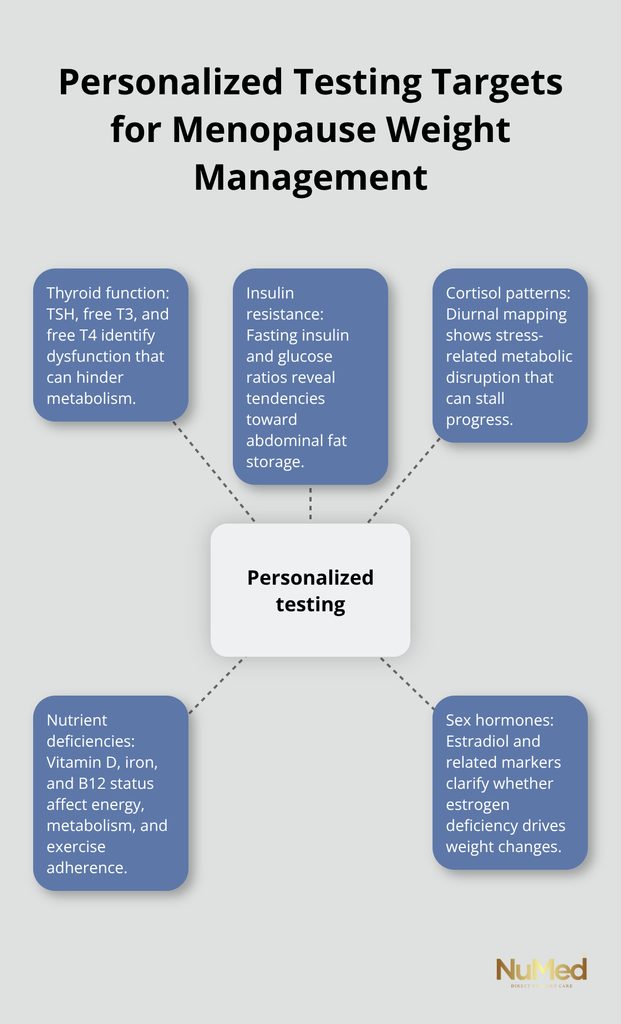
Testing also measures vitamin D, iron, and B12 levels because deficiencies in these nutrients impair metabolism and energy production, making exercise adherence and appetite regulation significantly harder.
Translating Test Results Into Action
Once results return, your healthcare provider can recommend specific interventions tailored to your actual metabolic state. Thyroid medication addresses documented dysfunction, targeted supplementation corrects nutrient deficiencies, and adjusted protein timing aligns with your measured metabolic rate. Hormone therapy becomes an option if testing shows appropriate candidates, rather than a one-size-fits-all recommendation. This contrasts sharply with conventional advice that treats all menopausal women identically, ignoring the biological differences that determine whether specific strategies will work for your body.
Behavioral Support Transforms Knowledge Into Results
Understanding what to eat and knowing how to actually change eating patterns are entirely different challenges. Health coaching bridges this gap by providing accountability and practical problem-solving, not just information. A coach helps you identify specific barriers: perhaps you skip breakfast because morning appetite feels absent, or you overeat at night when stress peaks, or social situations derail your protein intake. Rather than offering generic motivation, effective coaching addresses these concrete obstacles with specific strategies tailored to your lifestyle. Research shows that women receiving behavioral coaching combined with medical support achieve improved weight and metabolic outcomes compared to those receiving diet advice alone. Your coach tracks progress weekly, adjusts recommendations based on what actually works for your body and schedule, and prevents the common pattern where women lose initial weight then regain it within months. Many women abandon their efforts during plateaus, believing they’ve failed; a coach reframes plateaus as normal and adjusts calorie intake or exercise stimulus to restart progress.
Final Thoughts
Menopause weight management succeeds when you address the biological reality of hormonal change rather than fighting it with outdated strategies. Estrogen decline reduces your metabolic rate by 2-8% annually, shifts fat distribution toward your abdomen, and accelerates muscle loss. Generic calorie restriction fails because it ignores these fundamental changes, but prioritizing protein intake between 1.2 to 1.6 grams per kilogram of body weight, maintaining consistent meal timing, and engaging in regular resistance training directly counteracts the metabolic slowdown.
Personalized healthcare transforms menopause weight management from guesswork into precision medicine. Testing your thyroid function, insulin sensitivity, cortisol patterns, and hormone levels reveals whether your weight gain stems from thyroid dysfunction, insulin resistance, stress-related metabolic changes, or estrogen deficiency-each cause demands different interventions. Behavioral coaching bridges the gap between knowing what to do and actually doing it, addressing the specific barriers that derail most women’s efforts.
Your next step involves connecting with healthcare providers who understand menopause as a metabolic transition requiring individualized solutions. We at NuMed DPC specialize in this approach, combining functional medicine assessment with health coaching and transparent support tailored to your unique needs. Explore how personalized direct primary care can guide you through menopause weight management with the precision your body deserves.