
Depression affects millions of Americans, and for many, traditional antidepressants don’t provide adequate relief. Ketamine for depression has emerged as a promising option, with research showing rapid symptom improvement in treatment-resistant cases.
At NuMed DPC, we believe patients deserve clear, evidence-based information about their treatment options. This guide covers how ketamine works, what safety considerations matter, and what to expect during therapy.
How Ketamine Changes Brain Chemistry for Depression
Ketamine works through a completely different mechanism than the antidepressants most people take. Traditional SSRIs and SNRIs increase serotonin levels in your brain, but this process takes weeks to show results. Ketamine targets glutamate, the brain’s primary excitatory neurotransmitter, and produces measurable mood improvements within hours or days. When ketamine blocks the NMDA receptor, it forces a rapid surge of glutamate activation toward AMPA receptors, which are responsible for fast, immediate electrical signaling. This cascade of neural activity promotes new connections between brain cells. Research from Yale psychiatrist John Krystal, who conducted landmark studies starting in 2000, demonstrated that this glutamate-based mechanism creates rapid antidepressant effects. The key difference is timing: while an SSRI might take 4 to 6 weeks to work, ketamine can lift mood within 40 minutes to a few hours after a single infusion. About 50 to 65 percent of people with treatment-resistant depression show significant improvement after a series of sessions, according to major clinical trials. This speed matters profoundly when someone struggles with severe depression or suicidal thoughts.
Why Ketamine Works When Other Treatments Fail
Treatment-resistant depression typically means you’ve tried at least two different antidepressants without adequate relief. For these patients, ketamine offers a distinct advantage because it operates on a separate neural pathway. Traditional antidepressants increase neurotransmitter availability over time through a gradual rebalancing process. Ketamine instead promotes immediate neural plasticity-your brain’s ability to reorganize itself and form new connections. This neuroplasticity window is brief but powerful, which is why integration work in the 24 to 72 hours after treatment matters for lasting change. Some people experience mood shifts on the same day as their first session, while others notice improvements across multiple treatments. The effects don’t depend on your brain chemistry adapting to a daily medication; instead, ketamine creates the conditions for your brain to rewire itself.
What Happens Next in Your Treatment Journey
Understanding how ketamine alters your brain chemistry is only the first step. The actual experience of treatment-what happens before, during, and after your session-shapes whether you’ll see lasting benefits from this approach.
Safety and Side Effects of Ketamine Treatment
Ketamine’s safety profile differs significantly from traditional antidepressants because the drug itself carries real risks that require careful medical oversight. Common short-term side effects include dissociation, blurred vision, anxiety, elevated blood pressure, and nausea, with most resolving within hours after your session ends. Cleveland Clinic reports that mild dissociation and altered time perception occur normally during treatment and typically fade as the drug metabolizes. However, some people experience more intense reactions like hallucinations or temporary cognitive changes, which is why in-clinic physician-led infusions with continuous vital-sign monitoring matter far more than compounded ketamine used outside clinical settings.
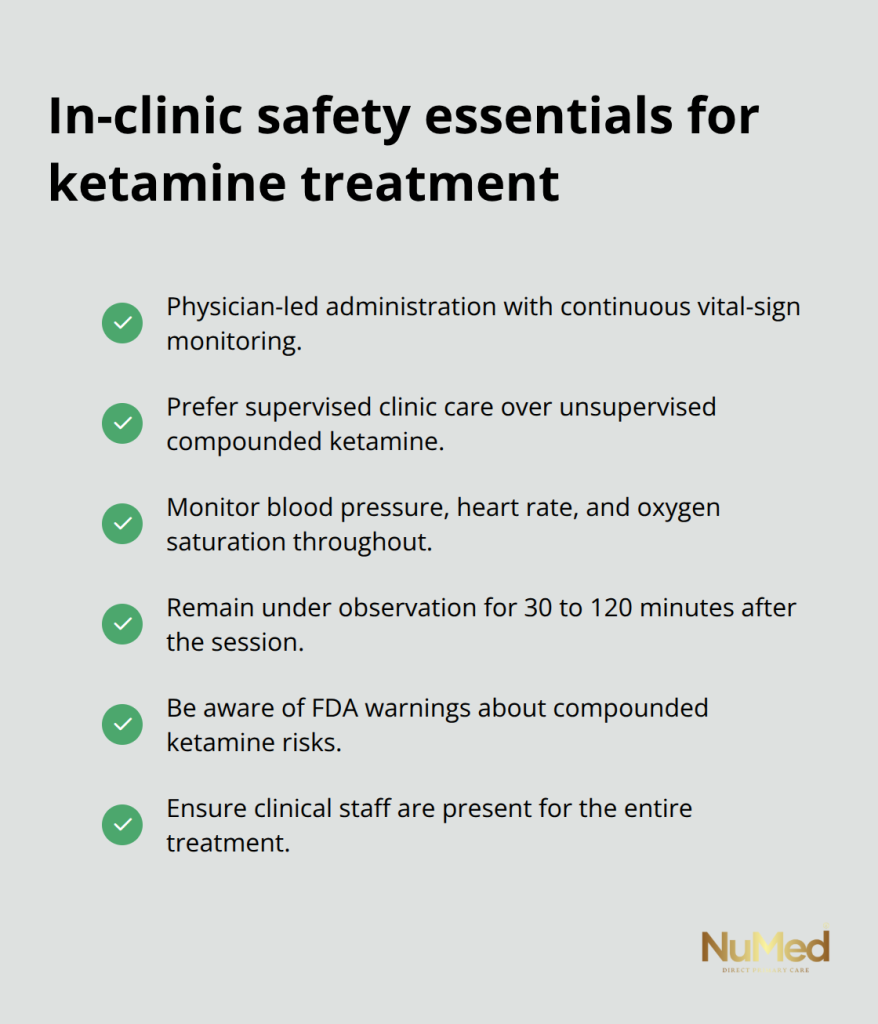
The FDA has warned about compounded ketamine risks, including loss of consciousness, respiratory problems, and adverse cardiovascular events, because no clinical oversight occurs during administration. This distinction matters critically: a reputable clinic monitors your blood pressure, heart rate, and oxygen saturation throughout the entire session and for 30 to 120 minutes afterward, with clinical staff present the entire time. Long-term safety data remain limited because ketamine for depression is relatively new in medical practice, with esketamine FDA approval in 2019 as an adjunctive therapy for treatment-resistant depression. The research does not currently show liver or kidney damage from occasional medical use, but the Cleveland Clinic notes that long-term safety continues to be studied as more patients receive treatment. This is why transparency with your provider matters enormously-you need a thorough intake evaluation before starting, not a clinic that skips this step.
Who Should Not Receive Ketamine
Several contraindications make ketamine unsuitable for certain patients, and your clinician must screen for these carefully. Uncontrolled high blood pressure, recent heart attack, aortic dissection or aneurysm history, and active, untreated psychosis disqualify most candidates because ketamine can elevate heart rate and blood pressure acutely. Pregnancy and breastfeeding are contraindications because fetal and infant safety data do not exist. Active, untreated substance use disorder significantly increases dependence risk, though dependence itself is uncommon with occasional medical use under supervision. Certain medications interact dangerously with ketamine-MAO inhibitors, and aminophylline are examples, so your full medication list, including over-the-counter supplements, must be reviewed before treatment. Liver disease and increased intracranial pressure also warrant exclusion. The intake process should include baseline liver and kidney function tests and potentially specialty cardiovascular clearance if your history suggests risk.
What Happens During Screening and Monitoring
Your first appointment involves far more than scheduling your first infusion. Clinicians need your complete mental health history, cardiovascular history, full medication disclosure, any prior ketamine experiences, and honest details about substance use. Transparency helps your provider create a safe plan, not automatically disqualify you. A typical ketamine visit lasts two to three hours total, including pre-treatment check-in, the infusion or nasal spray administration itself (roughly 40 minutes to one hour), and post-treatment observation. During your session, vital signs are monitored continuously, and clinical staff remain present throughout. You must fast for four to six hours beforehand and arrange a trusted driver because ketamine slows thinking and reflexes significantly. Some clinics require random drug screenings for safety verification. You should set a simple intention before your session, such as openness to a different perspective or seeking healing possibilities, because intention influences outcome quality. Try spending ten minutes journaling before arrival about what healing looks like for you, as this genuinely matters for results.
Preparing Your Body and Mind for Treatment
Physical preparation prevents complications and optimizes your safety during the session. Avoid alcohol or recreational substances in the days before your appointment, wear comfortable clothing, and bring items like an eye mask or calming playlist if your clinic permits them. Mental preparation proves equally important: your mindset shapes how your brain responds to ketamine’s effects. Try setting an authentic intention that resonates with you-whether that’s being open to something different, seeing challenges from a new perspective, or seeking possibilities for healing. Write this intention down and share it with your clinician during your pre-session check-in. This preparation work activates what researchers call “set,” the psychological readiness that influences whether you’ll experience deeper emotional release and longer-lasting relief. Your clinician will also review any medications you take and may order baseline liver and kidney function tests to establish your baseline health status before treatment begins.
What Monitoring Looks Like During Your Session
In-clinic monitoring protects you throughout the entire treatment experience. Clinical staff tracks your blood pressure, heart rate, and oxygen saturation continuously from start to finish, with a clinician present in the room for the full session and a post-session observation period lasting 30 to 120 minutes. This constant oversight allows your provider to respond immediately if your vital signs shift unexpectedly or if you experience distress. You’ll either self-administer a nasal spray or receive a short IV infusion in a quiet, comfortable space designed to minimize external stimulation. Soft music, eyeshades, and a calm environment support the therapeutic process. Most people experience a floating, dream-like state with mild dissociation during treatment; your clinical team guides you through this experience and helps you feel safe. Mood improvements can occur the same day as your first session, creating an optimal window for integration work that begins immediately after treatment ends.
What to Expect During Your Ketamine Treatment
Prepare Your Body and Mind Before Arrival
Your ketamine appointment demands serious preparation because the treatment window is narrow and your readiness directly affects outcomes. Start four to six hours before your scheduled session by fasting completely, and stop drinking liquids thirty minutes prior to arrival. This preparation prevents nausea and complications during infusion. Arrange transportation with a trusted driver in advance because ketamine impairs thinking and reflexes for several hours after treatment ends, making driving unsafe. Wear comfortable clothing you can move in easily, and bring items that calm you, such as an eye mask or a playlist of soft music if your clinic allows them.
Most clinics require you to disclose your full medication list, including over-the-counter supplements, during your pre-appointment review, so gather this information beforehand. Some facilities conduct random drug screenings for safety verification, so ask your clinic about this policy when you schedule. Avoid alcohol or recreational substances in the days before your appointment to minimize interaction risks and optimize your safety during the session.
Set Your Intention for Treatment
The most overlooked preparation step involves setting an intention for your session. Spend ten minutes journaling before you arrive about what healing means to you, then write a single sentence intention, such as being open to a different perspective or seeking possibilities for growth. Share this intention with your clinician during your pre-session check-in because research shows that psychological readiness directly influences treatment outcomes, with combining ketamine and psychotherapy enhancing therapeutic response and supporting longer-lasting cognitive and behavioral change. Your clinician will also review your complete mental health history, cardiovascular history, and any prior ketamine experiences during this intake phase, which typically takes thirty to forty minutes.
Experience the Treatment Session Itself
Your actual treatment session lasts roughly one hour within a two to three-hour total appointment window that includes pre-treatment preparation and post-treatment monitoring. You sit or recline in a quiet, comfortable private space with soft lighting and minimal external stimulation while clinical staff monitors your blood pressure, heart rate, and oxygen saturation continuously throughout the entire session. If you receive IV infusion, the actual medication delivery takes forty minutes to one hour, while nasal spray administration works faster. Most people describe the experience as a floating, dream-like state with mild dissociation and altered time perception, which are normal therapeutic responses rather than side effects. Your clinical team remains present in the room during the entire session to guide you through the experience and ensure you feel safe.
Mood improvements can occur within the same day as your first session, with about fifty to sixty-five percent of people showing significant improvement after a series of sessions, according to major clinical trials. Your post-treatment observation period lasts thirty to one hundred twenty minutes, during which the staff continues monitoring your vitals and helps you transition back to baseline consciousness before your driver takes you home.
Integrate Your Experience in the Critical Window After Treatment
The seventy-two hours immediately following your session represent a critical neuroplasticity window where your brain remains more adaptable to new insights and behavioral changes. During this window, journal the images, emotions, and thoughts that arose during treatment, note any recurring themes or symbols, and track shifts in how you perceive old problems. Add one small sustainable habit to your routine after each session, such as a daily morning walk, consistent sleep schedule, or five minutes of daily breath work, because these behavioral changes anchor the neurological shifts ketamine initiates.
Final Thoughts
Ketamine for depression represents a fundamentally different approach to treating severe mood disorders that haven’t responded to standard medications. The evidence is clear: this treatment works rapidly, operates through distinct brain mechanisms, and offers real hope for people struggling with treatment-resistant depression. However, ketamine therapy demands careful medical oversight, honest communication with your provider, and active participation in your own recovery through preparation and integration work.
Before you pursue ketamine treatment, have specific conversations with your healthcare provider about whether you meet the clinical criteria for treatment-resistant depression, what your provider’s experience is with ketamine therapy, and how they’ll monitor your safety throughout the process. Discuss your complete medical history, including cardiovascular health, current medications, and any substance use concerns, because transparency directly affects whether treatment will be safe and effective for you. Ask about the expected number of sessions, what realistic outcomes look like based on your specific situation, and how your provider will measure progress.
If you’ve already tried multiple antidepressants without adequate relief, ask your current mental health provider whether ketamine might be appropriate for you, or schedule a consultation with a qualified psychiatrist who specializes in ketamine therapy to determine your eligibility. We at NuMed DPC believe comprehensive healthcare means addressing the root causes of depression rather than managing symptoms alone, and our direct primary care model emphasizes personalized connections between patient and practitioner alongside functional medicine approaches that complement psychiatric treatment. Visit NuMed DPC to learn how our approach can support your recovery.